
Last updated October 15, 2026
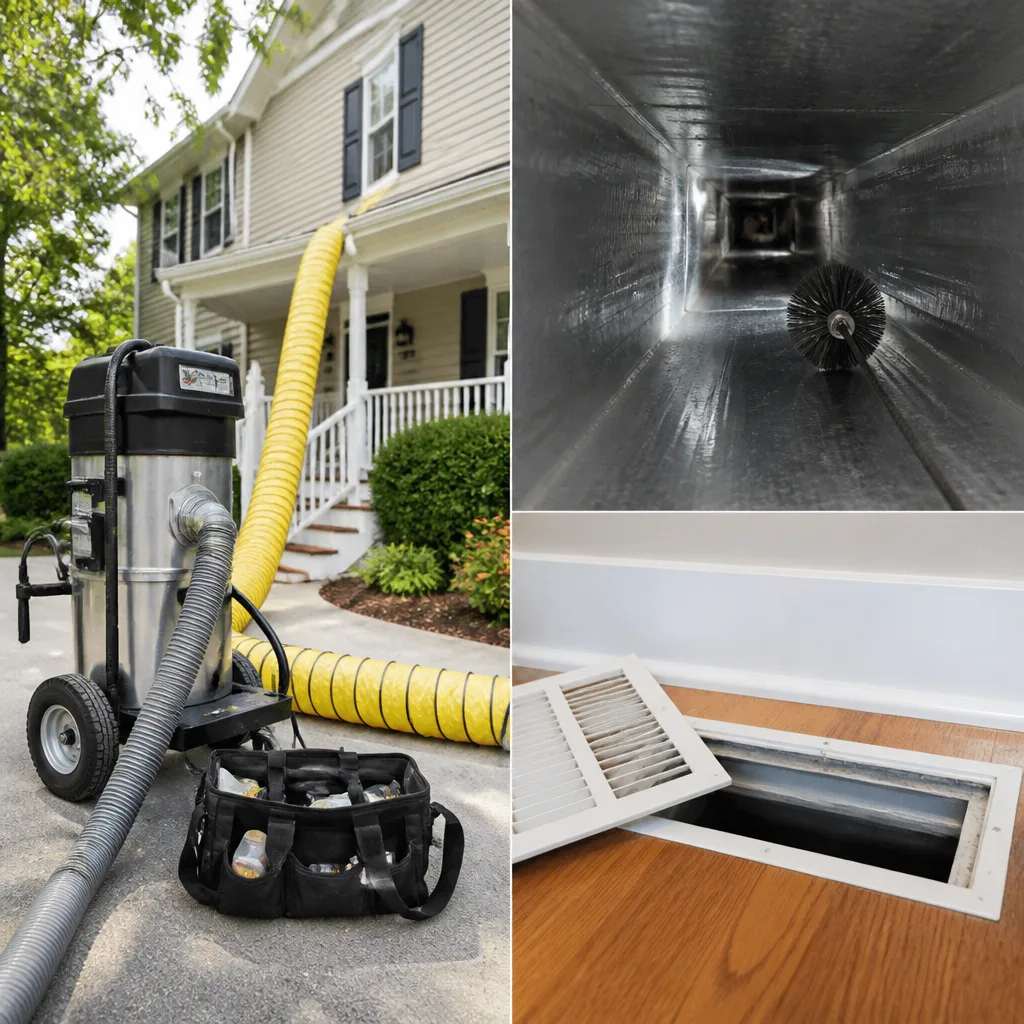 Whole-home duct cleaning
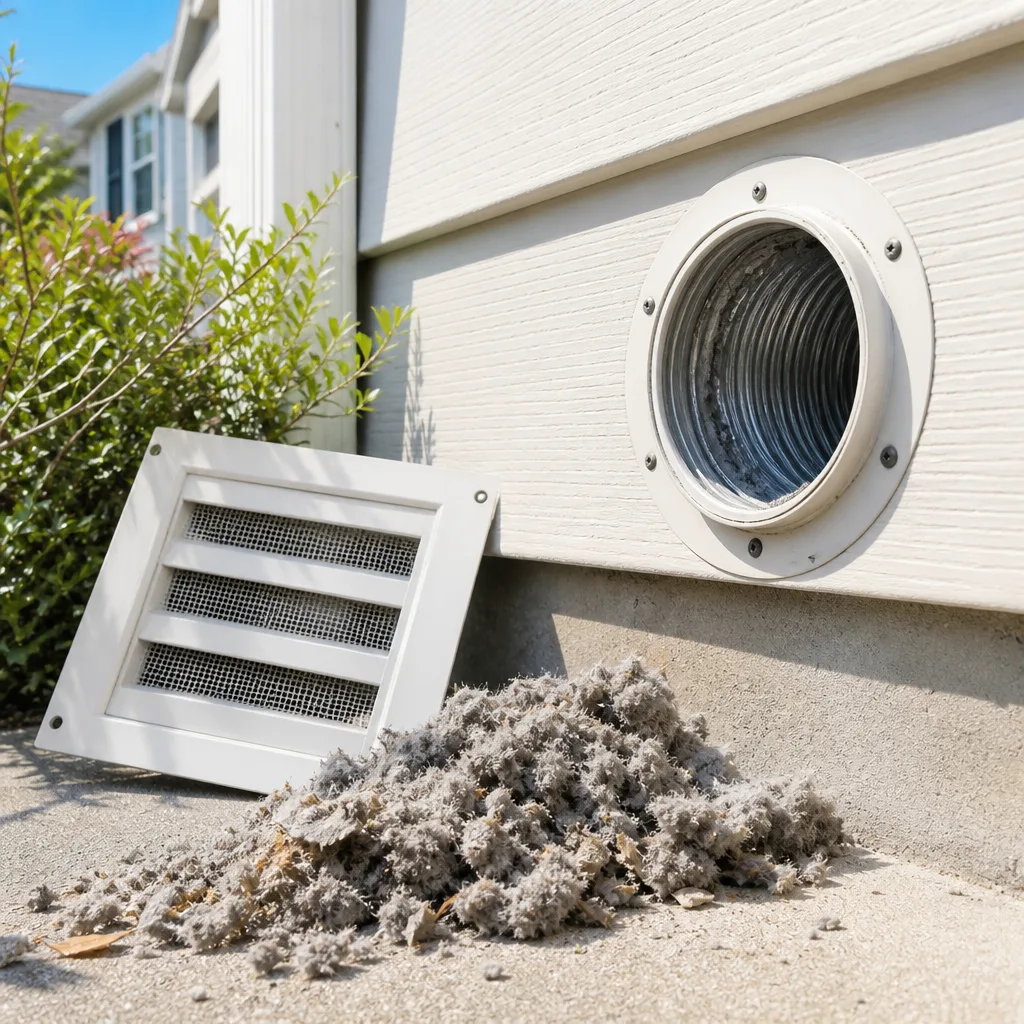 Dryer vent cleaning
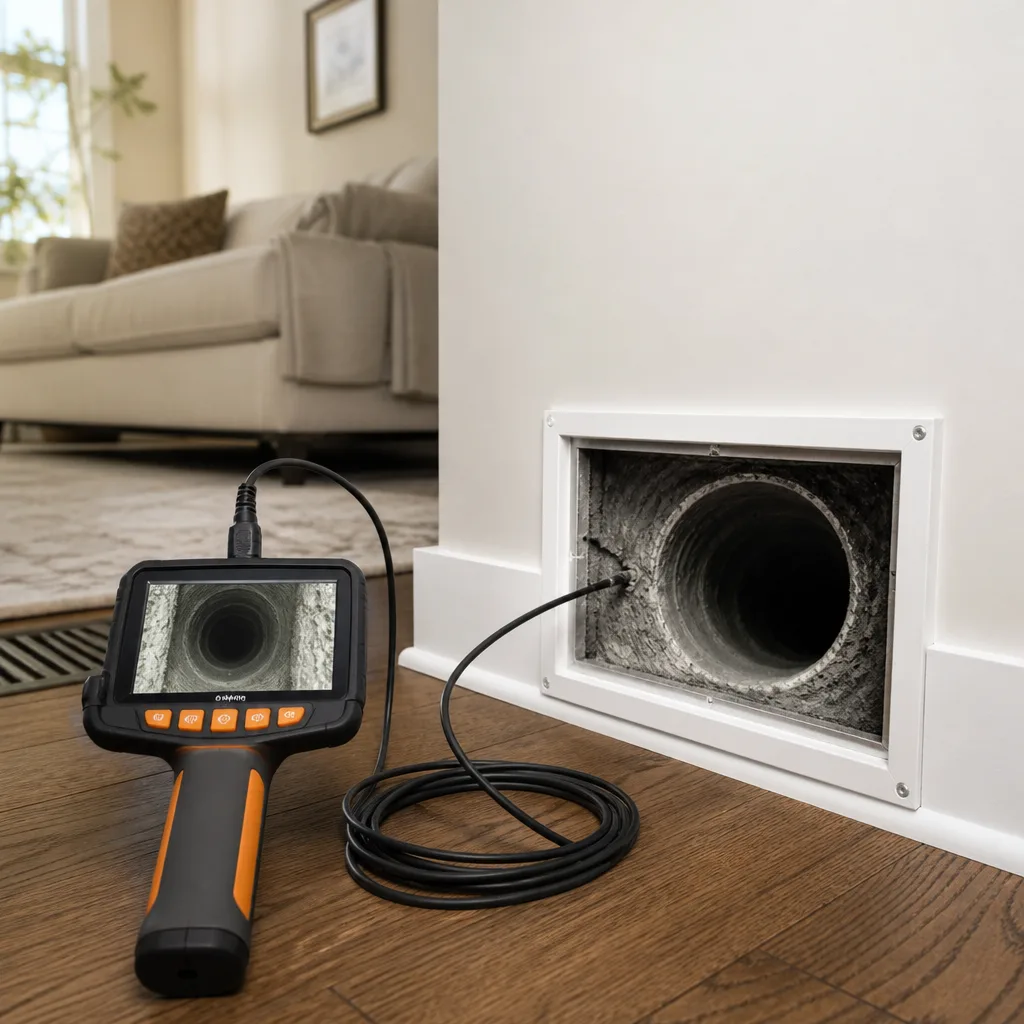 Camera inspection
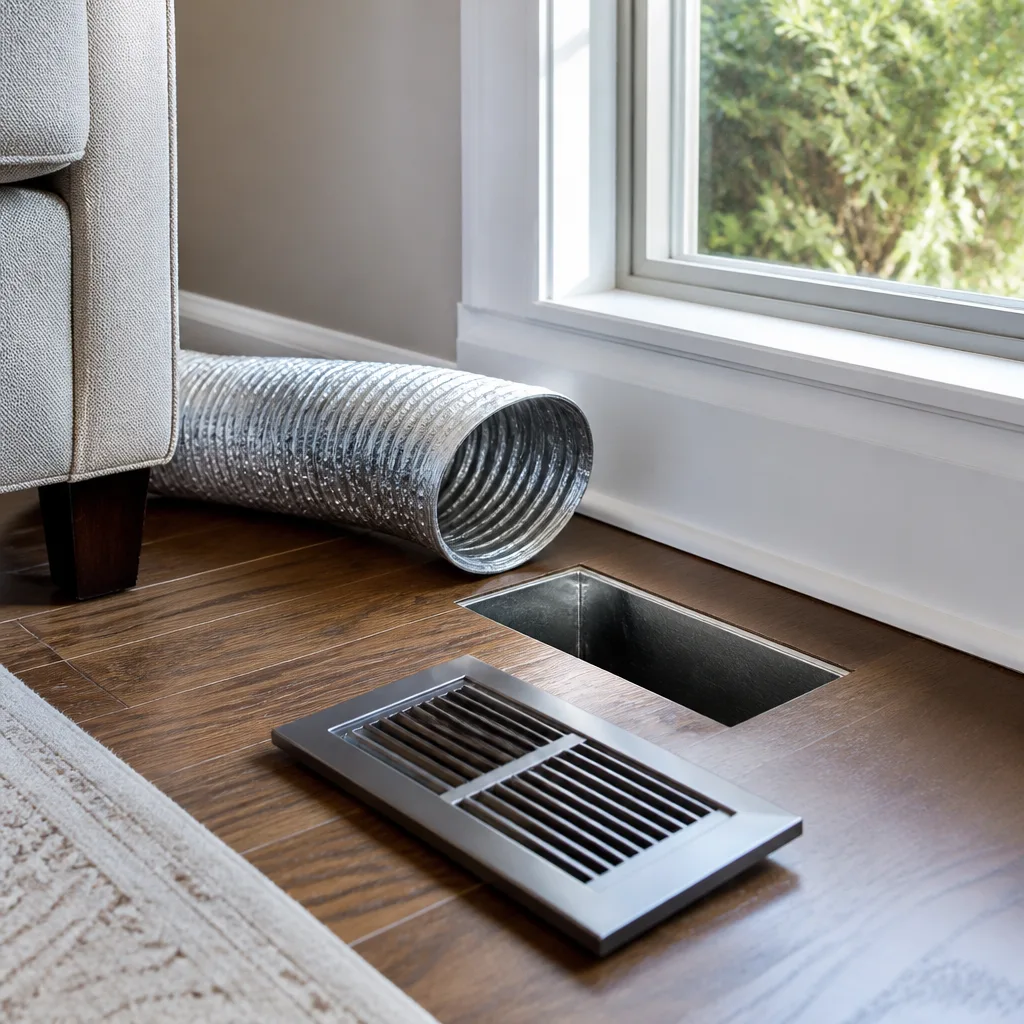 Sanitizing & deodorizing
Whole-system duct and dryer vent check with before-and-after photos - you see exactly what came out of your vents
That "$99 whole-house special" is a bait ad - the real number appears once they are in your hallway, or the "clean" is a shop-vac at the register. We photograph the inside of your ducts before and after instead.
DIY vs Professional Air Duct Cleaning: The Atlanta Homeowner’s Decision Guide
The top-selling duct cleaning kit on Amazon generates roughly one-fiftieth the suction of a truck-mounted negative-air machine. That single fact explains more about the DIY versus professional debate than any comparison chart ever could. A homeowner with a shop vac and a flexible brush can absolutely clean what they can see and reach: registers, return grilles, the first few feet of accessible ductwork. But the debris that actually affects your air quality in Atlanta, the dust caked onto the walls of your main trunk lines fifteen to thirty feet from any vent, never moves without serious extraction power. This guide explains exactly where DIY stops being useful, where our Air Duct Cleaning services become necessary, and how to make an honest call for your home without getting sold something you don’t need.
Styles & brands we work with
Quick Answer
DIY air duct cleaning works for surface-level maintenance: registers, grilles, visible flex duct, dryer vents, and filter changes. Professional cleaning becomes necessary when debris has accumulated in the main trunk lines and branch ducts beyond arm’s reach, because only negative-air extraction, meaning a machine pulling 2,000+ CFM of suction, can dislodge and remove that material. In Atlanta’s humid climate, partial DIY cleaning that stirs up settled dust without full extraction can release mold spores and allergens into your living space, leaving the air worse than before you started. For most Atlanta homes, the honest answer is a hybrid approach: handle the easy surface work yourself, and bring in professional equipment every 3 to 5 years for the deep extraction. See Seasonal Air Duct Cleaning Care for Atlanta: Year-Round Homeowner’s Guide for a maintenance calendar.
Table of Contents
- What a Homeowner Can Legitimately Do Themselves
- The Physics of Negative-Air Extraction: Why CFM Matters More Than Brushes
- The Atlanta Humidity Factor: Why Half-Cleaning Can Be Worse Than None
- What DIY Actually Costs vs Professional Cleaning in Atlanta
- How to Decide: A 5-Step Evaluation for Your Home
- How to Verify Professional Work Was Actually Done
- Common Mistakes to Avoid
- When to Call a Professional
- Frequently Asked Questions
- The Bottom Line
What a Homeowner Can Legitimately Do Themselves
Let’s be straight about this: do-it-yourself duct maintenance is not a myth. It’s a real thing with real benefits, and every homeowner in Atlanta should be doing some of it between professional cleanings. The problem comes when DIY is oversold as a replacement for professional work. It’s not a replacement. It’s a supplement, and understanding the difference saves you both money and frustration.
Here’s what you can genuinely accomplish with tools you already own or can buy for under $100:
Register and Grille Cleaning
Every register in your home, the metal or plastic covers where conditioned air enters each room, can be removed with a screwdriver in under two minutes. Most Atlanta homes have ten to twenty of them. Take them off, wash them in warm soapy water in the sink or with a garden hose outside, let them dry, and screw them back on. While each register is off, reach into the opening with a damp microfiber cloth or a dedicated duct brush and wipe the inside walls of the first six to twelve inches of ductwork. That is where visible dust bunnies collect, and you can remove them completely. This takes about five minutes per register and should be done twice a year, ideally in spring before cooling season and fall before heating season.
Return Air Grille and Filter Area
The return air grille, usually a larger vent in a hallway or central wall, pulls air back toward your HVAC system. It often has a filter behind it. Remove the grille, vacuum the filter area thoroughly, and check the filter itself. If it’s disposable and looks gray or clogged, replace it. If it’s a reusable electrostatic filter, wash it according to manufacturer directions and let it dry completely before reinstalling. A clean return area means your system isn’t fighting itself to pull air in.
Visible Flex Duct Inspection
In many Atlanta homes, particularly those built since the 1990s, some duct runs are flexible insulated tubing visible in attics, crawl spaces, or basement ceilings. You can visually inspect these yourself. Look for disconnected joints, crushed sections where something heavy was set on top, tears in the outer insulation, or sagging runs that should be supported. If you find a disconnected joint, you can often reconnect it with a zip tie or foil tape. If you find a crushed section, that’s a real airflow problem worth addressing. What you cannot do from the outside is clean the interior surfaces of that flex duct beyond the first foot or two. The debris inside is adhered to the walls, and no brush you can buy reaches more than a few feet into the run.
Dryer Vent Clearing
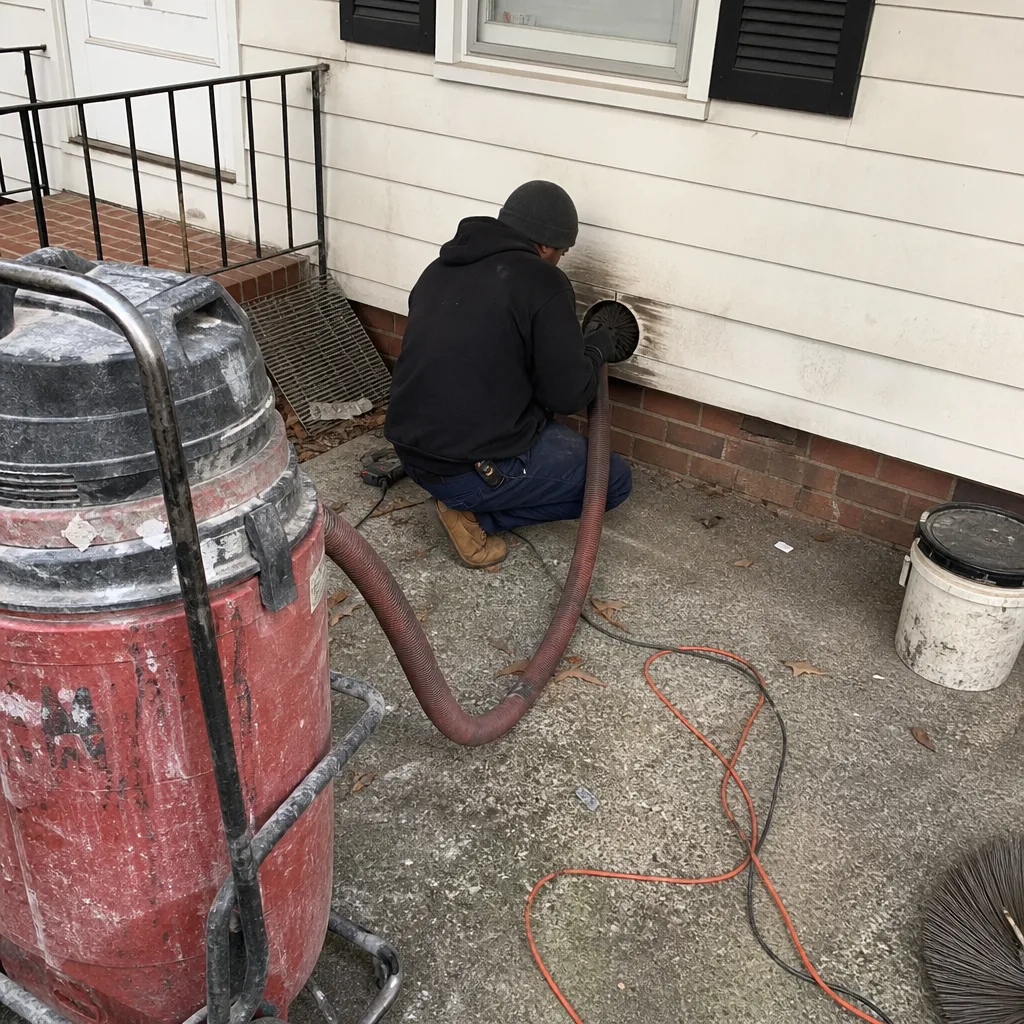
Dryer vents are a different animal from air ducts and are genuinely DIY-friendly in most cases. You can buy a dryer vent brush kit that attaches to a drill for $25 to $40. Disconnect the dryer, run the brush through the vent pipe from both ends where accessible, and then reconnect everything. Be meticulous about the reconnection: a loose dryer vent joint is a fire hazard. For most single-story Atlanta homes with a short, straight dryer vent run, this is a 30-minute job and completely appropriate to DIY. If your dryer vent runs through a wall, up through a roof, or more than ten feet to the exterior, professional Dryer Vent Cleaning in Atlanta becomes worth the money, because those long runs need the full-length agitation and extraction that only professional equipment delivers.
Filter Maintenance
This is the highest-impact DIY task you can do, and it’s not even close. Your HVAC filter’s entire job is to catch airborne particles before they enter your system and coat your ductwork. A clean, properly-rated filter means less debris enters your ducts in the first place. Change or clean your filter every 30 to 90 days depending on pets, dust levels, and season. Atlanta’s pollen season, which runs roughly March through May, clogs filters faster than any other time of year. If you do nothing else on this list, do this.
Here is the key point about DIY duct work: everything above deals with surfaces you can see and reach. Your arm, with a brush on the end, extends about three feet into a duct. The average Atlanta home has 40 to 80 linear feet of ductwork, most of it in walls, floors, ceilings, and attic spaces you cannot access. The material that settles in those hidden runs, the fine dust, pet dander, pollen fragments, and construction debris, stays there until something with serious extraction power pulls it out. That’s where the physics comes in.
The Physics of Negative-Air Extraction: Why CFM Matters More Than Brushes
Most people think of duct cleaning as brushing. You see the brush spinning in the marketing videos, and it looks like the brush is doing the work. The brush is doing some work, yes, but it’s doing the easy part. The brush dislodges debris from the duct wall. The extraction system is what removes that debris from your home. Without extraction, brushing is just rearranging dust.
The technical term is negative-air extraction, and here is the plain-English explanation: a high-powered vacuum unit creates suction at one end of the duct system, pulling air through the ducts toward the vacuum at a rate measured in cubic feet per minute, or CFM. Professional truck-mounted or trailer-mounted units, like the Nikro negative-pressure machines used by Kestrel Air Duct Atlanta, typically pull between 2,000 and 5,000 CFM. A standard shop vac pulls between 40 and 100 CFM. The Amazon duct cleaning kit you attach to your drill? It has no extraction at all. It’s a brush on a flexible rod. It breaks debris loose from the duct walls and leaves it sitting there, waiting to re-settle or blow into your living room the next time the system cycles on.
Why does CFM matter so much? Because air moving through a duct creates friction against the duct walls. To lift a particle off the wall and carry it out of the system, the air velocity at the wall surface has to exceed the particle’s settling velocity. In a 6-inch or 8-inch round duct, that requires a lot of air moving through. A shop vac cannot produce that velocity across a 30-foot duct run, period. It does not matter how long you hold the hose in there. The physics does not change.
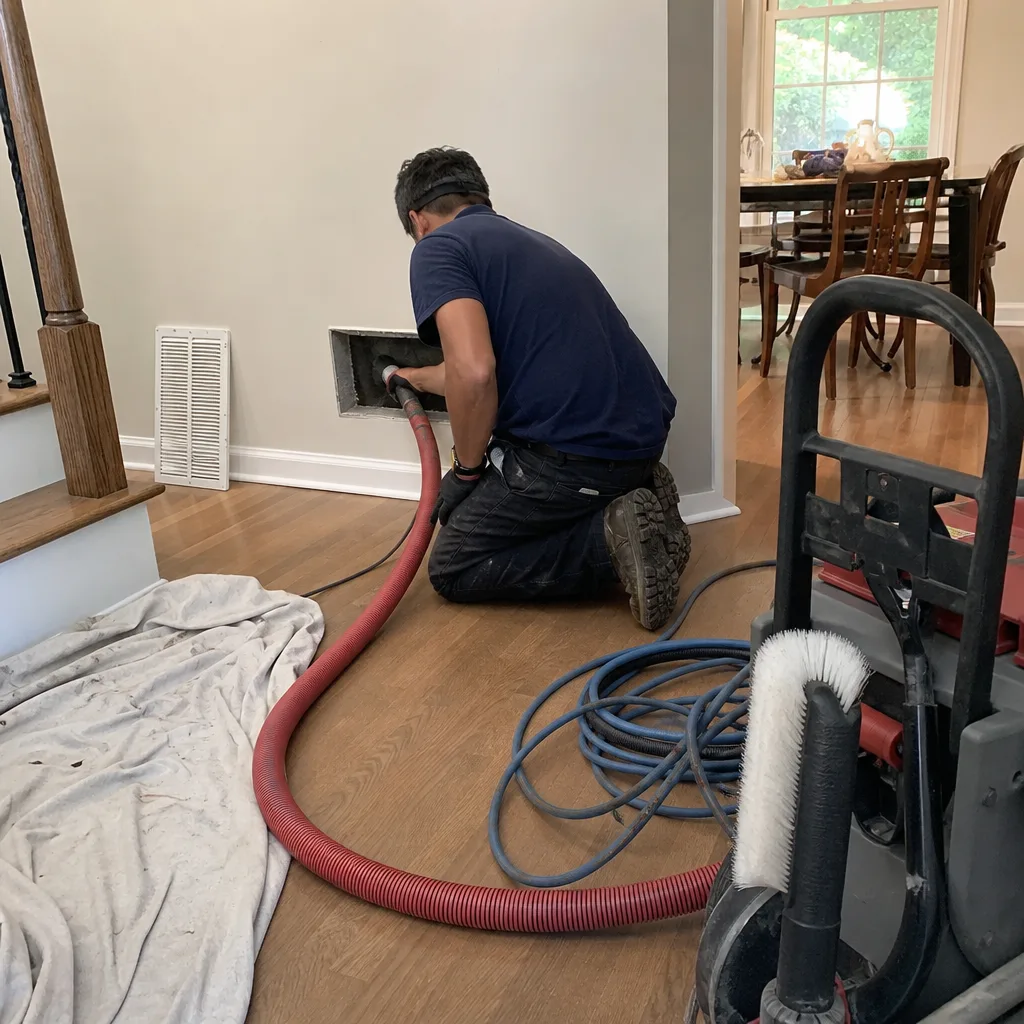
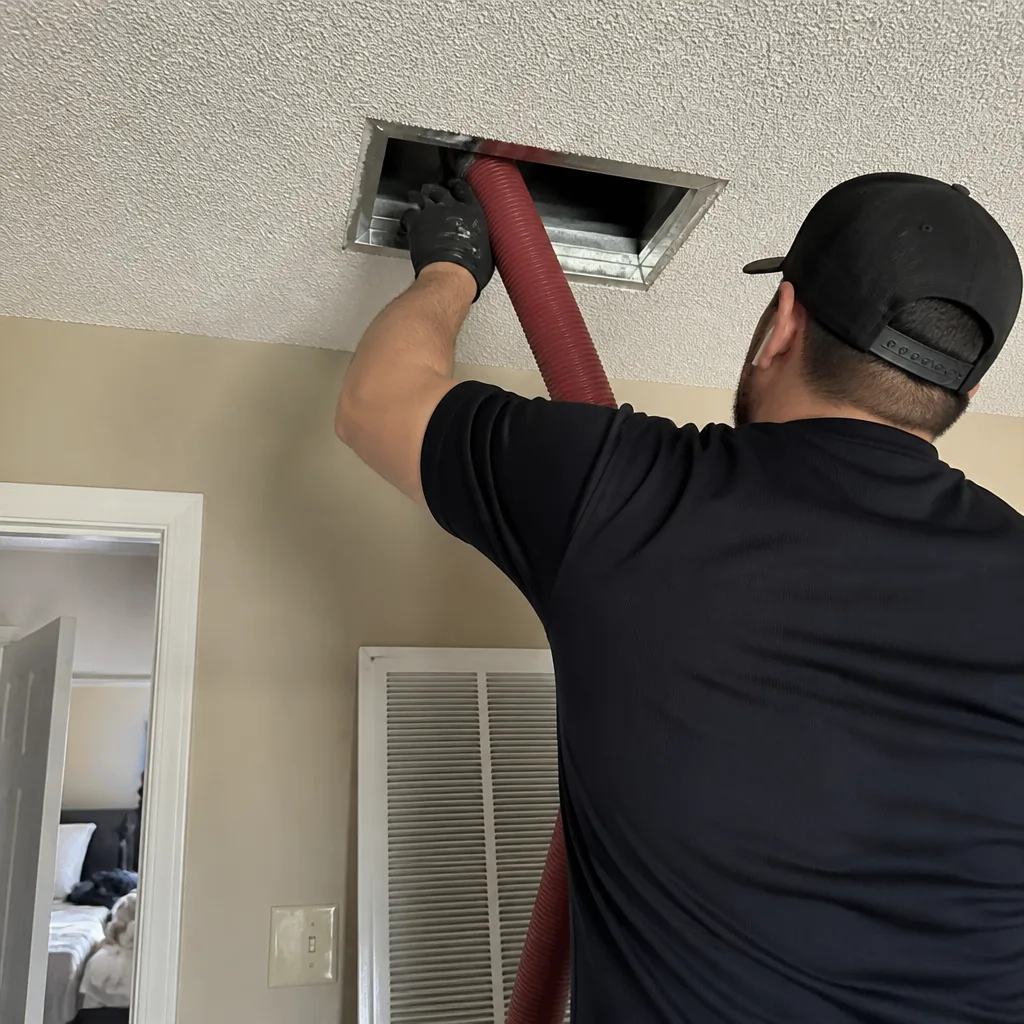
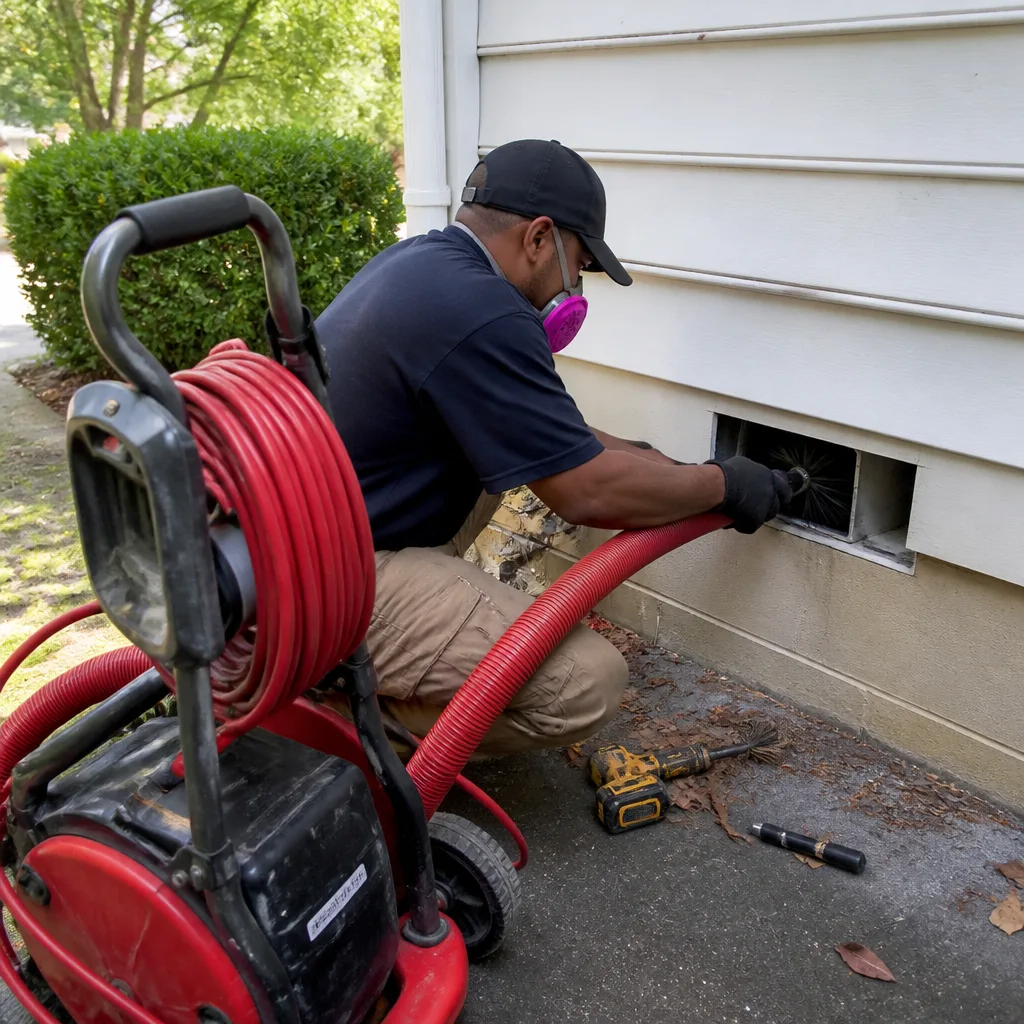
Professional cleaning equipment solves this with a two-part approach. First, a rotary brush system, Rotobrush being the most common brand, agitates the duct walls mechanically. The brush heads spin rapidly, physically scraping the debris layer off the metal or flex duct surface. Second, at the same time, the negative-air unit pulls air through the system at high CFM, creating enough velocity to carry those dislodged particles backward through the duct and out of the house entirely. The brush dislodges. The vacuum extracts. Both steps are necessary, and the vacuum step is the one that requires equipment a homeowner simply does not have.
There is another piece to this that matters especially in Atlanta: HEPA filtration. When a professional negative-air unit pulls 2,000 CFM of debris-laden air out of your ducts, that air has to go somewhere. Cheap or improvised extraction methods vent that air outside, which is fine for the debris but not great for your neighbor’s window or your own exterior walls. Professional units pass the exhaust through high-efficiency filters, including HEPA units from manufacturers like Abatement Technologies, that capture particles down to 0.3 microns before the air is released. That’s the difference between cleaning your ducts and redistributing their contents across your attic.
Here’s the practical takeaway from all this physics: agitation without extraction is incomplete. Extraction without agitation is incomplete. You need both, done simultaneously, with enough CFM to actually move debris out of the longest runs in your system. That is not a sales pitch. That is how fluid dynamics works.
The Atlanta Humidity Factor: Why Half-Cleaning Can Be Worse Than None
Atlanta’s climate creates a specific risk that homeowners in dry climates never have to think about. Our average relative humidity runs between 55% and 75% most of the year. Summer dew points regularly sit in the low 70s. That means the inside of your ductwork is never truly dry. A thin film of moisture, often invisible, coats the metal and flex duct surfaces. Dust and organic particles settle onto that film and stick. Over time, with the right conditions, microbial growth can begin in that damp, dark environment. It does not happen in every home, but the conditions exist in many.
Now consider what happens when you run a brush through that system without proper extraction. You dislodge years of accumulated material from the duct walls. Some of it gets captured by your shop vac at the register opening. Most of it doesn’t. The dislodged particles float into the airstream, and the next time your system cycles on, that air, now carrying dust, pollen fragments, and potentially mold spores, blows directly into your living space through every register in the house.
We have seen this specific scenario play out in Atlanta homes more times than we can count. A homeowner spends a Saturday running a drill-attached brush through their registers, feels good about the visible dust they collected, and then spends the following week sneezing, with worse air quality than they had before the project. The moisture that was safely bound up on the duct walls is now aerosolized. The particles that were settled are now airborne. The system is circulating material that had been effectively out of the picture.
This is why the sequence of steps matters so much in professional cleaning. The extraction unit runs continuously from the moment the agitation begins until the system is sealed back up. Dislodged particles have a fraction of a second of airborne time before they are pulled backward through the duct and into the filtration system. There is no window where loosened debris can migrate into the living space. That continuous negative pressure is the safety mechanism, and it is the thing no DIY setup can replicate.
For Atlanta homeowners specifically, the humidity factor argues for a conservative approach to DIY. Clean what you can clean completely: registers, grilles, visible surfaces, the return area. If you can see the bottom and sides of a duct run from the register opening and can reach them with a damp cloth, clean them. But do not run a brush blindly into ductwork you cannot see, in a humid system, without extraction. That’s the one DIY move that can genuinely make things worse.
What DIY Actually Costs vs Professional Cleaning in Atlanta
The financial comparison between DIY and professional duct cleaning is less lopsided than most people assume, especially when you account honestly for equipment, time, and outcomes. Let’s look at real numbers for the Atlanta market.
DIY Cost Breakdown
- Drill-attached duct brush kit: $25 to $45 on Amazon or at Home Depot. These include a flexible rod, assorted brush heads, and sometimes a dryer vent attachment.
- Shop vac rental or purchase: If you already own one, $0. If not, a decent shop vac runs $50 to $100, and a HEPA filter cartridge for it adds another $30. Renting a professional-grade HEPA vac from a tool rental shop in Atlanta runs about $40 to $60 per day.
- Register and grille cleaning supplies: $10 for dish soap, microfiber cloths, and a screwdriver set if you don’t have them.
- Replacement filters: $5 to $20 per filter depending on MERV rating and size. Budget two per year if you’re maintaining properly.
- Your time: At Atlanta’s median household income, a full weekend of DIY duct work represents roughly $250 to $400 of your time at a reasonable hourly valuation.
Total realistic DIY cost for a thorough surface-level cleaning: $135 to $350, plus a weekend, and you still haven’t touched the main trunk lines or branch ducts.
Professional Cleaning Cost in Atlanta
Professional Air Duct Cleaning in Atlanta for a typical single-family home, meaning 1,500 to 2,500 square feet with one HVAC system and 10 to 15 vents, runs between $350 and $650 for a complete job. Larger homes with multiple systems run higher. The price includes agitation of all accessible ducts, continuous negative-air extraction, HEPA filtration at the exhaust point, and before-and-after documentation of the work.
The honest comparison is not $75 of Amazon equipment versus $500 of professional service. It’s $300 of DIY effort that addresses surface-level debris versus $500 of professional work that removes material from the entire system. The value gap narrows considerably when you count your own labor at a real rate and then factor in what the DIY job does not accomplish. And in Atlanta, where our humidity compounds the consequences of incomplete cleaning, the risk-adjusted value of professional work tilts further in its favor.
One more consideration: the 365-Day Done Right Promise that Kestrel Air Duct Cleaning puts in writing on every job. If the work falls short within the guarantee period, Kestrel returns and makes it right at no charge. That’s a written obligation, not a promise made during a sales call. No DIY project comes with a warranty, because there’s no one to call when you realize the job missed something. You paid with your weekend, and if it didn’t work, you pay with another weekend. The professional guarantee changes that math.
How to Decide: A 5-Step Evaluation for Your Home
You don’t need a salesperson to tell you whether your ducts need professional attention. You can evaluate your own system with a flashlight, a screwdriver, and about 30 minutes. Here’s the process we recommend to Atlanta homeowners, and it’s the same process we use when deciding whether a home genuinely needs our equipment or whether the homeowner’s own maintenance has been sufficient. For a deeper walkthrough, read How to Hire a Air Duct Cleaning Contractor in Atlanta: A Step-by-Step Guide.
- Check the age of the home and the history of the ducts. If your Atlanta home was built before 2000 and has never had a professional duct cleaning, or you bought it recently and have no documentation of past cleanings, there is almost certainly accumulated debris in the trunk lines. The previous owners may have been meticulous about filters, but you have no way to know that. Assume the worst and inspect accordingly.
- Remove one register in the hallway or main living area and look inside with a flashlight. Wipe the interior wall of the duct with a white paper towel. If the towel comes out gray or black, there is a visible debris layer that extends beyond what you can reach. If it comes out clean or nearly clean, your ducts may genuinely be in acceptable condition.
- Check the return air side. Remove the return grille and look at the filter. If the filter is clogged, dusty, or gray, the air entering your system is carrying particulate that is now settling in your ducts. Note whether the return duct itself is visibly dusty beyond the filter area. A dirty return plenum with a clean filter slot suggests debris is entering the system from somewhere else, possibly a gap or leak.
- Consider the occupants. Atlanta homes with pets, smokers, recent renovations, or residents with allergies, asthma, or respiratory conditions reach the professional-cleaning threshold faster than others. Construction dust from a renovation is particularly stubborn: drywall dust is fine enough to become airborne easily and coarse enough to clog filters quickly. If you’ve renovated in the past three years and never had the ducts cleaned afterward, that dust is in your system.
- Do the surface-level DIY work first, then reassess. Clean every register and grille, replace the filter, wipe down the accessible surfaces. Wait a week. If you notice reduced dust accumulation on furniture, better airflow from vents, or less allergy symptoms, your maintenance was sufficient and you can defer professional cleaning. If nothing changes, the problem is in the ductwork beyond your reach, and that’s your answer.
This five-step process prevents two common errors: paying for professional cleaning when your system was fine, and assuming DIY was enough when the system actually needs extraction. Both errors are expensive in different ways. The evaluation only costs you an afternoon.
How to Verify Professional Work Was Actually Done
The air duct cleaning industry has earned its skeptical reputation. Too many companies offer a low teaser price, then discover “mold” or “rodent damage” once the van is in your driveway, doubling or tripling the invoice. That bait-and-switch pattern is exactly why Kestrel Air Duct Cleaning operates under the Kingswell Guarantee, which puts a written price in the customer’s hands before a single vent is touched. The price does not change at the door. No exceptions.
But beyond the price, you should also know how to verify that the work itself was actually performed. Here’s what a legitimate professional should show you during and after the job:
Before-and-After Photos
Any professional duct cleaning company should take photos of your duct interiors before the job begins and after it’s complete. Not stock photos, your actual ducts. The before photos should show the debris layer on the duct walls. The after photos should show clean metal or flex duct surfaces. Kestrel technicians document every job this way, so you can see exactly what changed. If a company refuses to show you photos of your own ducts, ask yourself why.
Live Access During the Job
You should be able to watch the work happening. Not every company allows this due to liability concerns around homeowners in attics or crawl spaces, but you should at least be able to see the equipment running: the negative-air unit connected to your system, the agitation equipment operating, and the airflow moving through the ducts. A legitimate operation has nothing to hide.
The Debris Pile
After the extraction runs, ask to see the collected material. The negative-air unit captures debris in a collection chamber or filter bag before the air is exhausted. A genuinely dirty system produces a visible pile of gray, dusty, sometimes startling material. If the system was clean, there won’t be much. Either way, the evidence should match the assessment.
Post-Cleaning Airflow Check
After the job, every register should deliver noticeably stronger airflow. The technician should walk the house with you, holding a hand at each vent, confirming that air is moving properly. If a register feels weaker after the cleaning than before, something was disconnected, and that’s a call-back under the guarantee.
The Kingswell Way, which is the operational code Kestrel technicians follow, includes four commitments on every job: say the price, show up in the window we gave, leave the place cleaner, and put the guarantee in writing. Those four commitments exist because they’re the things homeowners in Atlanta tell us were violated by previous companies. You should expect every one of them from any contractor you hire, and if a company balks at any of them, keep looking.
Common Mistakes to Avoid
- Assuming a drill brush cleans the whole system. A drill-attached brush agitates maybe the first three feet of each duct run. The other 90% of the system remains untouched. Thinking you cleaned your ducts because you cleaned your registers is like washing the doorknobs and believing you cleaned the whole house.
- Stirring up debris without extraction in Atlanta’s humidity. This is the mistake we described earlier, and it bears repeating: loosening moist, settled material without continuous negative pressure releases particles into your living space. The sequence matters. Extraction must run while agitation happens, not after.
- Falling for the $49 whole-house coupon. Low teaser prices in the Atlanta duct cleaning market are consistently the opening move of a bait-and-switch. The van arrives, the tech “discovers” a problem, and the real price is $900. A legitimate Atlanta duct cleaning company will quote you an honest range over the phone and hold to it in writing before work begins.
- Ignoring the dryer vent. Dryer vents and air ducts are different systems and require different approaches. A company that offers to clean your air ducts but doesn’t mention the dryer vent may not be thorough. A homeowner who cleans their air ducts but ignores a clogged dryer vent is addressing air quality while leaving a fire hazard in place.
- Using a shop vac to “clean” from one register. As the physics section explained, a shop vac’s CFM is insufficient to pull debris through long duct runs. Connecting one to a register and running it for an hour accomplishes almost nothing in the main lines. It’s not that you’re not trying hard enough. The machine can’t do the job.
- Believing duct cleaning is a scam because one company ripped you off. The bad actors in this industry have done real damage to consumer trust. But the existence of bait-and-switch operators doesn’t mean the service itself has no value. It means you should demand written pricing, before-and-after photos, and a written guarantee. The companies that provide those things are the ones worth hiring.
When to Call a Professional
You’ve done the register cleaning, the filter changes, the visual inspections. You’ve assessed your system honestly. At what point does the equation tip toward professional equipment? Here are the specific scenarios where we recommend bringing in a negative-air extraction unit: visible debris on the interior duct walls beyond what you can reach, a renovation in the past three years that produced drywall dust, a home with multiple pets or smokers, residents with persistent allergies or respiratory symptoms that don’t improve with clean filters, airflow from vents that has noticeably decreased over time, or a home that has simply never had a professional cleaning in its history. If any of those apply, the problem is in the trunk lines, and no amount of register cleaning will fix it. Kestrel Air Duct Atlanta offers free estimates in Atlanta, and the written price is in your hands before any work begins. Call (470) 378-1006.
Frequently Asked Questions
Professional air duct cleaning in Atlanta for a typical single-family home runs between $350 and $650, depending on home size, number of HVAC systems, and accessibility of the ductwork. Kestrel Air Duct Cleaning provides a written price before any work begins, and that price is the price, no door-step revisions. Call (470) 378-1006 for a free estimate specific to your home.
You can clean the surfaces you can reach: registers, grilles, return air areas, and the first few feet of ductwork from each opening. A shop vac cannot generate the CFM needed to extract debris from main trunk lines and branch ducts, so the majority of the system remains untouched by DIY methods regardless of effort.
For most Atlanta homes, professional cleaning every 3 to 5 years is sufficient, with more frequent service appropriate for homes with pets, smokers, recent renovations, or allergy-sensitive occupants. Between professional cleanings, consistent filter changes and register cleaning stretch that interval significantly.
Low-priced duct cleaning quotes in Atlanta typically come from bait-and-switch operators who plan to raise the price once the technician arrives and “finds” additional problems. Legitimate companies quote an honest range upfront and hold to it in writing. Kestrel’s Kingswell Guarantee exists specifically because this pattern is so common in our market.
Ask for before-and-after photos of your actual duct interiors, watch the negative-air extraction unit running during the job, inspect the collected debris afterward, and verify airflow at each register after completion. A company operating under a written guarantee, like Kestrel’s 365-Day Done Right Promise, has a financial incentive to do the work correctly the first time.
The primary risk isn’t physical injury, though working in attics and around HVAC equipment carries standard safety concerns. The real Atlanta-specific risk is air quality: agitating moist, settled debris without continuous extraction can aerosolize dust and potential mold spores into your living space. If you do DIY work, stick to surface cleaning you can complete without loosening debris in unreachable duct runs.
The Bottom Line
The DIY versus professional duct cleaning decision comes down to physics, not effort. You can clean what you can reach, and that surface-level maintenance genuinely matters. But the air quality issues in your Atlanta home live in the trunk lines and branch ducts beyond arm’s reach, where debris settles and, in our humidity, sticks. Removing that material requires negative-air extraction at a CFM level no homeowner equipment achieves. The honest approach for most Atlanta homeowners is a hybrid: maintain your system diligently yourself, use professional equipment every few years for the deep extraction, and demand written pricing, documentation, and a guarantee from any company you hire. That’s the whole decision, without the sales pressure. For more guides & resources, visit our blog.
Written by Dale Whitmore, Owner at Kestrel Air Duct Atlanta, serving Atlanta since 2004.
See the difference
 Before
 After
After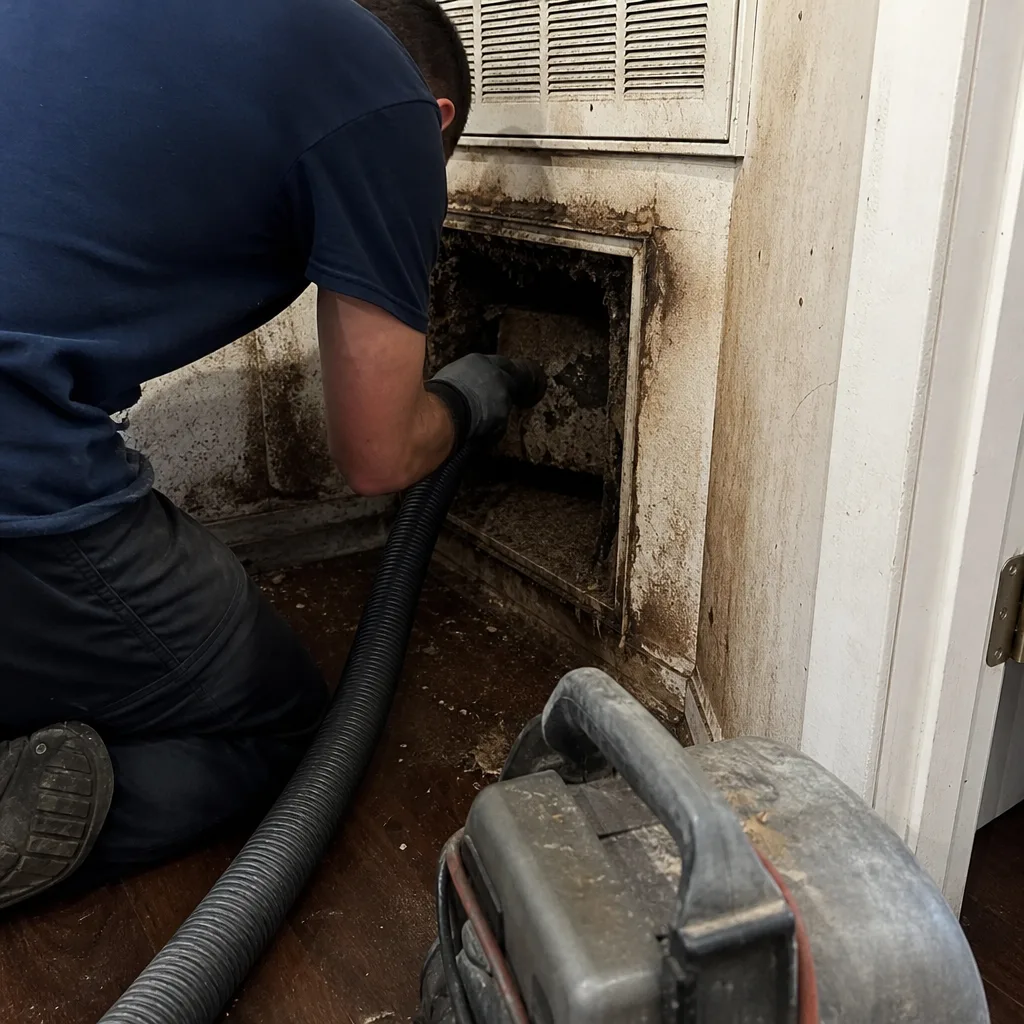 Before
 After
After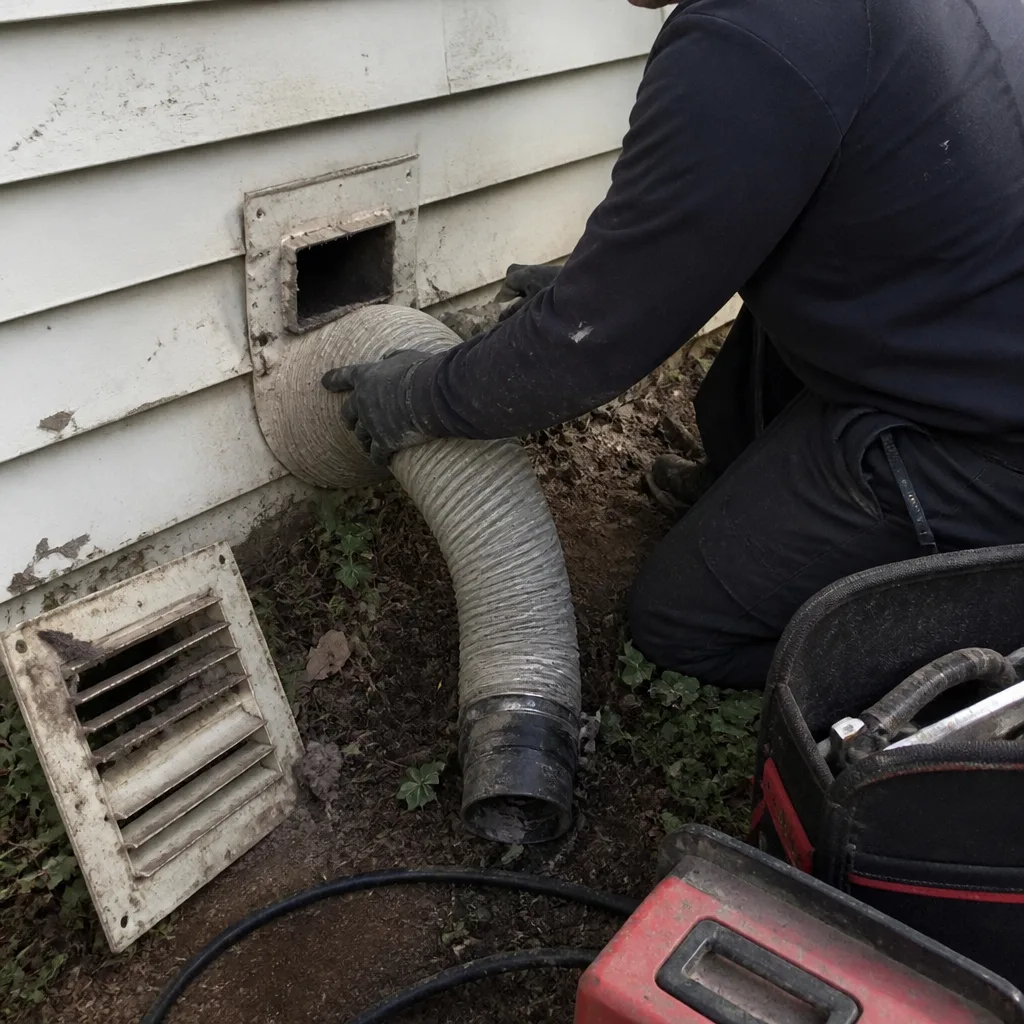 Before
 After
After