
Last updated October 15, 2026
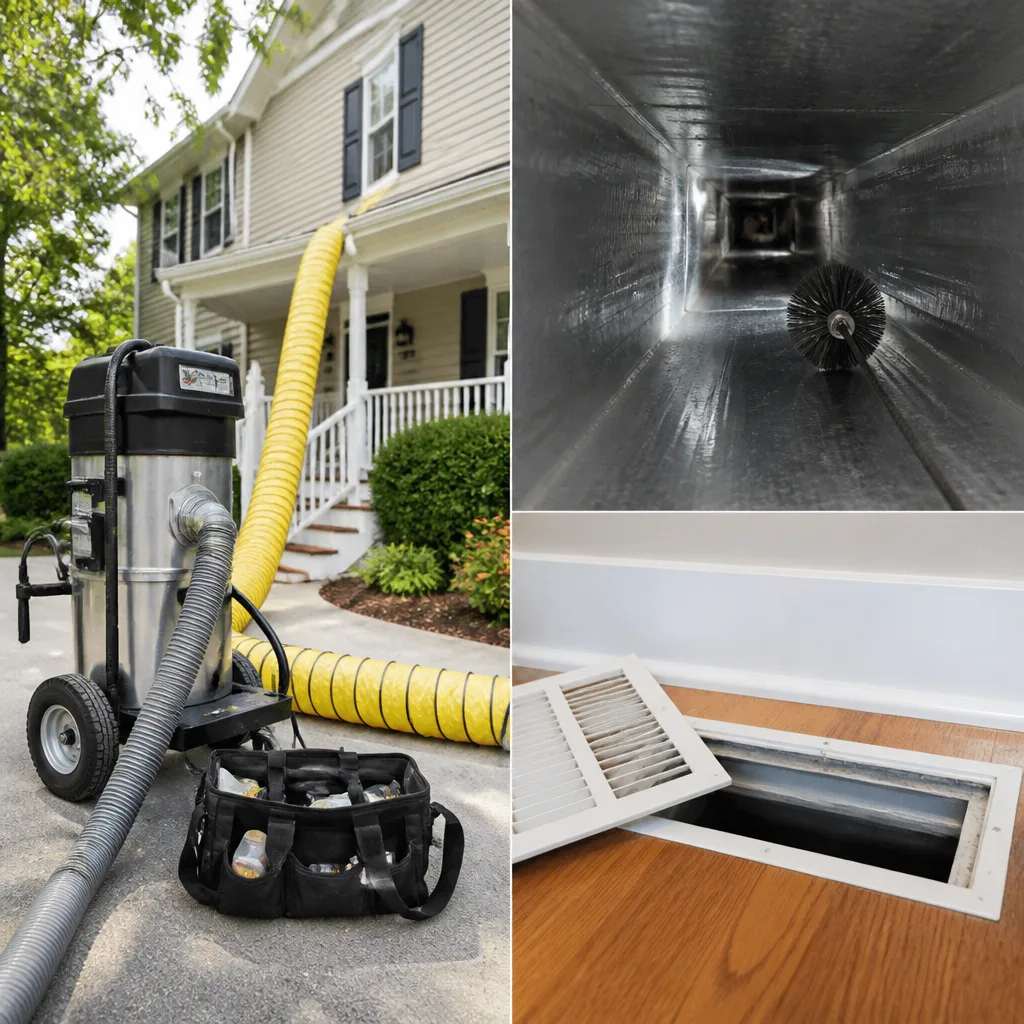 Whole-home duct cleaning
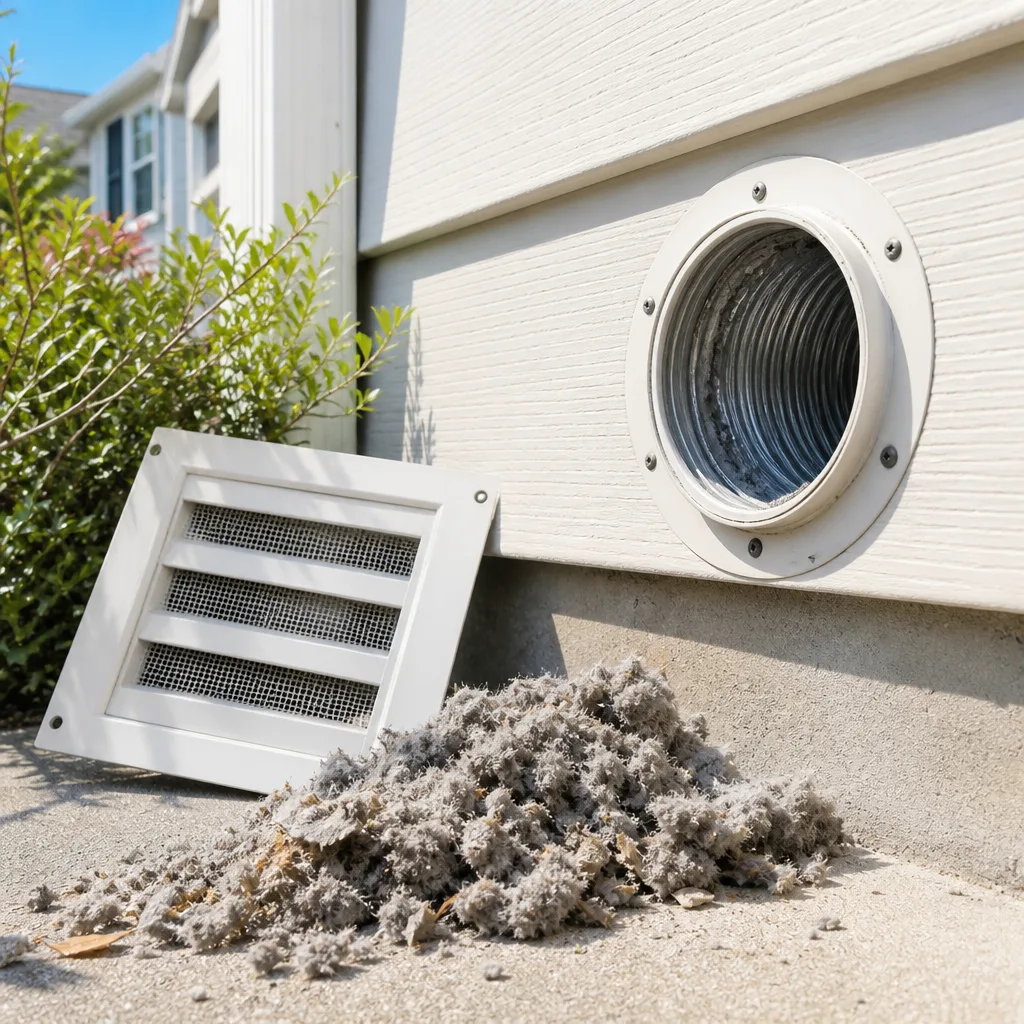 Dryer vent cleaning
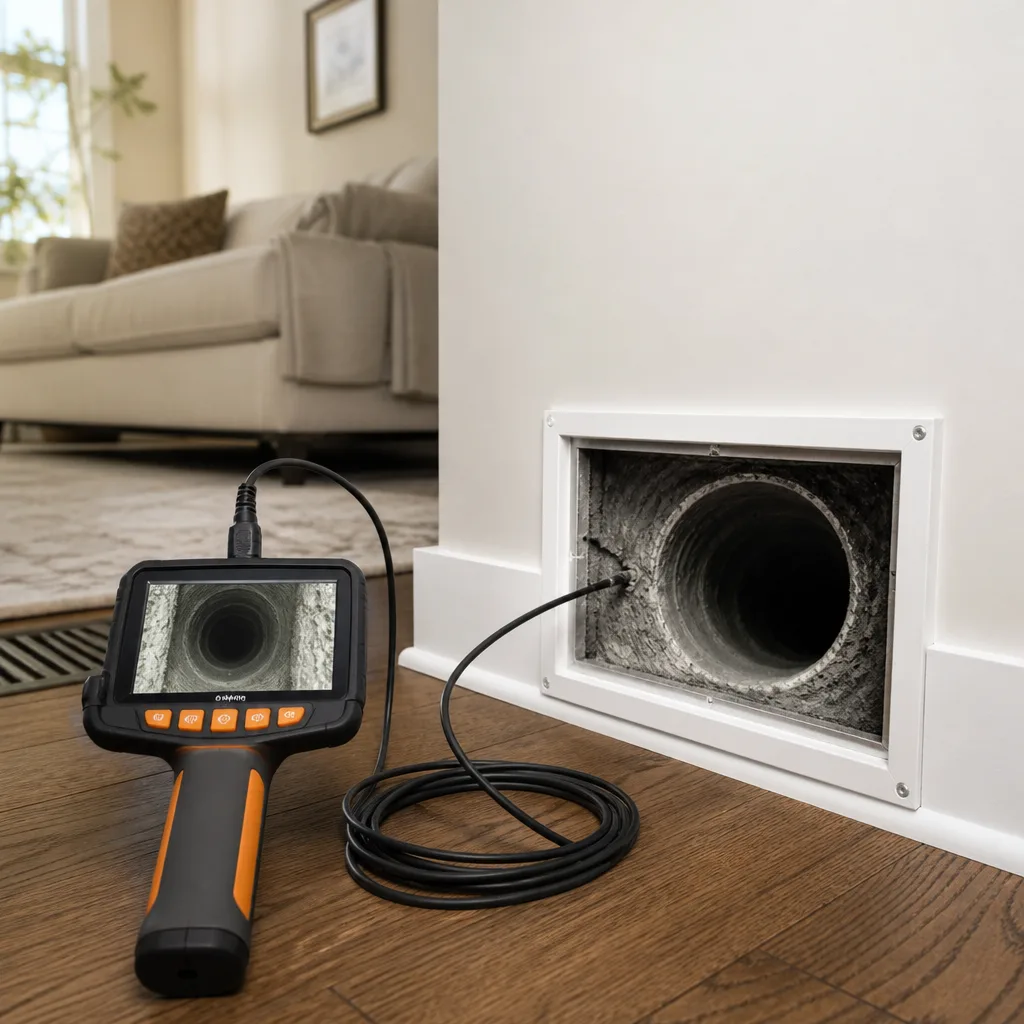 Camera inspection
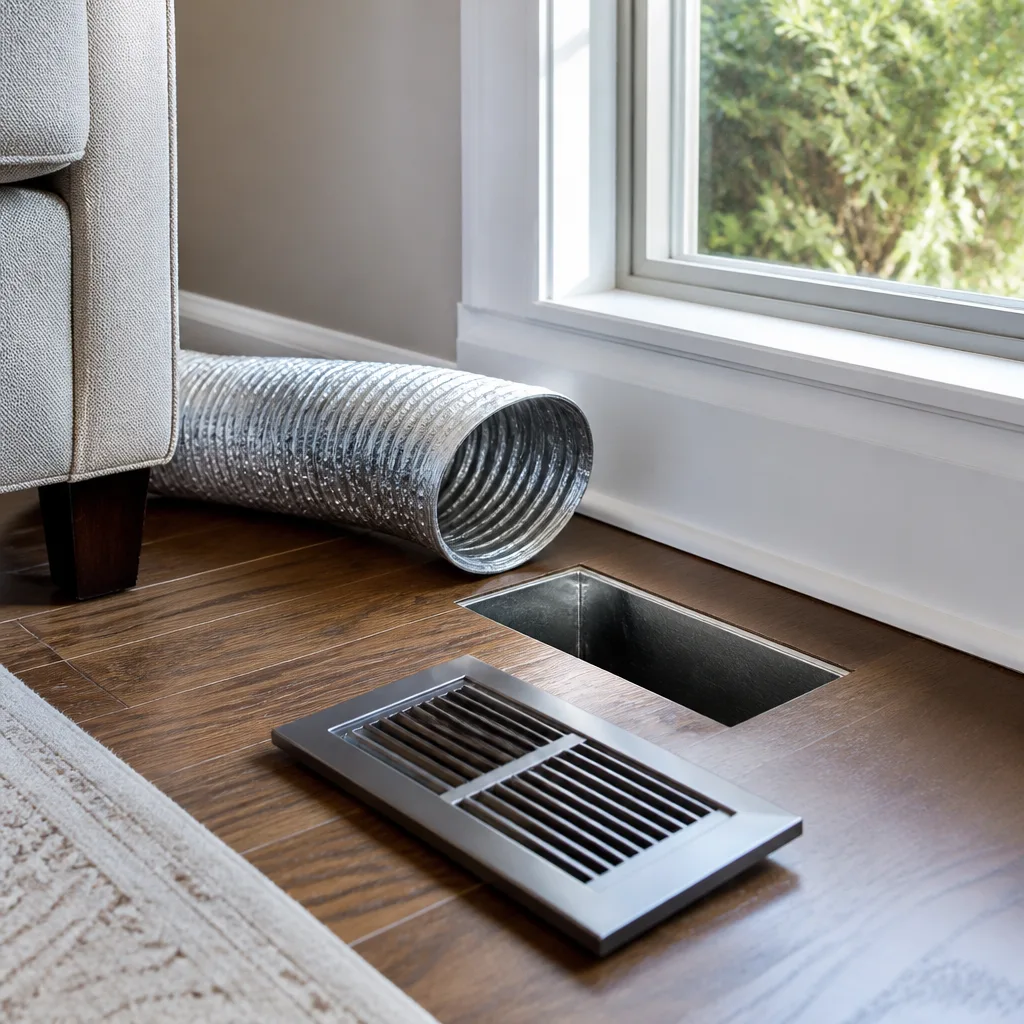 Sanitizing & deodorizing
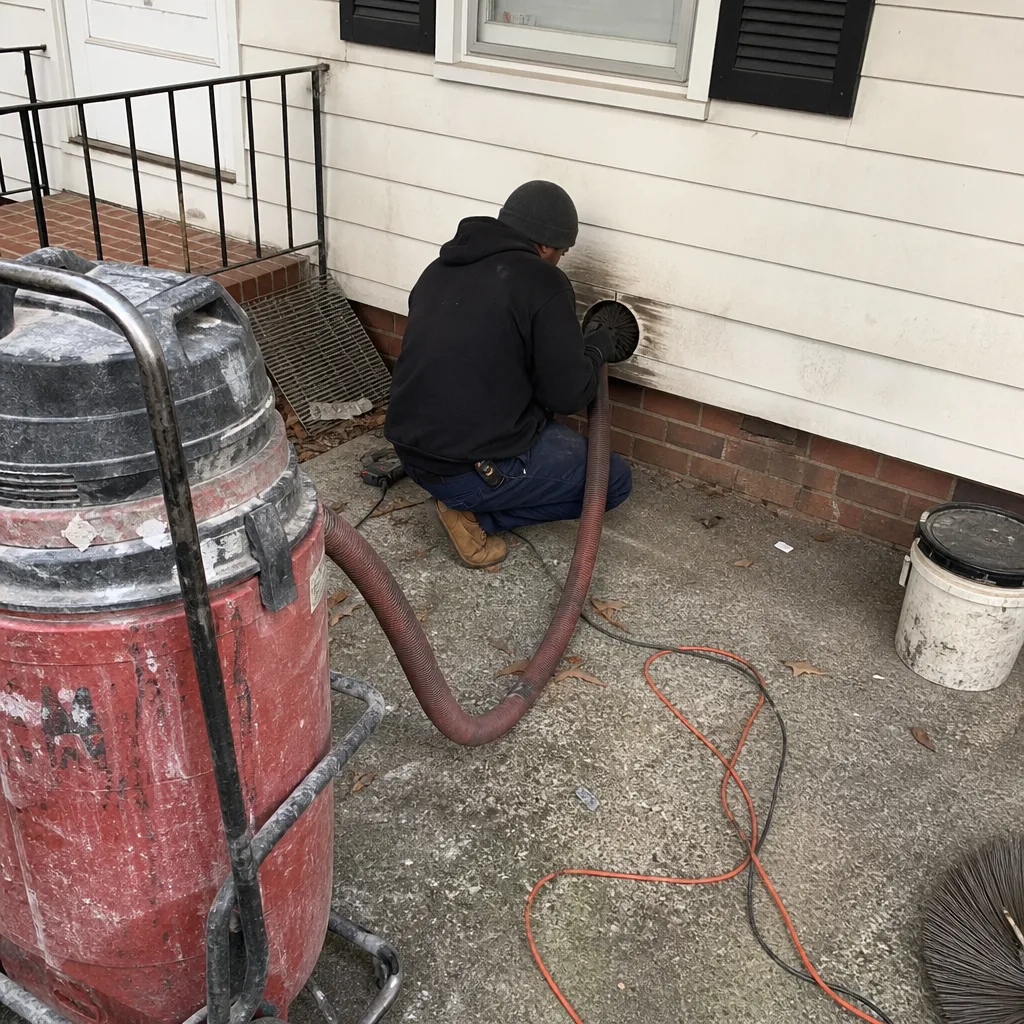
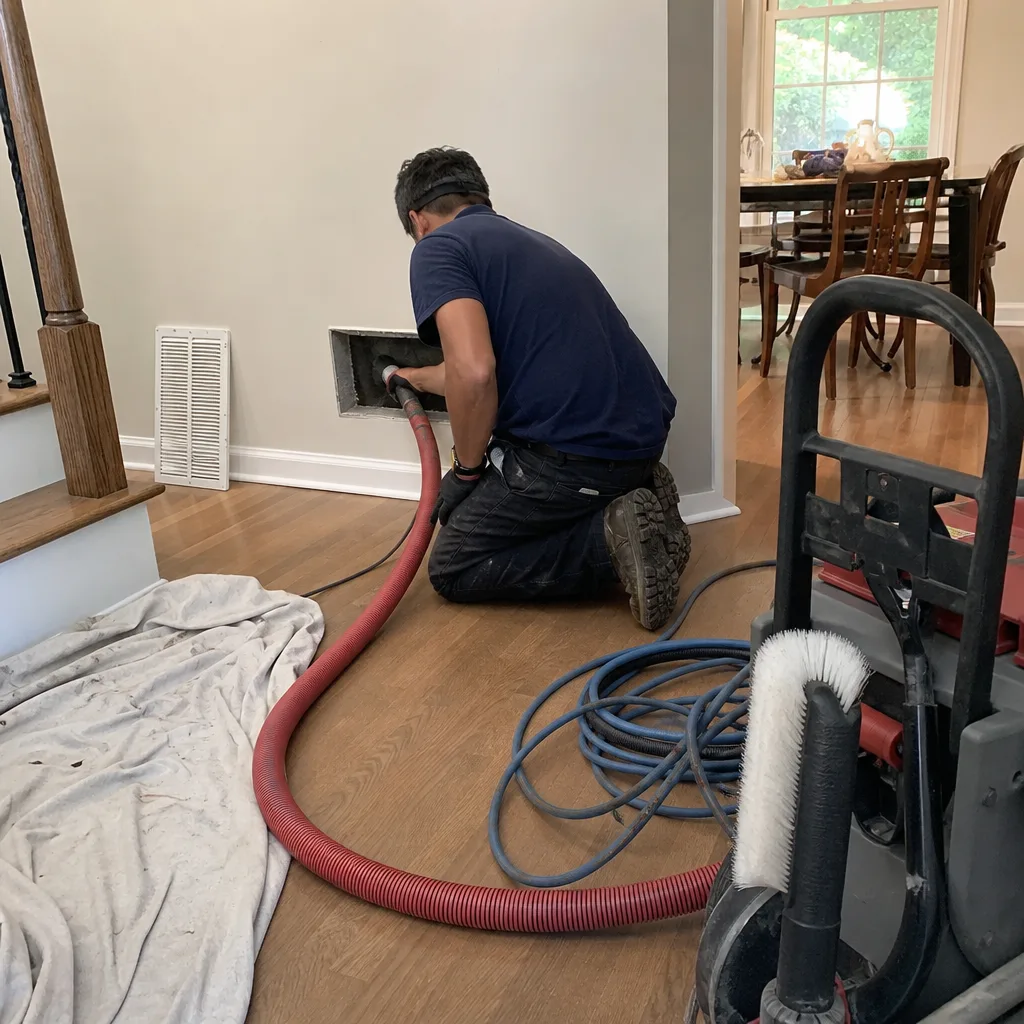
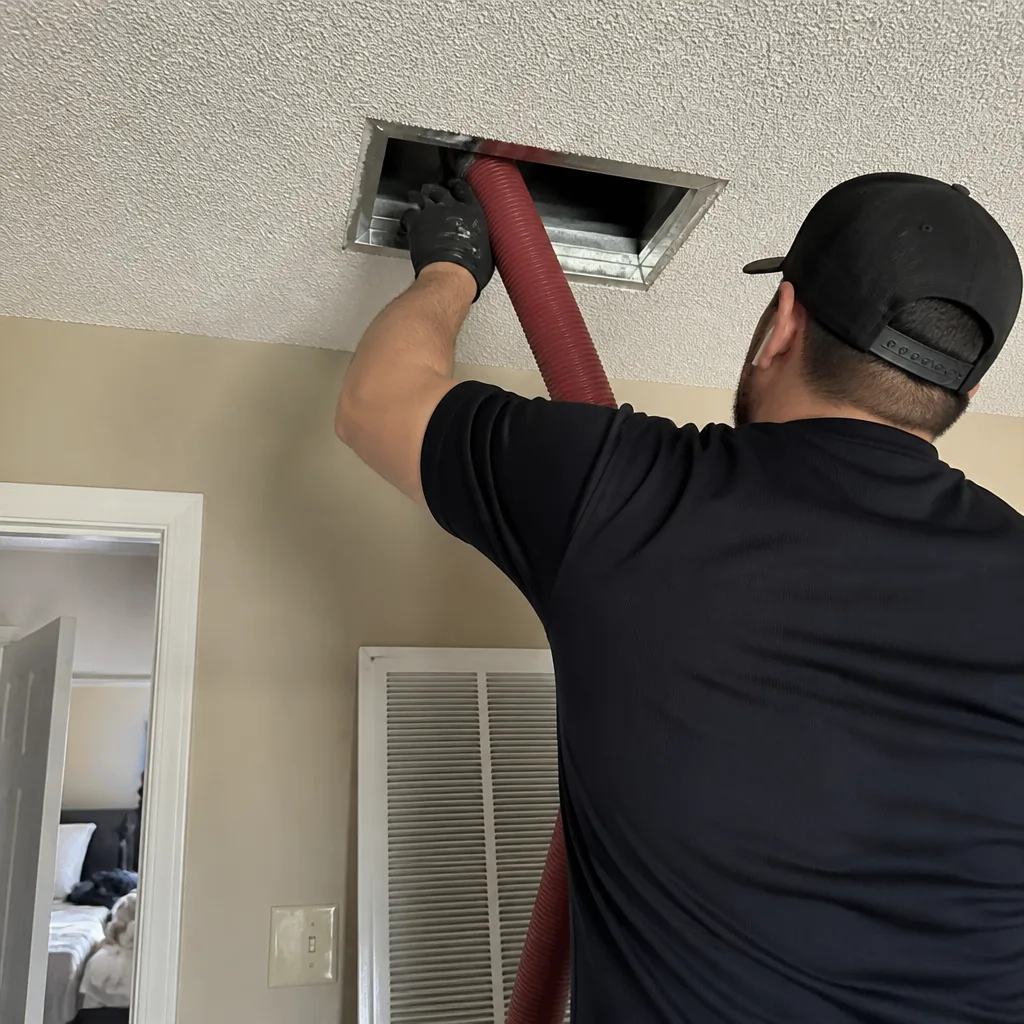
Whole-system duct and dryer vent check with before-and-after photos - you see exactly what came out of your vents
That "$99 whole-house special" is a bait ad - the real number appears once they are in your hallway, or the "clean" is a shop-vac at the register. We photograph the inside of your ducts before and after instead.
Air Duct Cleaning Warning Signs: A Atlanta Homeowner’s Reference Guide
Most Atlanta homeowners don’t recognize the early warning signs of dirty or failing air ducts because the signals are subtle. A faint musty smell that vanishes after ten minutes. A gray ring forming around a bedroom register. A room that never quite cools, no matter how low you set the thermostat. None of these scream “duct problem” on their own, so they get blamed on Atlanta’s humidity, an aging AC unit, or just the quirks of an older house. This guide will teach you to read those quiet signals for what they actually are, and our Complete Guide to Air Duct Cleaning in Atlanta goes deeper on when cleaning fixes the problem and when it doesn’t. Our goal is for you to finish this page knowing exactly what to look for and what to do about it.
Styles & brands we work with
Quick Answer
The most common air duct cleaning warning signs in Atlanta are a musty odor that appears only when the HVAC runs, visible gray or black staining around supply registers, rooms that stay warmer than others regardless of thermostat settings, unusual amounts of dust accumulating within days of cleaning, and evidence of pest activity near vent openings. If you notice two or more of these signs, your duct system likely needs Air Duct Cleaning services from a trained professional. A thorough cleaning typically resolves these issues unless the ductwork itself is damaged or disconnected, which a trained technician can identify during inspection.
Table of Contents
- The Musty Smell That Comes and Goes: Atlanta’s Most Ignored Warning Sign
- The Gray Halo Effect: What Register Staining Actually Tells You
- Uneven Room Temperatures: When the Ductwork Is the Problem, Not the HVAC
- Dust That Returns Too Fast: Reading Your Home’s Particulate Load
- Pest Intrusion Signals Specific to Atlanta Slab Construction
- Cleaning vs. Replacement: How a Legitimate Contractor Tells the Difference
- Common Mistakes to Avoid
- When to Call a Professional
- Frequently Asked Questions
- The Bottom Line
The Musty Smell That Comes and Goes: Atlanta’s Most Ignored Warning Sign
Here’s the scenario we hear about most often from Atlanta homeowners. The air conditioner kicks on, and for the first ten or fifteen minutes there’s a damp, earthy smell coming through the vents. Then it fades, and everyone forgets about it until the next cycle. That smell is not your imagination, and it’s not just Atlanta humidity working its way through the house. What you’re smelling is mold or mildew releasing spores into the airflow each time the system starts up. The reason it fades is simple: your nose adapts and the concentration in the air dilutes. But the source remains active, and it’s been doing this for months before anyone notices.
Before we go further, let’s separate two things that often get confused. A musty smell that comes from the supply registers when air blows out is typically a duct problem. A musty smell that hangs around the air handler closet or utility room, even when the fan isn’t running, usually points to the evaporator coil or the drain pan, which are HVAC territory. A third pattern: the smell appears when the AC first starts but disappears within a minute or two, which often traces back to condensation on the coil burning off. Learning to distinguish these patterns matters because the solution changes completely. Cleaning the ducts won’t fix a moldy coil, and cleaning the coil won’t fix mold growing inside duct runs.
In Atlanta’s climate, the conditions that produce duct mold are present for a large portion of the year. Warm air, high relative humidity, and a cool dark duct interior create an environment where organic matter (dust, skin cells, pollen that found its way inside) can support microbial growth. Homes that have experienced any degree of water intrusion, from a roof leak that dripped into an attic duct run to a crawl space flooding event in a summer storm, are at higher risk. If you smell that periodic musty odor, don’t wait. The longer mold sits in the ducts, the more it releases spores into every room, and the more extensive the remediation becomes.
How to Tell If the Smell Is Ducts or the Coil
- Run the fan only, no cooling. Set your thermostat to “fan on” with the AC off. If the musty smell appears, the source is in the ductwork or the blower cabinet, not the cooling coil.
- Sniff the return air opening. If the smell is strong at the return, the contaminant is being drawn into the system rather than produced inside it. Check the area around the return for dampness, pest nests, or old filter debris.
- Remove the filter and look. If you see visible mold, dust caking, or standing water near the coil, you have an HVAC issue. A qualified HVAC technician should address it, and duct cleaning may still be a sensible follow-up.
- Check whether the smell is worse in one room. If one specific room has the smell and others don’t, the problem is likely in that branch line or the diffuser itself.
Kestrel Air Duct Atlanta has been cleaning ducts in Atlanta homes since 2004 under the Kingswell Guarantee, and we’ve seen this exact scenario play out in homes from Buckhead to Decatur. The pattern is consistent: the smell was ignored for a season or two, and what could have been a straightforward cleaning became a more involved job. Written price before work begins, every time, no exceptions. If you’ve been noticing that intermittent musty smell, the next section will help you confirm whether the ducts are the source.
The Gray Halo Effect: What Register Staining Actually Tells You
Look at the ceiling or wall around any supply register in your Atlanta home. If you see a faint gray or black ring spreading outward from the register edges, that’s not a paint problem. It’s called a particulate halo, and it indicates that air is moving through the system at higher-than-design velocity, carrying fine particles that impact the surface and stick. Over time, those particles build up into a visible stain. This is one of the clearest physical signs that your duct system is handling more particulate load than it should.
Here’s the distinction that most homeowners miss. A little dust on the register slats themselves is completely normal. Those slats sit directly in the airflow path, and any home with a functioning HVAC system will accumulate some dust there. But a wall stain spreading outward from the register means particles are being driven against the surface with enough force to adhere. That points to one or more of the following: the filter isn’t doing its job (wrong MERV rating for your system, or not changed often enough), the duct runs are undersized for the blower output, or the ducts themselves contain a large reservoir of fine particulate material that keeps getting re-entrained into the airflow.
In Atlanta’s housing stock, which includes a wide range of home ages and HVAC system types, we frequently find similar patterns. Homes built in the 1970s and 1980s often have metal ductwork that has never been thoroughly cleaned. Flex duct installations from every era can develop pinhole leaks, disconnected joints, and crimped sections that increase air velocity at the register. The halo stain is essentially a forensic marker: it tells you the system is moving more particle-laden air than it should, and the fix usually starts with a thorough duct cleaning and a filter assessment.
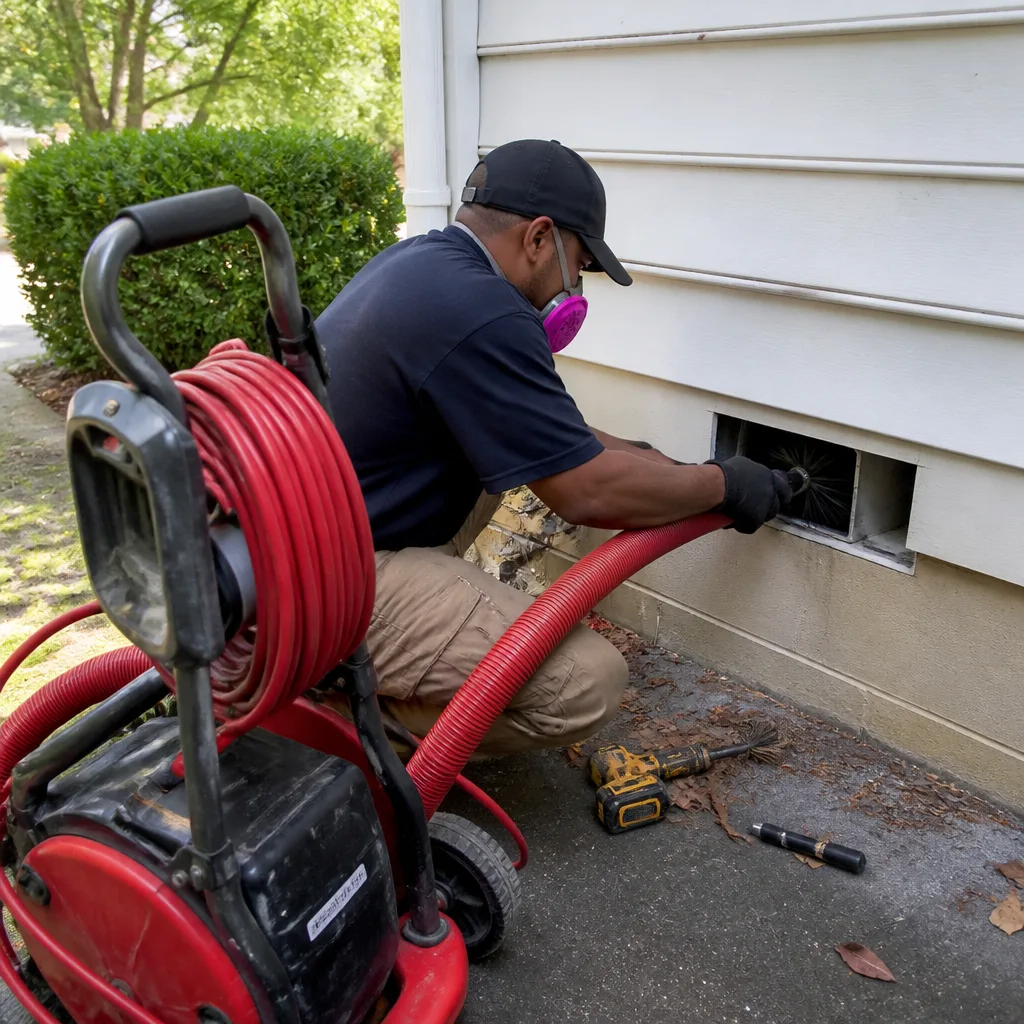
Cleaning the visible stain off the wall without addressing the duct system is a temporary cosmetic fix. The particles that caused the stain are still in your ducts, and the stain will return within months. A proper air duct cleaning in Atlanta removes the reservoir of particles inside the system, and the halo formation slows or stops entirely. We use Rotobrush rotary brush systems to dislodge debris at the duct wall, which is where the fine particles that create halos tend to accumulate.
Uneven Room Temperatures: When the Ductwork Is the Problem, Not the HVAC
Atlanta summers are unforgiving. When one room stays noticeably warmer than the rest of the house, the typical homeowner response is to call an HVAC company and ask about the air conditioner. Sometimes that’s the right call. But in our experience, a significant percentage of uneven temperature complaints trace back to problems in the duct distribution system rather than the cooling unit itself.
Here’s the reasoning. Your air conditioner is a single unit that produces a fixed amount of cooled air. The ductwork is what divides and delivers that air to each room. If the system was balanced when it was installed, every room should receive roughly proportional airflow. When one room starts running warmer or cooler over time, something in the delivery system has changed. Common culprits include:
- Disconnected flex duct joints. Flex duct connections can separate at the plenum or the register boot, particularly in attics where summer heat cycles the materials through expansion and contraction. A disconnected run means that room gets little to no direct airflow.
- Crimped or collapsed flex runs. Anything from a careless attic storage project to a contractor stepping on the duct can kink a flex run, reducing its internal diameter and choking off airflow.
- Accumulated debris in a specific branch line. Over years of use, one branch line can accumulate more debris than others. This is common in long runs or runs with multiple bends.
- Damper positions that have drifted. Manual volume dampers in the ductwork can shift from their set position, sending too much air to some rooms and too little to others.
A thorough duct cleaning in an Atlanta home often reveals exactly which of these factors is at play. During the cleaning process, our technicians access the duct system and can identify disconnected runs, crushed sections, and debris concentrations that are restricting airflow. This is one of the ways that professional duct cleaning delivers a surprise benefit-it’s also a diagnostic pass across your entire air distribution system, which we cover in our DIY vs Professional Air Duct Cleaning guide. When we find a collapsed section of flex duct, we’ll tell you plainly before we quote anything, because that’s not a cleaning issue, it’s a repair, and you deserve to know the difference.
Dust That Returns Too Fast: Reading Your Home’s Particulate Load
Every Atlanta home accumulates dust. Pollen season coats every surface with a fine yellow film, and even the most diligent housekeepers know that dust is a constant companion from March through October. But there’s normal dust, and then there’s a dust curve that tells you something is wrong with the air distribution system.
Here’s a useful baseline. In a typical Atlanta home with regularly changed filters and closed windows, visible dust accumulation on horizontal surfaces (shelves, dresser tops, baseboards) becomes noticeable after roughly five to seven days. If you dust a surface thoroughly and it’s visibly coated again within 24 to 48 hours, your system is circulating more particulate than it should. That excess particle load is almost always coming from one of three places: the ducts themselves, a bypassed or underperforming filter, or an external source being drawn into the return side of the system.
Duct systems act as a reservoir over time. Fine particles settle on the duct walls when the system isn’t running, and when the blower kicks on at full speed, those particles get re-entrained and blown into the living space. This is particularly noticeable in homes where the HVAC system has been run for years without a duct cleaning. The layer of material inside the ducts reaches a critical depth where normal airflow is enough to dislodge it, and suddenly the whole house is dustier than it used to be.
One test we recommend to Atlanta homeowners: run your system in fan-only mode for ten minutes, then check the air blowing from an open vent with a flashlight at night. If the air looks clean in the beam, the filter is doing its job. If you see a visible stream of fine particles, your ducts are contributing material to the air you’re breathing. For homeowners who want to maintain cleaner air after a cleaning, we stock Aprilaire and Guardsman filtration products that sit on the return side and help keep particle levels low between service visits.
Pest Intrusion Signals Specific to Atlanta Slab Construction
Atlanta’s housing stock includes a substantial percentage of slab-on-grade homes, where ductwork runs beneath the concrete floor or through the walls rather than through a crawl space or basement. This construction style, combined with Atlanta’s climate, creates specific pest intrusion patterns that differ from what homeowners in other regions encounter.
In slab homes, the duct runs often pass through wall cavities and chases that connect to the exterior. Rodents, particularly roof rats and house mice, can enter through deteriorated wall penetrations, gaps around exterior vents, or openings where utilities pass through the foundation. Once inside a duct run, they build nests from insulation and organic debris, and they leave behind droppings and urine. The signals you’ll notice include:
- Scratching sounds from walls or ceilings that coincide with the HVAC system cycling off. Rodents often use ducts as travel routes, and they move through them when the blower isn’t running.
- An acrid, ammonia-like odor in one specific room or from one vent opening that doesn’t match the musty smell of mold. This is often rodent urine.
- Droppings or nesting material visible near the vent opening or in the bottom of the register boot when you remove the register cover.
- Insect activity near supply registers, particularly roaches, which are drawn to the dark, humid environment of ducts and the organic material inside them.
Pest intrusion is not a cleaning-only problem. If rodents are living in your ducts, the first step is exclusion: finding and sealing the entry points so new ones can’t get in. After that, the contaminated ductwork needs thorough cleaning and, in severe cases, replacement of insulation-lined sections. A responsible contractor will tell you this sequence before quoting you a price, because cleaning ducts that still have an open rodent highway is wasted work. At Kestrel Air Duct Atlanta, we’ve encountered this situation often enough in Atlanta slab homes that we’re comfortable walking you through how the cleaning fits into the bigger pest-control picture. The order matters: exclude, then clean.
Cleaning vs. Replacement: How a Legitimate Contractor Tells the Difference
One of the clearest signs you’re talking to a contractor who has your best interests in mind is how honestly they discuss the line between cleaning and replacement. Some problems respond well to cleaning. Others require duct replacement, HVAC service, or a different trade entirely. A legitimate professional will tell you which is which before you spend anything.
Here’s the distinction we use at Kestrel Air Duct Atlanta, and it’s the same framework any reputable company should apply:
Problems That Cleaning Typically Solves
- Accumulated dust, pet dander, and pollen debris inside the duct runs.
- Mold growth on the interior surfaces of metal and flex ducts where the duct material remains structurally sound.
- Debris left behind by construction or renovation work (drywall dust, sawdust, general particulate).
- Light pest debris after the pests have been excluded and entry points sealed.
Problems That Cleaning Cannot Fix
- Duct sections that are crushed, collapsed, or disconnected. These need repair or replacement before the system can deliver air properly.
- Mold that has penetrated porous duct liner or insulation. The affected sections typically need replacement, not cleaning.
- A refrigerant leak, a failing compressor, or a cracked heat exchanger. These are HVAC system failures, not duct issues.
- Persistent water intrusion from a roof leak, plumbing leak, or condensation problem. Unless the water source is fixed, cleaning is temporary.
We put this list in writing for every Atlanta customer because the Kingswell Guarantee demands it. A written price before work begins, a defined arrival window, a clean job site, and a written guarantee on the work, with a free return visit if the work fails within the guarantee period. Part of honesty is telling you when duct cleaning won’t solve the problem you called about. If a contractor quotes you a price without inspecting the system or asks you to commit before looking at the ducts, that’s a signal to slow down and ask more questions.
Common Mistakes to Avoid
- Ignoring the intermittent musty smell. Atlanta homeowners often write off the smell that appears when the AC kicks on as normal for a humid climate. It isn’t. That smell indicates active mold growth somewhere in the system, and every week it goes unaddressed, the remediation gets more extensive.
- Painting over register halos before addressing the ducts. A fresh coat of paint over a gray halo stain looks good for about three months, and then the particles re-deposit and the stain returns. Fix the particle reservoir in the ducts first, then repaint.
- Assuming uneven temperatures always mean the AC unit is failing. Before spending thousands on a new HVAC system in Atlanta, check whether the duct distribution system is balanced and intact. Sometimes a $700 duct cleaning and a minor damper adjustment solve what a $9,000 system replacement was proposed to fix.
- Choosing the lowest-priced duct cleaning quote without asking what’s included. Some low quotes cover only the main trunk line and skip the individual branch runs. You end up with half-cleaned ducts and the same problems months later. Ask what’s included, in writing.
- Treating pest evidence as a cleaning problem only. If you find droppings or nesting material in your ducts, cleaning alone will not prevent recurrence. Exclusion comes first. Find and seal the entry points, then clean.
- Assuming duct cleaning is a scam or unnecessary because someone on the internet said so. The truth is more nuanced. Duct cleaning is appropriate for specific conditions and unnecessary for others. The key is an honest assessment from a provider who will tell you when you don’t need it.
- Running the same filter for six months during Atlanta’s pollen season. Pollen clogs filters fast, and a clogged filter forces the blower to work harder while allowing particle bypass. Check your filter monthly during peak pollen months, and replace it more often than the packaging suggests.
When to Call a Professional
Call for a professional duct inspection and cleaning when you notice any of these signs: a musty smell that appears only when the HVAC system runs, a visible gray or black halo spreading from a supply register, rooms that stay persistently warmer or cooler than the rest of the house, dust accumulation that returns within 48 hours of cleaning, or evidence of pest activity inside the duct system. Also call if you’ve recently completed a renovation project in your Atlanta home that generated drywall dust or sawdust, if you’ve never had the ducts cleaned and the home is more than 15 years old, or if anyone in the home has persistent allergy or respiratory symptoms that improve when away from the house. Kestrel Air Duct Atlanta offers free estimates in Atlanta, and we’ll give you a written price before any work begins. Call (470) 378-1006 to schedule an assessment.
Frequently Asked Questions
Most Atlanta homes run between $500 and $1,200 for a complete residential duct cleaning, depending on the home’s square footage, the number of HVAC systems, and the accessibility of the ductwork. Larger homes with multiple systems or heavily contaminated ducts can exceed that range. At Kestrel Air Duct Atlanta, we provide a written price before any work begins, so you know the exact number before a single vent is touched. Call (470) 378-1006 for a free estimate for your specific home.
Lower quotes typically reflect a narrower scope of work. Some providers clean only the main supply trunk and skip the individual branch runs that deliver air to each room, which means large portions of the duct system are left untouched. Others use a simple vacuum that lacks the agitation needed to dislodge debris from the duct walls. Ask what’s included, ask how branch runs are addressed, and ask whether the method includes mechanical agitation (rotary brush) and negative-pressure extraction. If a quote sounds too cheap to be complete, it probably is. The Kingswell Guarantee is our answer to that bait-and-switch dynamic: a written price before work begins, on every job, no exceptions.
Ask for before-and-after photos. Our technicians at Kestrel Air Duct Atlanta photograph the duct interior at multiple points before and after the cleaning process, and you’ll see the difference in the images. We use Rotobrush rotary brush systems to mechanically dislodge debris from the duct walls, then Nikro negative-pressure units to pull the loosened material out of the system. Abatement Technologies HEPA filtration keeps those particles from re-entering your living space during the process. After the work is complete, review the photos and inspect a couple of registers yourself, and if anything falls short, our 365-Day Done Right Promise means we come back and make it right at no charge, in writing.
In the Atlanta climate, with its extended pollen season and high summer humidity, most homes benefit from a professional duct cleaning every 3 to 5 years. Homes with pets that shed heavily, residents with severe allergies, or recent renovation history may need cleaning more frequently. Homes that have never been cleaned and are more than 15 years old should be cleaned as a baseline. If you’re unsure whether your ducts need attention, the warning signs in this guide and our more guides & resources are the best indicators to watch for. Call (470) 378-1006 and a Kestrel technician will help you assess your situation honestly, even if the assessment says you don’t need cleaning yet.
Dirty air ducts can contribute to allergy symptoms by circulating accumulated pollen, dust mite debris, pet dander, and mold spores through the living space every time the system runs. In Atlanta, where spring pollen counts are among the highest in the country, the particulate load inside duct systems tends to be substantial. Homeowners with persistent allergy symptoms that improve when they leave the house should consider duct cleaning as part of an overall indoor-air-quality improvement plan. We also recommend Aprilaire and Guardsman filtration products for clients who want an ongoing defense against allergen buildup between professional cleanings.
A complete duct cleaning in a typical Atlanta single-family home takes between 3 and 6 hours, depending on the number of systems, the size of the home, and the amount of accumulated debris. Homes with multiple HVAC units or severely contaminated ductwork may take longer. We schedule a defined arrival window and honor it, and the technicians who show up at your Atlanta home are background-checked, uniformed, and trained to follow The Kingswell Way: say the price, show up in the window we gave, leave the place cleaner, put the guarantee in writing, and come back if it fails.
The Bottom Line
Air duct problems in Atlanta homes announce themselves quietly before they become obvious. A musty smell that fades after ten minutes. A gray halo spreading around a register. A bedroom that never cools. Dust that returns within days. Each of these signals is traceable to a specific condition inside the duct system, and each one has a clear path to resolution if you act before the problem compounds. The most important takeaway is this: cleaning is the right tool for some problems, and the wrong tool for others. A legitimate contractor will tell you which category your home falls into before quoting a price. If you’ve noticed any of the warning signs described in this guide, Kestrel Air Duct Atlanta is ready to help. We’ve been serving Atlanta since 2004 under the Kingswell Guarantee, and every job, from the smallest dryer vent cleaning in Atlanta to a full home duct system cleaning, gets the same standard: a written price before work begins, a defined arrival window, a clean job site, and a written guarantee on the work. Call (470) 378-1006 for a free estimate.
Written by Dale Whitmore, Owner at Kestrel Air Duct Atlanta, serving Atlanta since 2004.
See the difference
 Before
 After
After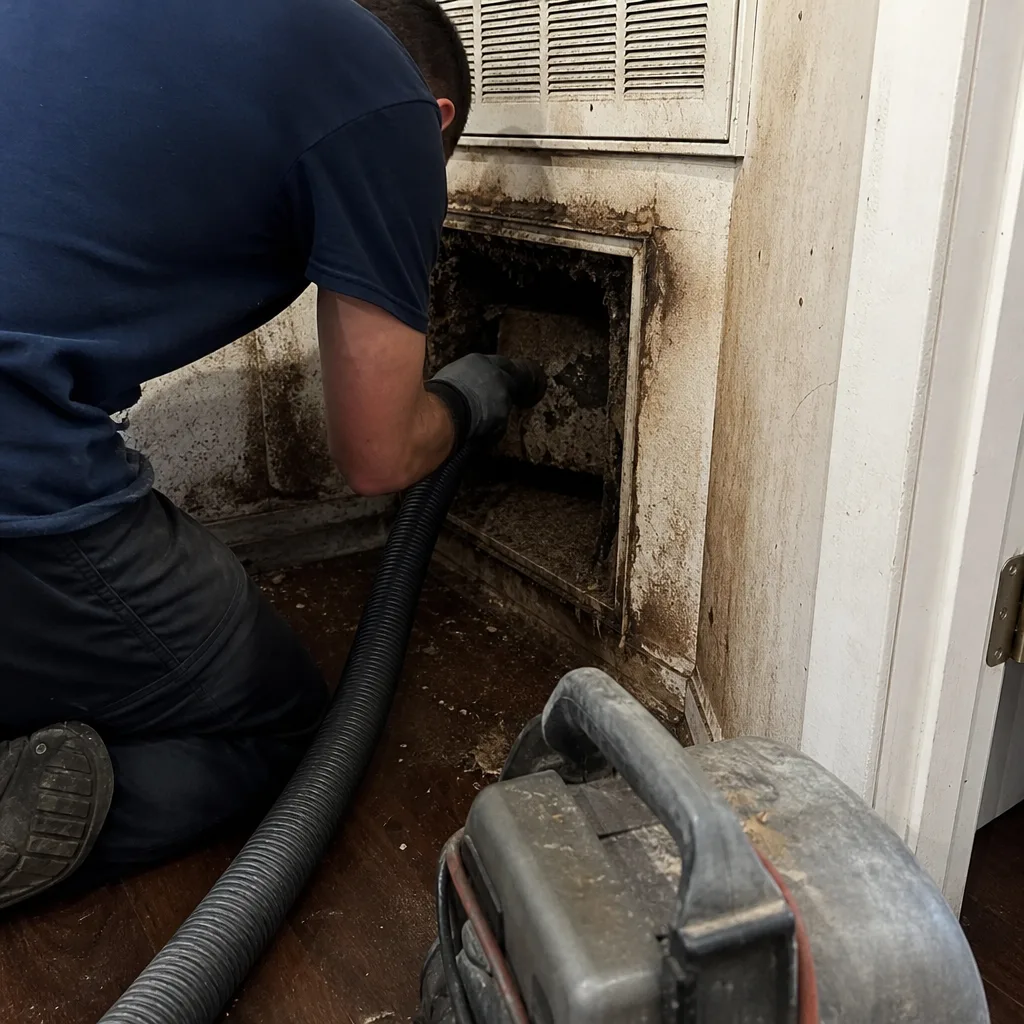 Before
 After
After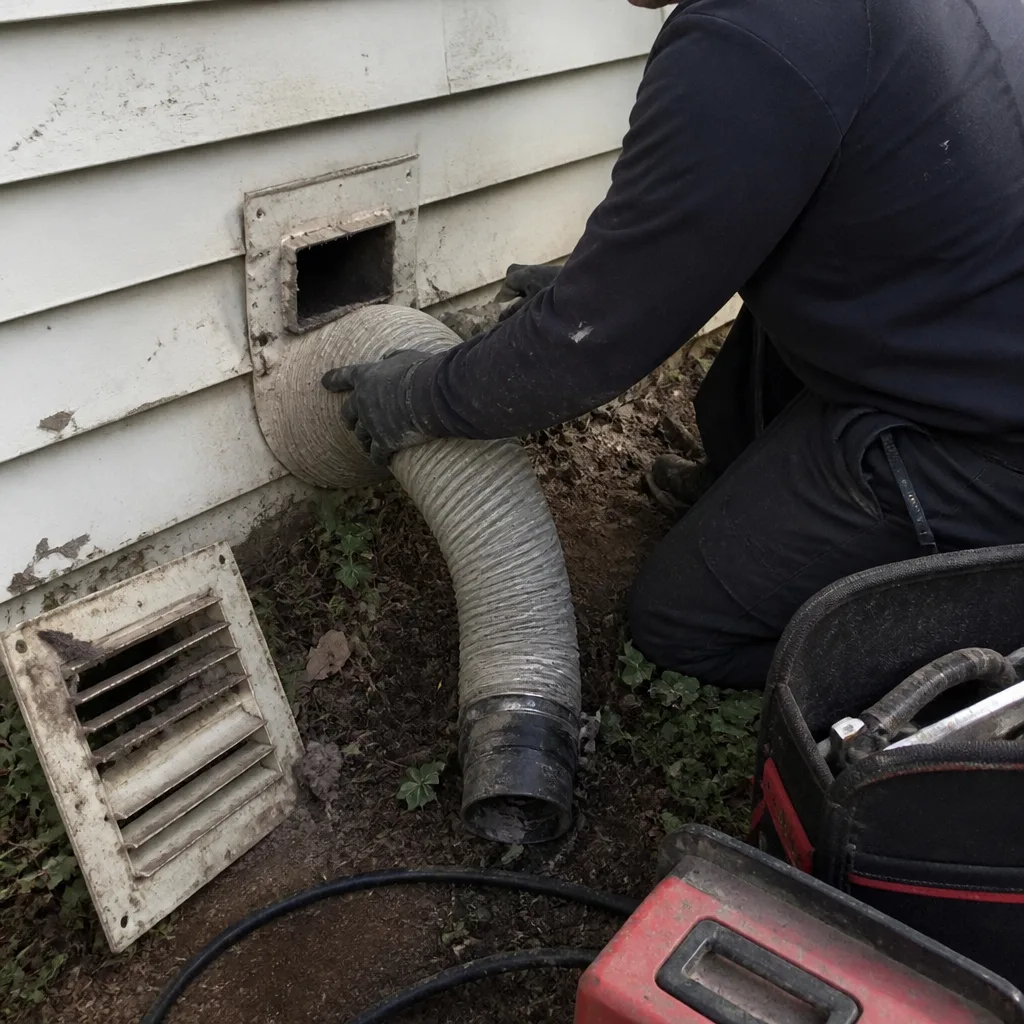 Before
 After
After