
Last updated October 15, 2026
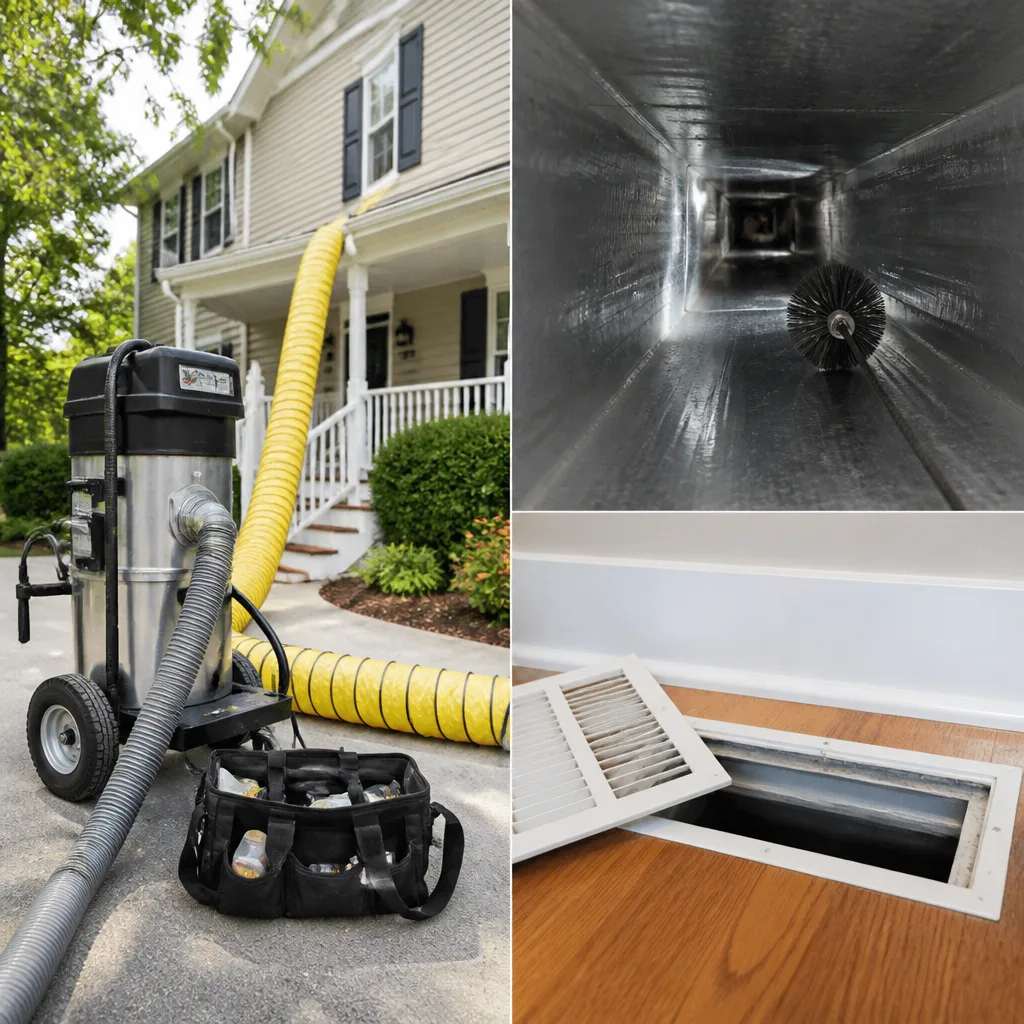 Whole-home duct cleaning
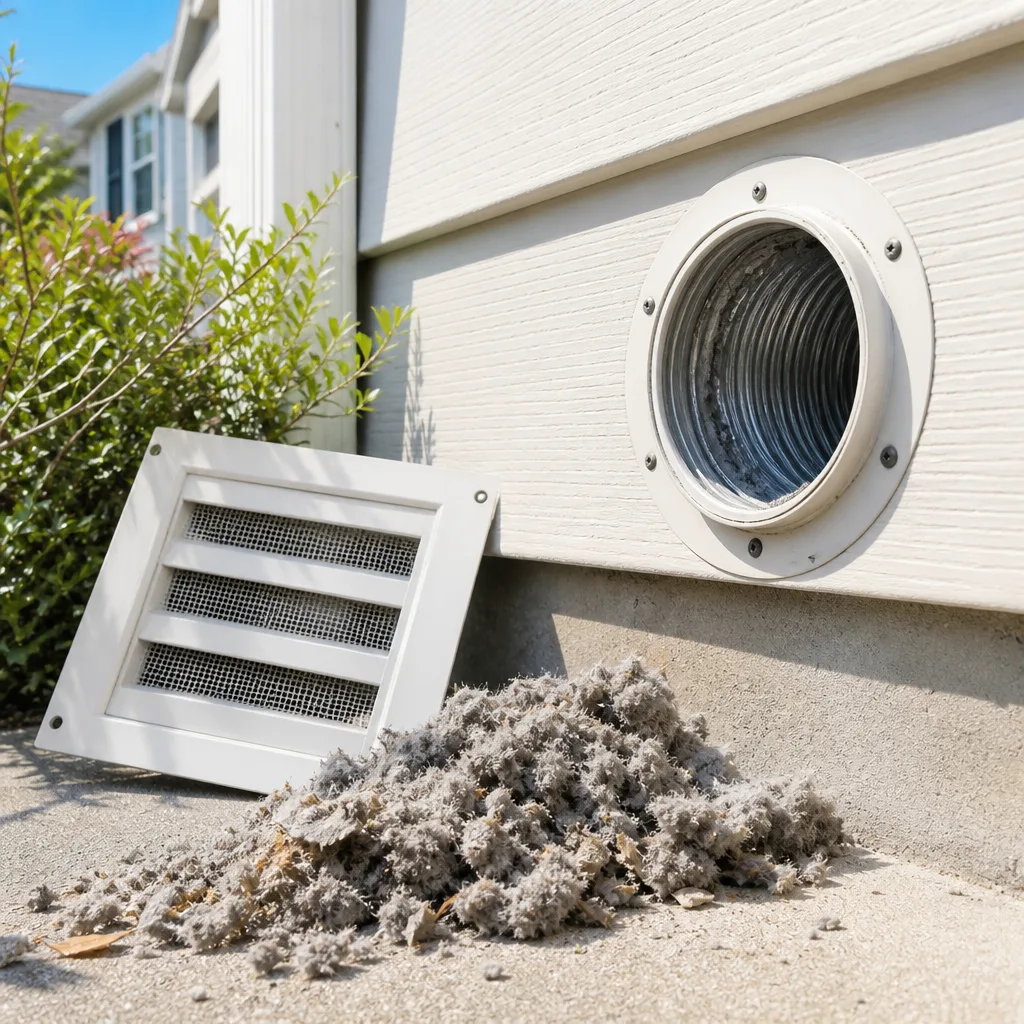 Dryer vent cleaning
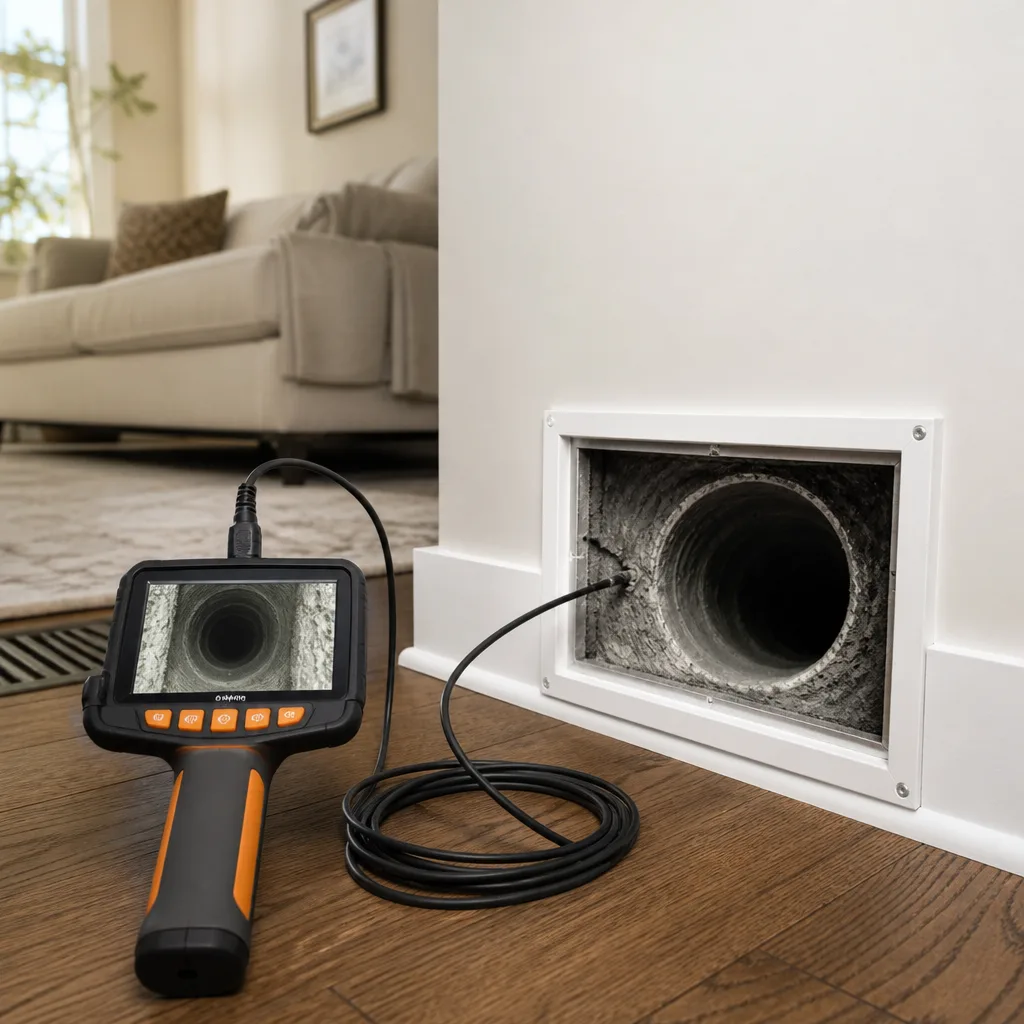 Camera inspection
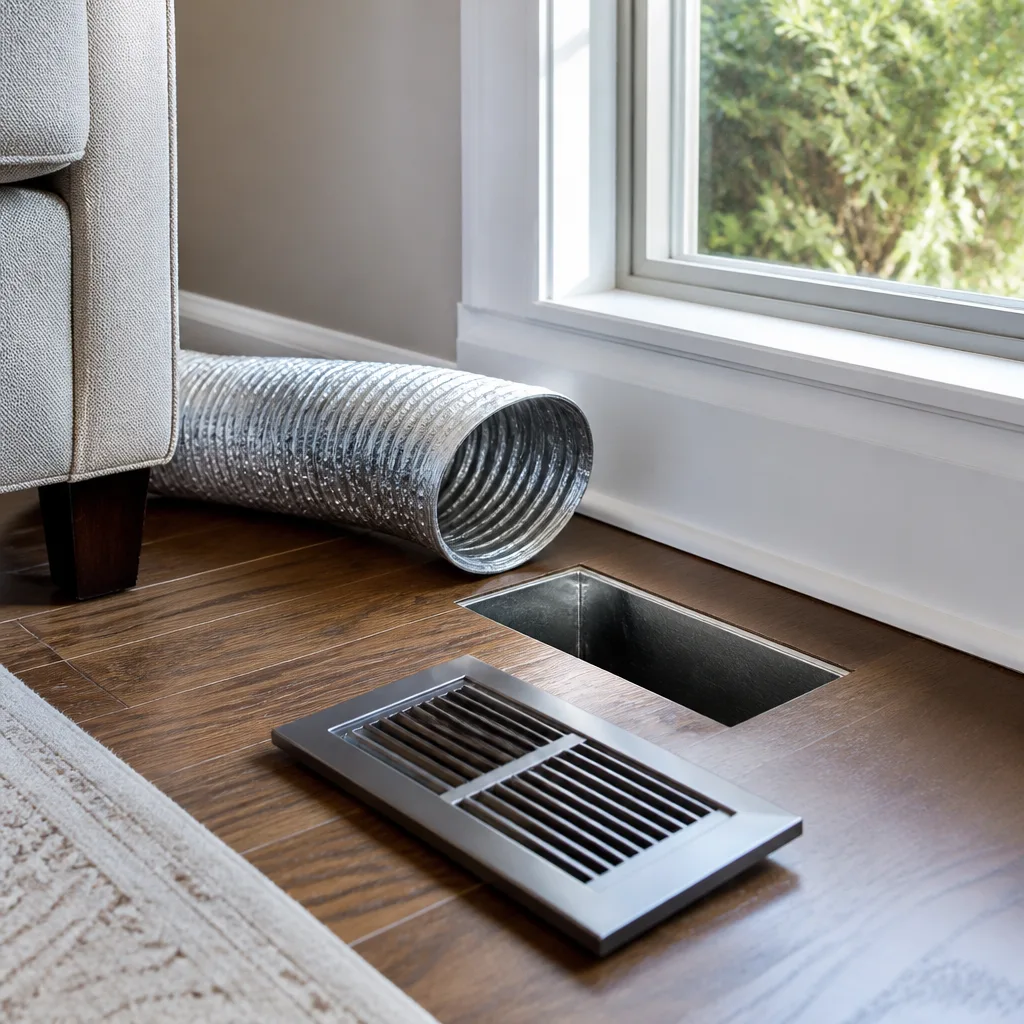 Sanitizing & deodorizing
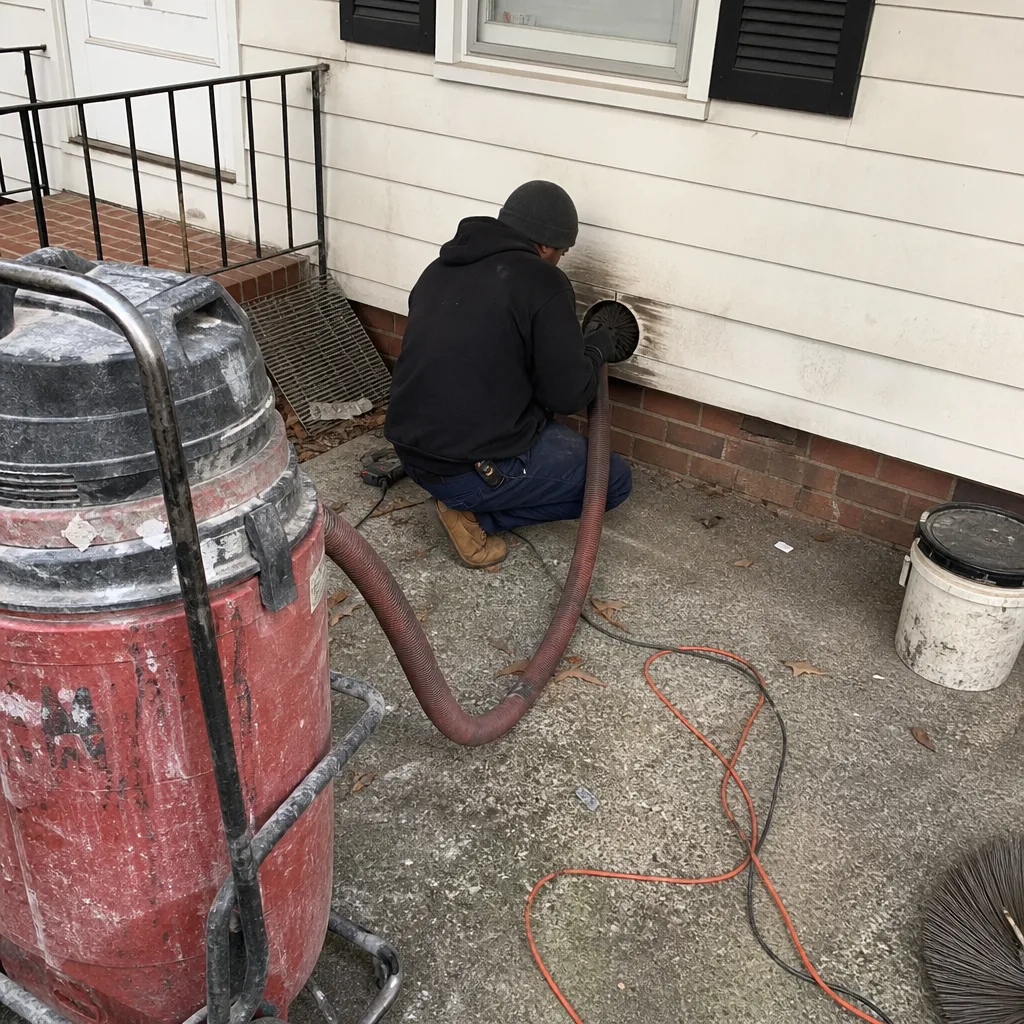
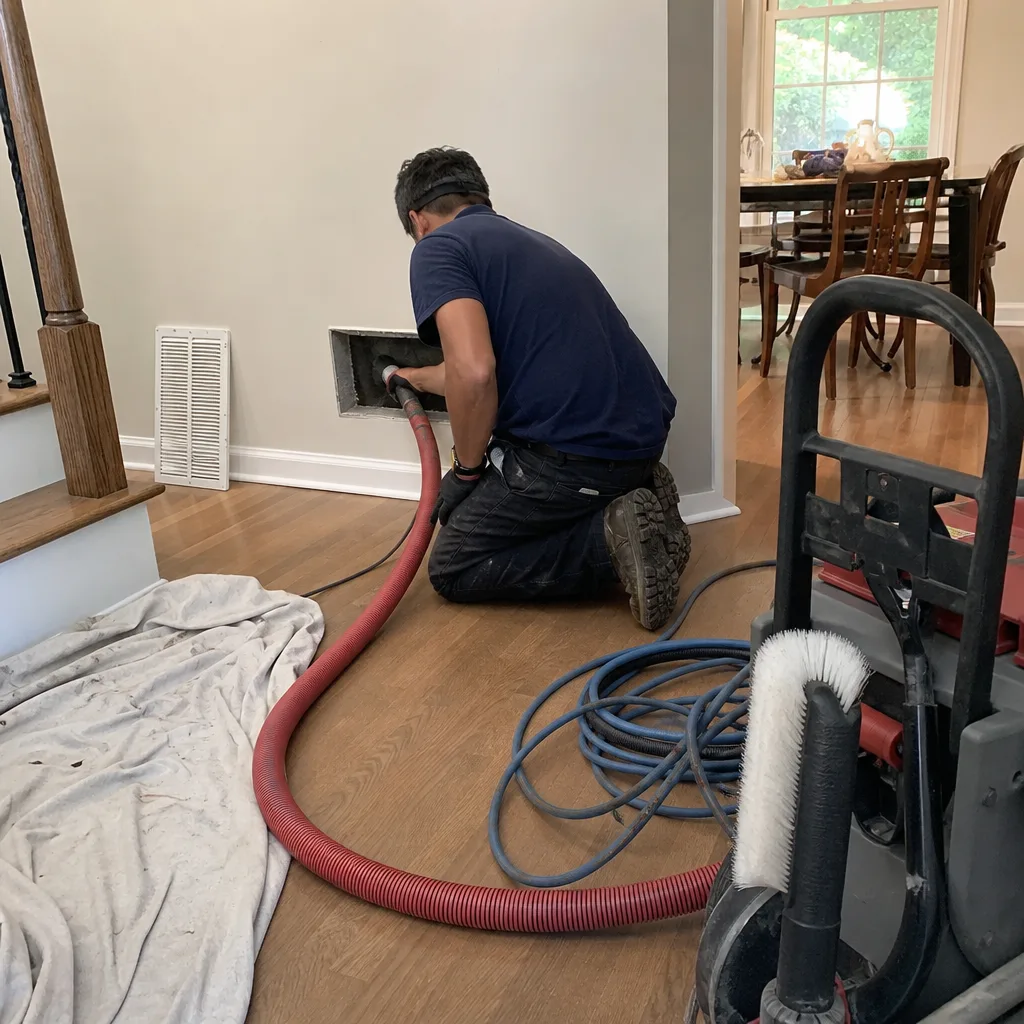
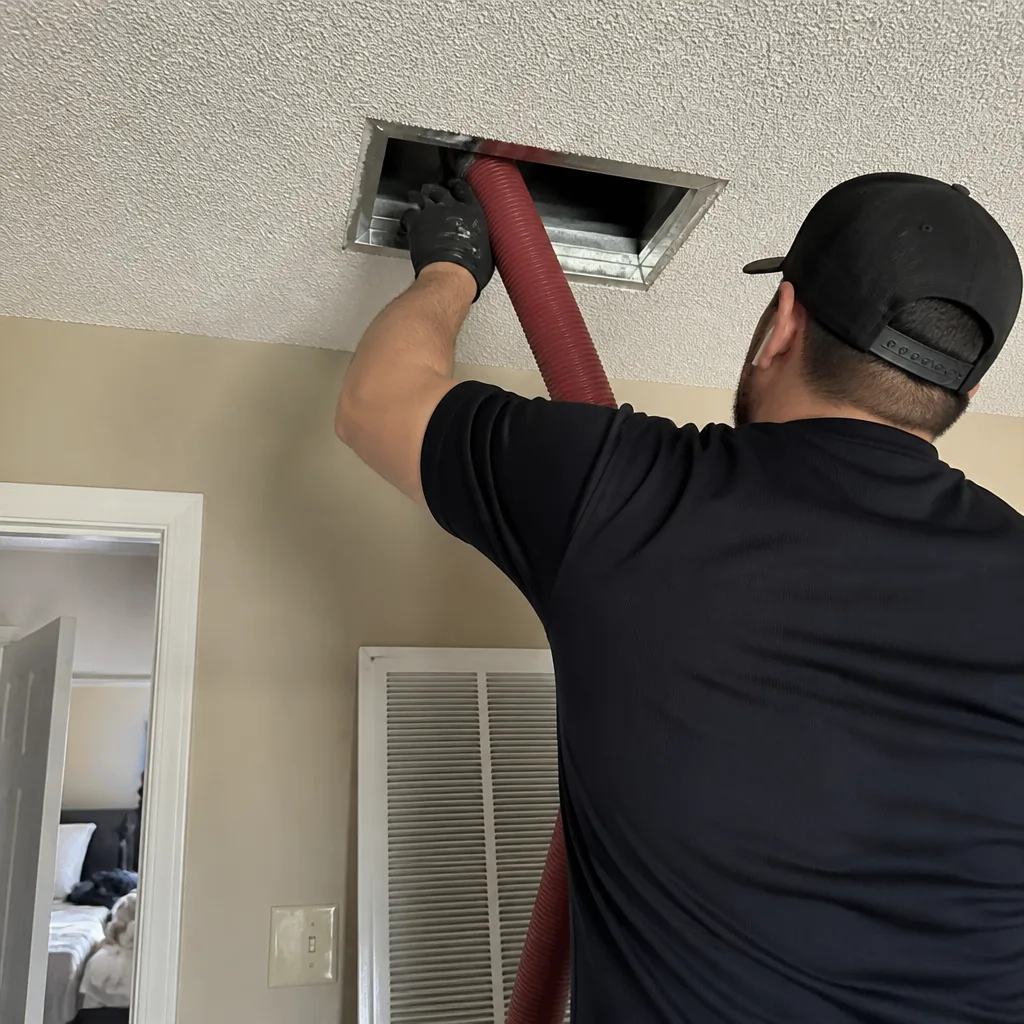
Whole-system duct and dryer vent check with before-and-after photos - you see exactly what came out of your vents
That "$99 whole-house special" is a bait ad - the real number appears once they are in your hallway, or the "clean" is a shop-vac at the register. We photograph the inside of your ducts before and after instead.
The Complete Guide to Air Duct Cleaning in Atlanta
Atlanta sits in the top 10 U.S. cities for spring pollen counts every single year, and most of that yellow-green dust finds its way into residential ductwork within 72 hours of a high-count day. Once inside, Atlanta’s humidity, which runs above 60% for nearly half the year, turns that pollen into a sticky paste that clings to duct walls instead of blowing through. This Air Duct Cleaning guide explains what actually happens inside Atlanta duct systems, what a proper cleaning should cost, how to spot the difference between real extraction equipment and a shop vac with a marketing budget, and the one document you should demand before any technician touches a vent. Our company, Kestrel Air Duct Atlanta, has worked on thousands of Atlanta homes since 2004, and the patterns we see here are not the patterns national guides describe.
Quick Answer
Air duct cleaning in Atlanta typically costs between $450 and $900 for a standard 2,000-square-foot home and takes 3 to 6 hours when done properly with negative-air extraction and rotary brush agitation. In Atlanta specifically, the red-clay dust, extreme pollen loads, and summer humidity mean ducts accumulate sticky, mold-favorable debris faster than in drier climates, so every-3-to-5-year cleaning is a reasonable interval for most homes here. Always get a written scope of work with a locked price before the job starts.
Styles & brands we work with
Table of Contents
- Why Atlanta Ducts Are Different From the Rest of the Country
- What Air Duct Cleaning Actually Does
- Negative-Air Extraction vs. Portable Shop-Vac Units: How to Tell the Difference
- How Much Does Air Duct Cleaning Cost in Atlanta?
- How Often Should You Clean Your Ducts in Atlanta?
- The One Document to Demand Before Work Begins
- What a Proper Cleaning Looks Like, Step by Step
- Common Mistakes to Avoid
- When to Call a Professional
- Frequently Asked Questions
Why Atlanta Ducts Are Different From the Rest of the Country
Most national air duct cleaning guides were written for houses in Ohio or Arizona and then stamped with a new city name. That approach misses what makes Atlanta a genuinely distinct market. Our technicians see the difference on every job. Here’s what Atlanta’s climate does to ductwork that a generic guide will not tell you.
The two-season humidity swing. Atlanta winters are dry, with indoor relative humidity often dropping below 35%. That dries out accumulated dust and turns it brittle and flaky, so it releases into the air in fine particles. Atlanta summers are the opposite: humidity regularly exceeds 70%, which makes dust heavy, sticky, and prone to clumping at duct joints and register boots. This seasonal cycle means Atlanta ducts develop layered contamination, alternating between dry loose debris and compacted damp deposits, that requires agitation to remove. A suction-only approach does not break this bonded material loose from the duct wall.
Pollen species you will not see elsewhere. Atlanta’s tree canopy is dominated by pine, oak, hickory, and sweetgum. Pine pollen is large and granular, oak pollen is fine and abundant, and sweetgum produces a spiky pollen that clings to surfaces aggressively. The spring pollen load in metro Atlanta routinely hits counts above 1,500 grains per cubic meter, with peak days exceeding 4,000, among the highest in the nation. That pollen enters ducts through the return-air system, especially in homes that open windows during the mild weeks of March and April, and it accumulates fast. Once inside a humid duct, pollen becomes a nutrient source for mold spores that are also present in Atlanta’s outdoor air year-round.
Red-clay dust. Georgia’s famous red clay is a fine iron-rich silt that gets tracked into homes from yards, driveways, and construction sites, and metro Atlanta has seen continuous residential development since the 1990s. That dust is heavier than ordinary household dust and settles quickly in the lowest sections of duct runs, often the main trunk line under the house. In our experience, Atlanta homes near active grading or new subdivision construction show red-clay accumulation in ducts within 12 months of a previous cleaning.
Slab-on-grade foundations. A large share of Atlanta’s suburban housing stock, particularly in subdivisions built since 1980, sits on slab foundations rather than crawl spaces or basements. That means supply ducts are frequently routed through attic spaces or embedded in the slab itself, and return ducts often run through wall cavities. Slab-embedded ducts are more vulnerable to condensation because the surrounding concrete stays cool while humid Atlanta air moves through the warm duct interior. That condensation traps dust and feeds microbial growth at the lowest points. Ducts in attics face the opposite problem: summer attic temperatures above 130°F bake fine particulate into a crust that resists simple vacuuming. Understanding which configuration your home has matters because the cleaning method and equipment needed differ.
What Air Duct Cleaning Actually Does
Air duct cleaning removes accumulated dust, pollen, pet dander, construction debris, and microbial growth from the interior surfaces of your home’s supply and return ductwork. A proper cleaning addresses the entire system: the return and supply trunks, the branch runs, the register boots, the plenums at the furnace or air handler, the blower fan, and the coils. A half-job that only cleans the visible registers does nothing for the air you actually breathe.
The goal is not to make the inside of your ducts germ-free, which is not physically possible, but to remove the accumulated debris load that degrades indoor air quality and forces your HVAC system to work harder. When dust builds up on the blower fan and evaporator coil, airflow drops, the system runs longer cycles, and your cooling bill climbs during Atlanta’s long summer season. The air duct cleaning process we perform in Atlanta targets that debris load at every point in the system.
A proper cleaning involves two mechanical actions working together:
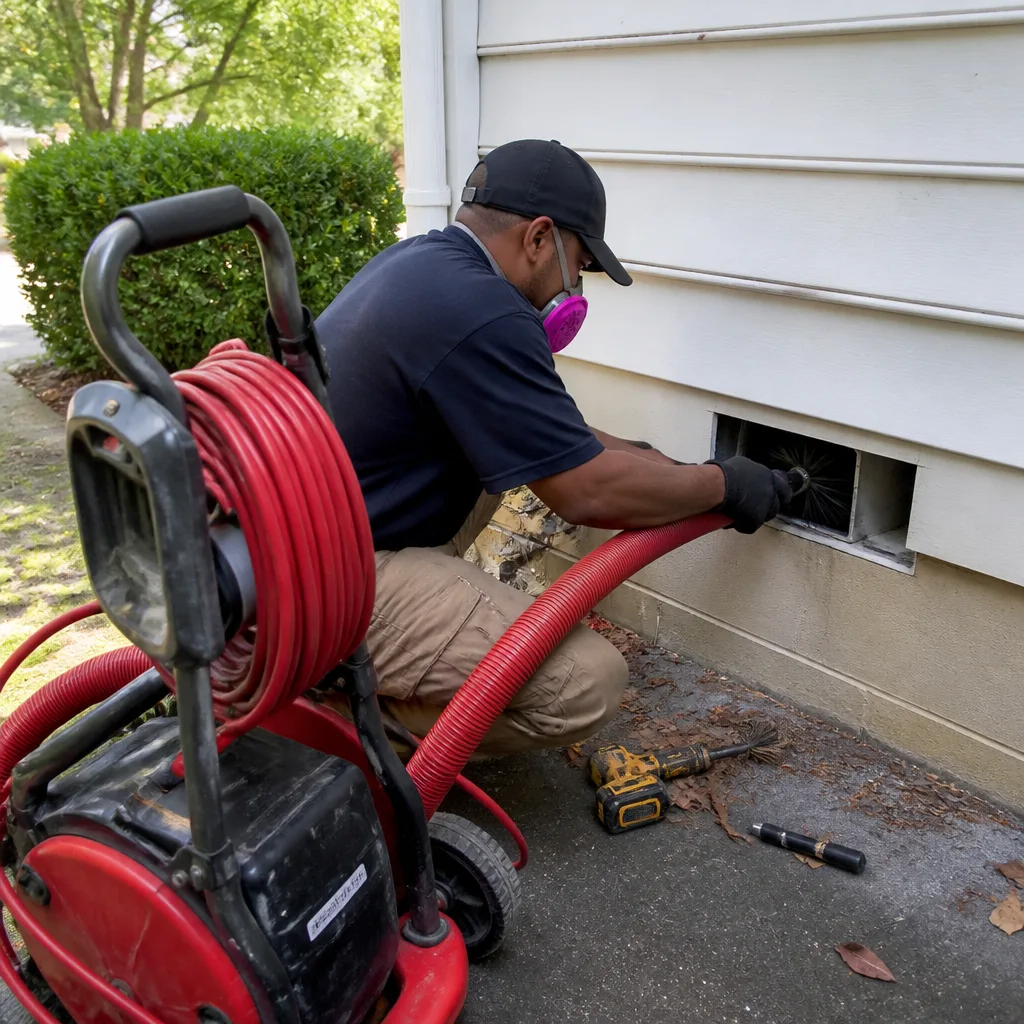
- Brush agitation: A rotary brush system, we use Rotobrush equipment, spins stiff bristles against the duct walls to dislodge the compacted, sticky debris that Atlanta humidity creates. Suction alone will not lift bonded pollen paste or crusted red-clay dust off a duct wall. The brush physically breaks that bond.
- Negative-air extraction: A high-powered vacuum unit, we use Nikro negative-pressure systems, is connected to the duct system and pulls the loosened debris out of the home rather than redistributing it through the living space. During this process, we deploy Abatement Technologies HEPA filtration at the work area so any particles that escape the duct stream are captured before they reach your furniture and flooring.
We also inspect the entire system before and after cleaning, using a camera to show customers what their ducts actually look like. You should never pay for duct cleaning without seeing before-and-after images of your own system.
Negative-Air Extraction vs. Portable Shop-Vac Units: How to Tell the Difference
This is the single largest point of confusion in the duct cleaning industry, and in Atlanta, where the humidity creates heavy, sticky debris loads, it matters more than anywhere else. Many companies advertise “duct cleaning” but arrive with a portable vacuum, sometimes an actual shop vac, that has nowhere near the suction power to pull debris from a full duct run. Here’s how to tell what you are getting before the work starts.
Negative-air extraction means the vacuum unit is powerful enough to depressurize the entire duct system. A truck-mounted or trailer-mounted vacuum creates suction measured in thousands of CFM (cubic feet per minute) and pulls air from every branch line at once toward a single collection point. The debris leaves the house and is trapped in the collection unit outside. This is the industry-standard method recommended by the National Air Duct Cleaners Association, and it is what our Nikro systems deliver.
Portable units are limited by the size of their motors and collection canisters. A portable unit typically moves a few hundred CFM, which is enough to clean the first few feet of a duct run but not enough to pull debris from a 30-foot branch line. Worse, many portable units lack proper HEPA filtration, so the fine dust they do disturb is exhausted back into the room through the vacuum’s own vents.
How to tell which one a contractor brought:
- Look for the hose size. Negative-air systems use hoses 8 to 12 inches in diameter that run from the truck or trailer to your duct system. Portable units use 2 to 4-inch hoses similar to a household vacuum.
- Ask where the vacuum unit lives. If the technician says the main vacuum is in the truck or trailer outside, that’s negative-air. If they carry a single portable box into the house, that’s not the same equipment.
- Ask about the access point. Negative-air extraction requires cutting or opening a large access port, usually 8 to 10 inches, into the main supply and return trunks. Portable cleaning typically works only through the existing register openings, which are too small to pass a rotary brush through the main trunk.
- Ask the technician to name the equipment. A legitimate negative-air company can tell you the brand and CFM rating of their vacuum unit on the spot. If the answer is vague, that tells you something.
Portable equipment has a place in the world, but it is not a substitute for proper duct cleaning in a typical Atlanta home with 15 to 25 branch runs and a 60-foot trunk line. If you have been quoted a price that seems too good to be true, this is usually why.
How Much Does Air Duct Cleaning Cost in Atlanta?
The honest answer is that a proper, whole-system air duct cleaning for a standard Atlanta single-family home runs between $450 and $900. Homes under 1,500 square feet with a single HVAC system typically fall in the $450 to $600 range. Homes from 2,000 to 3,500 square feet with one system typically run $600 to $900, and larger homes or those with multiple systems run higher. Here is how that price breaks down.
| Cost Component | Typical Range | What It Covers |
|---|---|---|
| Base system cleaning | $300 – $550 | All supply and return ducts, trunk lines, branch runs, register boots, and plenums for one HVAC system |
| Blower fan and coil cleaning | $100 – $200 | Evaporator coil and blower assembly, where dust and microbial growth accumulate |
| Camera inspection (before and after) | $50 – $100 | Visual documentation of the duct interior; should show real before-and-after images |
| Dryer vent cleaning add-on | $75 – $150 | Separate from the HVAC ducts; important in Atlanta due to lint accumulation plus humidity |
| Sanitizing or deodorizing treatment | $100 – $300 | Optional; applied after mechanical cleaning if microbial growth is present |
These numbers reflect what we charge and what we see from legitimate competitors in the Atlanta market. The $49 whole-house specials you see advertised are a marketing hook to get a technician in the door, after which the price changes. We hold to a different standard: the written price you receive before work begins is the price you pay when the job is done. No door-step revisions, no surprise add-ons. That commitment is part of the Kingswell Guarantee, the written standard that has governed every job at our company since Dale Whitmore founded it in 2004 under the Kingswell family of companies. For more guides & resources, visit our blog.
For accurate context on what your specific home should cost, read our detailed Kestrel Air Duct Atlanta home page, where we explain our upfront pricing model in plain language.
How Often Should You Clean Your Ducts in Atlanta?
The national guideline is every 3 to 5 years. That applies in Atlanta, but with a caveat: Atlanta homes on the fast end of that range, every 3 years, are often the ones that need it most. Several local factors accelerate duct contamination here.
- Pollen load: If you live in an established neighborhood with mature oak and pine trees, like areas of Decatur, Buckhead, or Marietta, your ducts collect a heavier pollen load every spring than homes in newer subdivisions with fewer mature trees.
- Construction activity: Atlanta’s metro area has grown continuously for 30 years. If your neighborhood is within a mile of active site work, grading, or new construction, red-clay particulate enters your ducts at a much faster rate. Homes we service in developing areas of Gwinnett, Cobb, and Cherokee counties consistently show heavy clay dust accumulation.
- Pets: Atlanta is a high pet-ownership market. Pet dander is lighter than clay dust and stays suspended in the air stream longer, which means more of it gets distributed through the entire duct system rather than settling in one place.
- Indoor humidity and mold history: If your home has ever had a humidity problem, a condensate drain backup, or visible mold around registers, those conditions leave residue inside the ducts. Cleaning every 3 years in those homes is a reasonable preventive measure.
- Renovation history: Drywall dust, flooring adhesive residue, and insulation fibers from a renovation do not clear themselves out of ductwork. If you have renovated since your last cleaning, you likely need another one.
Here is the practical rule we give Atlanta homeowners: if you cannot remember the last time the ducts were cleaned, or if it was more than 5 years ago, schedule a camera inspection. The inspection will tell you whether cleaning is warranted, and a reputable company will show you the footage and let you decide.
The One Document to Demand Before Work Begins
Before any technician touches a vent in your home, there is one document you need in your hands: a written scope of work with a locked price. Our How to Hire a Air Duct Cleaning Contractor in Atlanta: A Step-by-Step Guide explains exactly what to look for. Not a verbal estimate. Not a text message. A document that lists exactly what the job includes, what equipment will be used, how long it will take, and the total price you will pay. This single piece of paper eliminates almost every dispute in the duct cleaning industry.
Why this matters so much in Atlanta: the market here has a known problem with bait-and-switch pricing. A company advertises a low whole-house price, gets a technician into the home, and then discovers “additional contamination” that requires a higher-priced add-on. The customer, already committed, often pays rather than start over. We see the results of this pattern when we follow other companies into homes.
The Kingswell Way governs how we operate at Kestrel Air Duct Atlanta, and it is simple to describe: say the price before work begins, show up in the window we gave you, leave the house cleaner than we found it, put the guarantee in writing, and come back if the work falls short. Our 365-Day Done Right Promise is in writing on every job. If anything we clean fails within 365 days, we return and make it right at no charge. No pro-rating, no arguing about what “clean” means.
When you are comparing companies, ask this question directly: “Will you give me a written scope of work with a locked price before I agree to anything?” A legitimate company says yes without hesitation. That answer tells you everything you need to know.
What a Proper Cleaning Looks Like, Step by Step
Here is the sequence a real duct cleaning follows in our Atlanta operations. If a company’s process looks nothing like this, you are not getting a full cleaning.
- Initial inspection and written scope. The technician walks the home, locates the air handler, counts the supply and return registers, checks the filter, and inspects the return side for visible contamination. You receive a written scope with the locked price before any work begins.
- System setup and access points. The HVAC system is powered down. The technician cuts or opens access ports in the main supply and return trunks to connect the negative-air hose from the Nikro vacuum unit outside.
- Brush agitation. Using the Rotobrush system, the technician runs a rotating brush head through every supply run and the return trunk, from the register boot back to the main plenum. This dislodges the pollen paste, clay dust, and pet dander bonded to the duct walls.
- Negative-air extraction. With the entire system depressurized by the external vacuum, the loosened debris is pulled through the ducts and out of the house into the collection unit. The Abatement Technologies HEPA filtration runs at the work area to catch any stray particles.
- Register and grille cleaning. Every supply register and return grille is removed, washed, and reinstalled. In most homes these are the most visibly dirty parts of the system.
- Blower and coil service. If included in the scope, the blower fan and evaporator coil are cleaned using soft-brush and compressed-air methods. This step is where the efficiency gains come from.
- Post-cleaning camera inspection. The technician runs the inspection camera through the main trunks and representative branch runs and shows you the before-and-after footage. You should see a visible difference.
- System restart and final walkthrough. The access ports are sealed permanently, the system is powered back on, and the technician walks you through what was done and answers questions. You receive the written 365-Day Done Right Promise documentation.
The full process takes 3 to 6 hours for a typical Atlanta home depending on the number of registers, the length of the runs, and how long it has been since the last cleaning.
Common Mistakes to Avoid
Most problems we see in Atlanta homes are the result of decisions made before the cleaning even starts. Our DIY vs Professional Air Duct Cleaning: The Atlanta Homeowner’s Decision Guide covers this in depth. Here are the mistakes that cost homeowners the most.
- Hiring based on the lowest advertised price. In the Atlanta market, a $49 or $99 whole-house special is not a discount, it is a foot-in-the-door tactic. The final invoice will be higher than a legitimate upfront quote, and the work will almost certainly be incomplete.
- Paying for a “portable-only” cleaning. A portable vacuum connected through the register openings cannot extract debris from the main trunk line. You pay for a visible result, not an actual cleaning.
- Skipping the camera inspection. Without before-and-after footage, you cannot verify the work was done. Any reputable Atlanta duct cleaning company will provide this documentation.
- Cleaning ducts without addressing the filter. A dirty or undersized filter allows the contamination to return within months. After cleaning, upgrade to a MERV 8 or higher filter, or ask about Guardsman or Honeywell filtration products.
- Ignoring the dryer vent at the same time. Atlanta’s humidity turns dryer lint into a dense, sticky blockage faster than in drier climates. If you are having the ducts cleaned, add dryer vent cleaning in Atlanta to the same visit, it is cheaper than scheduling it separately.
- Not asking how many systems are included. Larger Atlanta homes often have two HVAC systems, one per floor or one per wing. If the quote does not specify how many systems the price covers, assume the answer is one.
- Agreeing to “sanitizing” without understanding what it means. Sanitizing is a separate treatment applied after mechanical cleaning. It is not a substitute for cleaning, and in Atlanta’s humid climate, it only makes sense if the camera inspection showed actual microbial growth. Ask to see the footage first.
When to Call a Professional
You cannot clean your own ductwork with household tools, and attempting to do so can make the problem worse by loosening debris and blowing it into the living space. Call a professional when you see visible dust buildup around supply registers, when you find dust returning to surfaces within days of cleaning, when your cooling bills climb in summer despite a clean filter, or when anyone in the home has unexplained allergy symptoms that improve away from the house. If you have never cleaned the ducts in a home you have lived in for more than five years, schedule an inspection. Kestrel Air Duct Atlanta offers free estimates throughout the metro area, call (470) 378-1006 and a live person will answer, day or night.
Frequently Asked Questions
Expect to pay between $450 and $900 for a complete, whole-system cleaning of a standard Atlanta home, with the price determined by square footage, number of HVAC systems, and the condition of the ductwork. Any quote far below that range is a red flag for an incomplete portable-unit cleaning or a bait-and-switch sales visit. Call (470) 378-1006 for a free estimate with a written, locked price.
You should receive camera footage of the inside of your ducts before and after the job, showing a visible difference in the main trunk and branch lines. A company that cannot or will not provide this documentation cannot verify the work. Our post-cleaning inspection is included in the price.
The low-ball quotes are almost always portable vacuum units that only clean through the existing registers, leaving the main trunk and much of the branch runs untouched. Those jobs take 45 minutes instead of 3 to 6 hours, which is why they can be priced at $99. A proper negative-air cleaning with brush agitation cannot be done at that price.
For people with pollen, dust mite, or pet dander allergies, removing the accumulated contaminant load from the duct system reduces the amount of allergen circulated through the home with every cooling cycle. In Atlanta’s high-pollen spring season, this can make a meaningful difference, particularly in bedrooms.
Dryer vents should be cleaned every 12 to 18 months in Atlanta because our humidity compacts lint into dense blockages faster than in dry climates. If your dryer takes longer than one cycle to dry a normal load, the vent is partially blocked. Our dryer vent cleaning service in Atlanta addresses the full run from dryer to exterior termination.
If the evaporator coil and blower fan are included in the cleaning, you can see a measurable drop in summer cooling costs because a clean coil transfers heat more efficiently and a clean blower moves more air per watt. The duct cleaning itself has a smaller effect, but the combined service is where the energy savings live.
The Bottom Line
Atlanta’s climate creates a distinct duct contamination problem: heavy pollen loads, persistent humidity, red-clay dust, and slab foundation routing that many homes share. A proper cleaning addresses all of it through mechanical agitation plus negative-air extraction, and the cost should be stated in writing before work begins. The difference between a good job and a wasted charge comes down to equipment, documentation, and a written guarantee. Kestrel Air Duct Atlanta has worked to the same standard since 2004, with a written price before work, camera verification on every job, and a 365-Day Done Right Promise that is in writing. Call (470) 378-1006 for a free estimate, and you will reach a live person who can answer your questions directly.
Written by Dale Whitmore, Owner at Kestrel Air Duct Atlanta, serving Atlanta since 2004.
See the difference
 Before
 After
After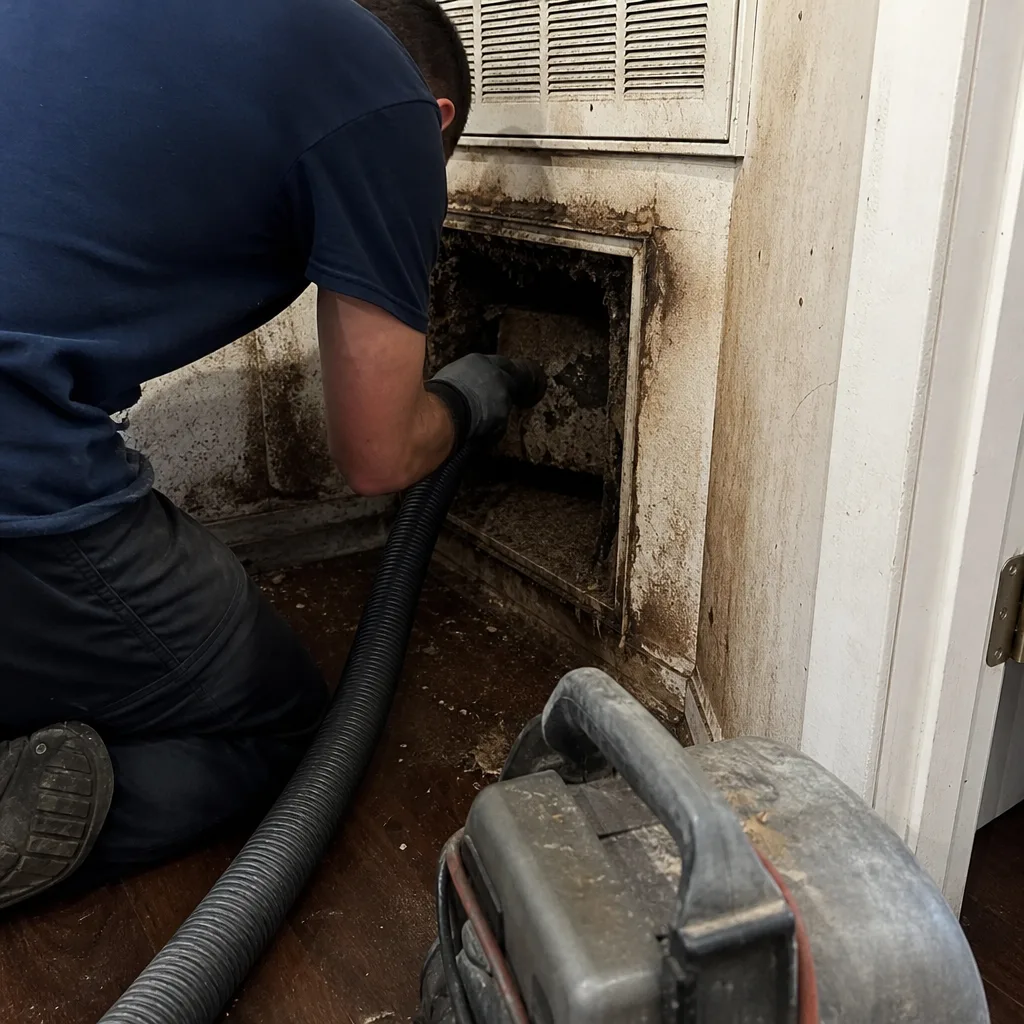 Before
 After
After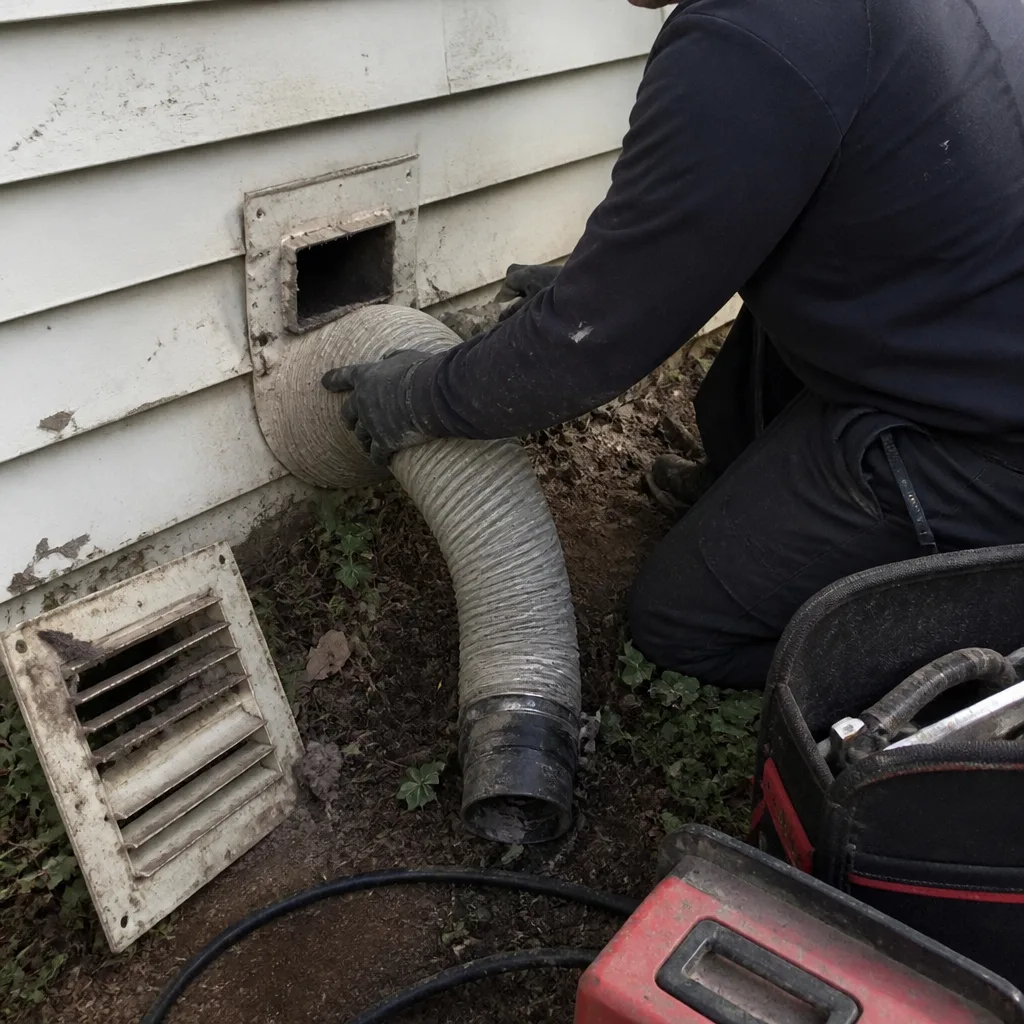 Before
 After
After