
Last updated October 15, 2026
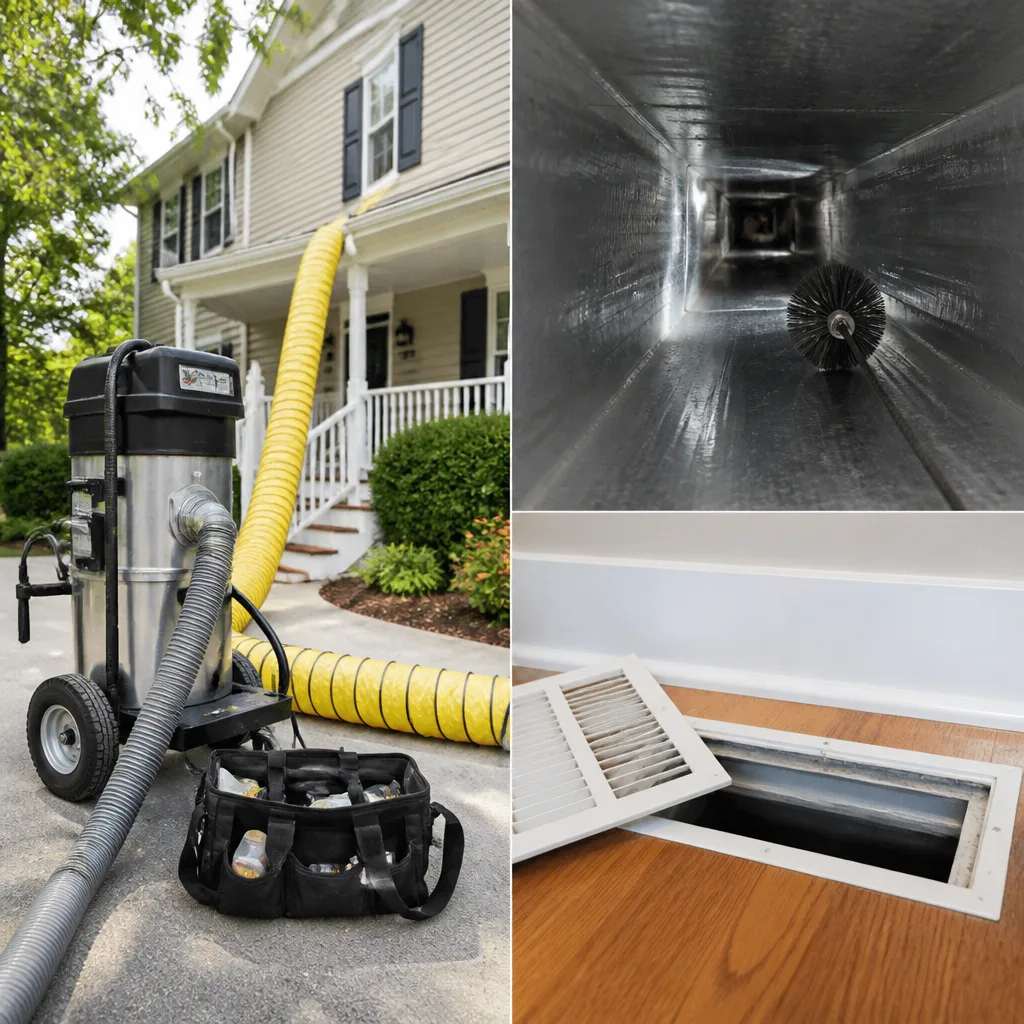 Whole-home duct cleaning
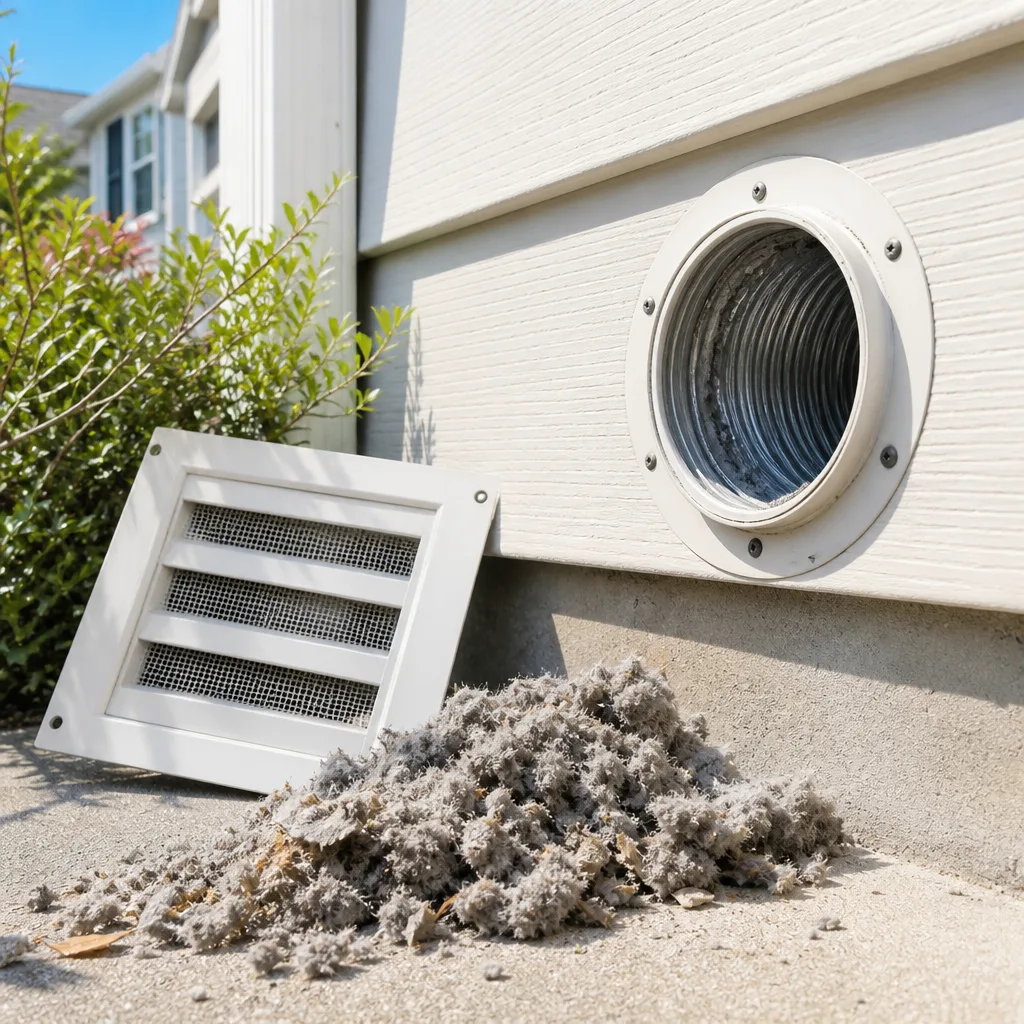 Dryer vent cleaning
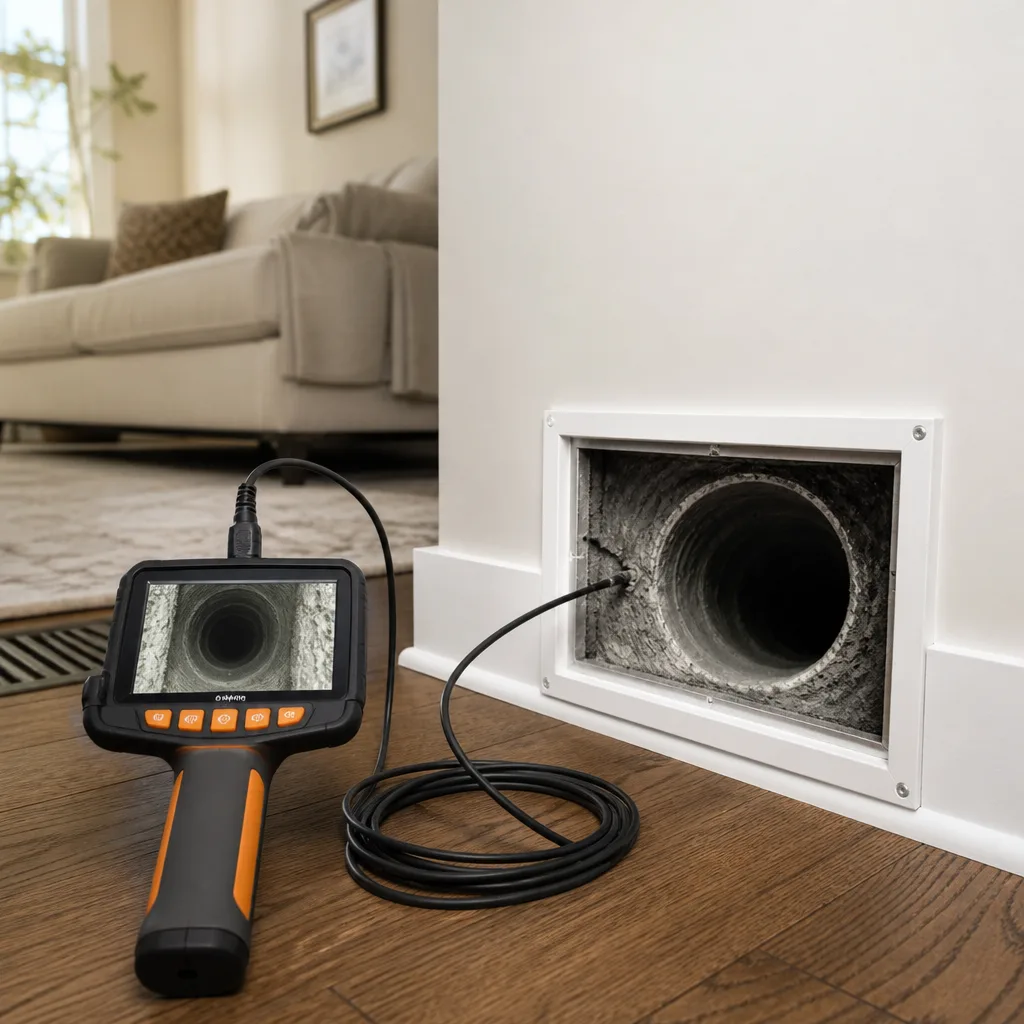 Camera inspection
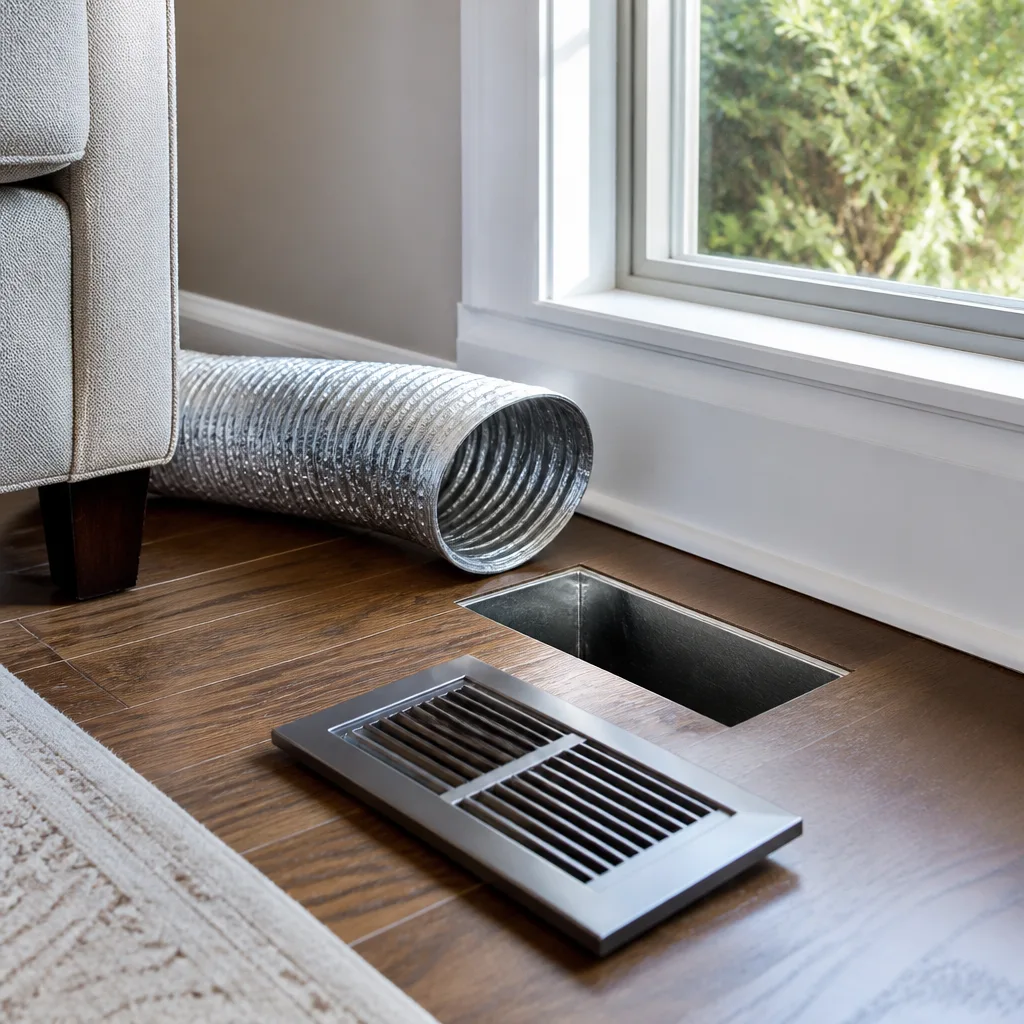 Sanitizing & deodorizing
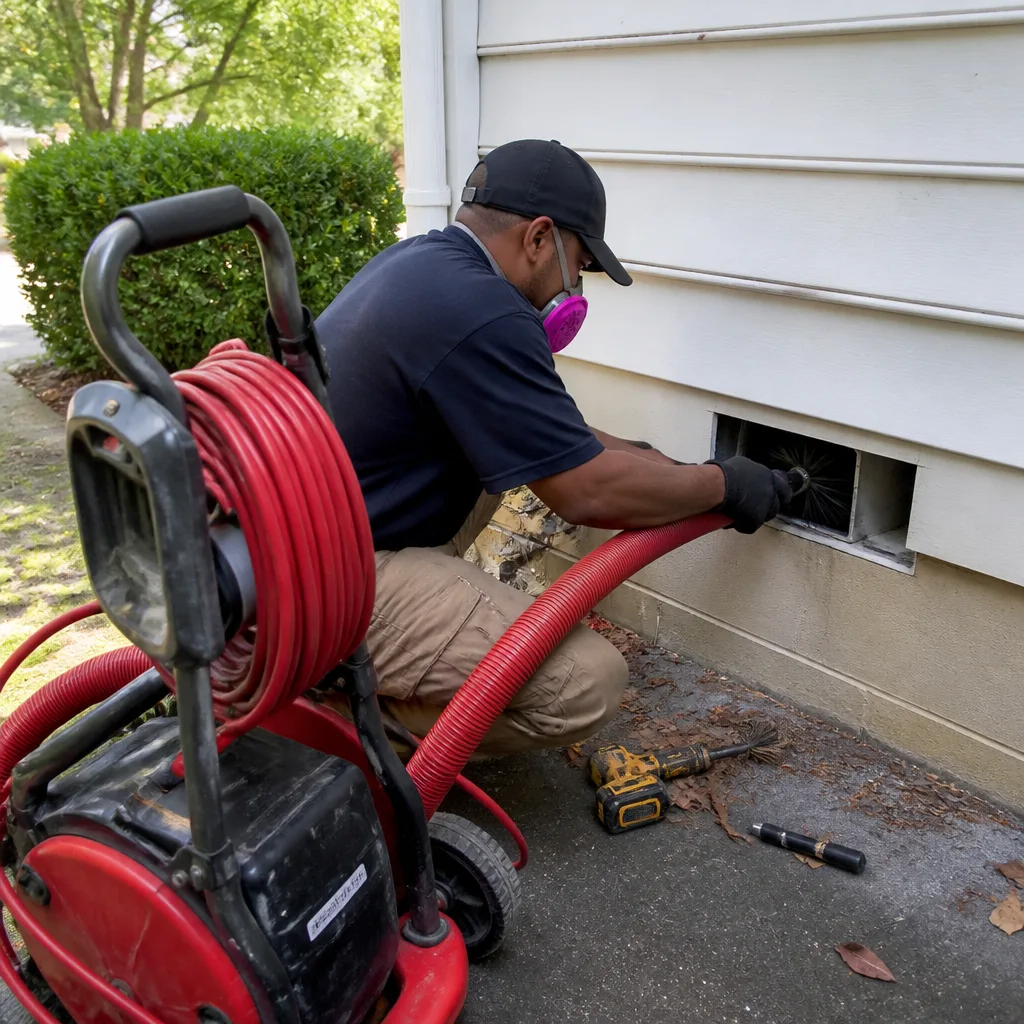
Whole-system duct and dryer vent check with before-and-after photos - you see exactly what came out of your vents
That "$99 whole-house special" is a bait ad - the real number appears once they are in your hallway, or the "clean" is a shop-vac at the register. We photograph the inside of your ducts before and after instead.
Air Duct Cleaning Cost Breakdown: The Atlanta Homeowner’s Reference for 2026
In 2026, Atlanta homeowners will pay anywhere from $49 to $1,200 for the exact same air duct cleaning on the exact same house. That spread isn’t a reflection of quality differences. It’s a reflection of two entirely different business models operating side by side in the Atlanta market: one that prices the whole job honestly up front, and one that prices a foot-in-the-door teaser and builds the real invoice after the van arrives. This guide pulls apart the line items, the equipment, the labor rates, and the upsell mechanics so you can read any Air Duct Cleaning quote and know exactly what’s real, what’s inflated, and what’s designed to extract money rather than clean ducts.
Quick Answer
A legitimate whole-house air duct cleaning for a 2,000 sq ft Atlanta home costs between $300 and $550 in 2026, depending on vent count, duct layout complexity, and whether supply and return mains require separate access. If a company quotes you $99, the business model requires them to upsell you past $300 once they’re inside. That’s not a deal. It’s a sales funnel with a van attached.
Styles & brands we work with
Table of Contents
- The Real Line-Item Breakdown: What Honest Atlanta Pricing Actually Looks Like
- Why Vent Count and Duct Layout Matter More Than Square Footage
- The Equipment Question: Why Truck-Mounted Negative Air Changes the Cost Equation
- Add-Ons That Earn Their Price vs. Add-Ons Built on Margin
- The $49 Bait-and-Switch: A Line-by-Line Reconstruction of How It Works
- The Written Price-Lock: What It Looks Like and Why It’s Your Best Protection
- How Often Atlanta Ducts Actually Need Cleaning (And What Changes That Answer)
- The DIY Question: What a Homeowner Can and Cannot Do Safely
The Real Line-Item Breakdown: What Honest Atlanta Pricing Actually Looks Like
Every legitimate Atlanta duct cleaning quote is built from four cost drivers: labor, equipment time, vent count, and access complexity. Here’s what each one actually costs at honest 2026 Atlanta market rates, based on what we’ve seen across thousands of homes in the metro area.
Labor: $90 to $140 per technician hour
A proper whole-house duct cleaning takes two technicians working three to five hours. That’s not because the work is slow; it’s because the job done correctly is methodical. One technician runs the negative-air extraction unit and monitors pressure readings while the second works the rotary brush through each duct run, opening and sealing access points as they go. At Atlanta labor rates, expect $270 to $560 in labor alone for a typical two-story home. Companies quoting under $200 total are either paying workers under the table, cutting the job short, or planning to recover the difference through add-ons.
Equipment mobilization: $60 to $120
Truck-mounted negative-air units and commercial rotary brush systems aren’t cheap to run. Fuel, wear, filter replacement, and the simple cost of getting a fully equipped van from a warehouse to a home in Atlanta adds a fixed mobilization charge to every job. This is legitimate. It’s the same reason an electrician charges a trip fee. If a quote doesn’t include it as a separate line, it’s buried in the vent price.
Per-vent pricing: $25 to $45 per vent
Most honest Atlanta contractors price by vent count, not by a flat “whole house” number pulled from thin air. A 2,000 sq ft Atlanta home typically has 8 to 12 supply vents and 2 to 4 return intakes. At $25 to $45 per vent, that’s $300 to $550 for the vent work alone. Some homes with finished basements and bonus rooms push past 16 vents, which is why range estimates exist. The vent price includes brush agitation, extraction at each register, and sealing the register after cleaning.
Supply and return main access: $75 to $150 per main
This is the line item most homeowners never see quoted, and it’s where bait-and-switch operations hide their margin. Cleaning the branch ducts running to individual rooms requires opening an access point in the main trunk lines, the large rectangular ducts running the length of your attic or crawlspace. On many Atlanta homes, supply and return mains require separate access cuts. Each main runs $75 to $150 to access, clean, and reseal properly. Legitimate quotes include this. Teaser quotes omit it and add it back as an “unexpected condition” once the tech is on site.
Filter replacement: $15 to $40
Every cleaning should end with a fresh filter. Most Atlanta homes run 1-inch disposable filters, which cost $8 to $20 at retail and a bit more installed. Some contractors push electrostatic or high-MERV upgrades here, a topic we’ll address in the add-ons section. For pricing purposes, a standard filter swap should land between $15 and $40.
Real total for a typical Atlanta home
- 1,500 sq ft, 10 vents, 2 mains: $320 to $450
- 2,000 sq ft, 12 vents, 2 mains: $360 to $520
- 3,000 sq ft, 16 vents, 3 mains: $480 to $680
- 4,000+ sq ft, 20+ vents, 3+ mains: $650 to $900+
These are the numbers an honest Atlanta contractor should be able to write down for you, in line-item form, before you ever book the appointment. If they can’t or won’t, that’s information in itself.
Why Vent Count and Duct Layout Matter More Than Square Footage
Square footage is the metric homeowners reach for, and it’s the wrong one. Duct cleaning cost is driven by how many openings a technician must clean and how hard the ductwork is to reach. A 1,800 sq ft 1980s ranch in Decatur with 14 vents and a tight crawlspace can cost more to clean than a 2,400 sq ft open-plan home in Milton with 10 vents and a walkable attic. Atlanta’s housing stock varies wildly, from 1950s brick ranches with original galvanized ductwork to 2010s infill builds with flex ducts in conditioned attics. A legitimate contractor explains this on the phone and asks about vent count, not square footage. A commission-driven sales rep asks for square footage because it’s the number that lets them anchor the quote high while the teaser price stays low.
Here’s what actually drives labor time:
- Vent count: more vents means more register removal, more brush passes, more sealing.
- Duct material: rigid galvanized duct cleans faster than old flex duct, which can snag brushes and requires gentler agitation.
- Access to mains: walkable attics and open crawlspaces are quick. Finished basements with drywalled ceilings over the mains take longer because access points must be cut and patched with more care.
- Story count: two-story Atlanta homes often have separate trunk lines for upstairs and downstairs, effectively doubling main-line work.
- Return configuration: homes with multiple return intakes, including hallway and master bedroom returns, add extraction time at each location.
When you call for a quote in Atlanta, and the first question is “How many square feet?” without any follow-up on vents or layout, you’re talking to a sales operation, not a cleaning operation. The square-footage question produces a quote; vent and layout questions produce a price. The difference is which one survives contact with the actual house.
The Equipment Question: Why Truck-Mounted Negative Air Changes the Cost Equation
The single biggest technical difference between a $99 duct cleaning and a $400 duct cleaning is negative-air extraction. This section explains what that means, why it costs more, and how to spot companies running the cheaper alternative.
What negative-air extraction actually is
Negative-air extraction means the system is set up so air is pulled out of the ductwork under vacuum while brushing happens. A powerful truck-mounted or portable negative-air unit connects to the duct system through a sealed access point, creating suction that pulls loosened debris out of the ducts and into a HEPA-filtered collection chamber. Nikro and Abatement Technologies units are the industry standards for this approach in the Atlanta market. The vacuum runs the entire time the technician is brushing, so particles loosened at the duct wall are removed from the system immediately rather than floating in the airstream and resettling. This is the standard a legitimate cleaning should meet.
The cheap alternative: positive-pressure brushing with a shop vac at the register
This is the box-store approach. A technician pushes a rotating brush down each vent opening and holds a shop vacuum at the register to catch whatever comes back. There’s no sealed system, no continuous extraction, and no HEPA filtration. Debris loosened deep in the duct run doesn’t get pulled out; it just gets pushed around and resettles. Within weeks, the ducts look the same as before the cleaning. The equipment costs a few hundred dollars instead of tens of thousands, and the labor is unskilled. This is what your $99 buys.
Rotobrush and mechanical agitation: why the brush matters
Dust that has been baked onto duct walls by years of Atlanta humidity doesn’t fall off from air pressure alone. It requires mechanical agitation, a rotary brush system that physically scrubs the duct wall to break the adhesion. Rotobrush systems are built exactly for this, with rotating bristle heads sized to the duct. Brush agitation followed immediately by negative-air extraction is the sequence that produces a genuinely clean duct. A company running negative air without brushing is skipping the step that makes the cleaning last. A company brushing without negative air is making dust airborne without removing it. Both halves are necessary, and the equipment to do both properly is why honest pricing sits where it sits.
Filtration at the unit: where the particles go
Every negative-air unit runs some form of filtration between the duct system and the vacuum motor. Abatement Technologies units, common on professional trucks in Atlanta, use multi-stage HEPA filtration rated to capture 99.97% of particles down to 0.3 microns. This matters because the unit is running inside your home during the cleaning. A unit without proper filtration is exhausting fine particulate back into your living space, which defeats the entire point. When you’re comparing Atlanta duct cleaning quotes, ask one question: “Does your equipment run HEPA filtration at the collection unit?” If the answer is a blank stare, hang up.
Add-Ons That Earn Their Price vs. Add-Ons Built on Margin
Atlanta duct cleaning companies offer a menu of add-ons once the base job is priced. Two of them carry documented value. Most of the rest are margin vehicles dressed up as health services. Here’s how to tell the difference.
Dryer vent cleaning: worth every dollar
Lint accumulation in dryer vents is a fire hazard, full stop. The National Fire Protection Association identifies dryer lint as a leading cause of residential appliance fires, and Atlanta’s humid climate accelerates lint compaction because moisture makes lint clump and adhere to vent walls. A separate dryer vent cleaning in Atlanta typically runs $100 to $180 as an add-on when paired with duct cleaning. It requires specialized equipment, most commonly a rotary brush system with a bypass for the lint trap, and it should be done annually regardless of duct cleaning schedule. This is not an upsell. It’s a second, distinct service with its own safety justification. If you’re cleaning your ducts once every three to five years but your dryer vent has never been touched, you’re cleaning the wrong thing first.
Air handler and coil cleaning: conditionally worth it
If your HVAC air handler, the indoor unit that houses the blower and evaporator coil, is accessible and hasn’t been cleaned in years, adding air handler cleaning to a duct job makes mechanical sense. A dirty evaporator coil reduces system efficiency and adds strain to the blower motor. Expect $150 to $250 for a proper coil cleaning with a no-rinse evaporator cleaner applied correctly. The condition is this: if the contractor proposes handler cleaning without first looking at the handler, that’s a red flag. The handler may be sealed, the coil may be clean, or the access may require disassembly that isn’t worth the cost. A legitimate company evaluates and then recommends. A sales company recommends and then charges.
Sanitizer foggers and duct coating: near-pure margin
Most “antimicrobial sanitizing fog” add-ons sold by Atlanta duct companies cost the contractor $20 to $60 in product and an extra 20 minutes of labor, and they’re billed at $150 to $300. The chemical is atomized into the duct system after cleaning. Here’s the honest truth: once ducts are physically clean, a residual antimicrobial fog adds little measurable benefit, and the EPA has registered these products for limited, specific claims that don’t include “prevents mold growth in ducts for 5 years.” Duct coating treatments, the ones that spray a polymer sealant onto duct walls, are even worse. Most duct coatings are not recommended by HVAC manufacturers, can alter airflow characteristics, and are almost impossible to remove if application goes wrong. If a company leads with foggers and coatings in a bundled “healthy home package,” they’re selling chemicals, not cleaning.
Filtration upgrades: value outside the ducts
What does have documented value is what goes into the filter slot after the cleaning. Upgrading from a fiberglass 1-inch filter to a pleated MERV 8 or MERV 11 filter improves particle capture between cleanings. Homes with allergy-sensitive occupants may benefit from a whole-house media filter cabinet from Honeywell or Aprilaire, which accepts deeper 4-inch filters with more surface area and lower static pressure drop. These products run $150 to $400 installed and are optional, legitimate, and easy to understand. Guardsman offers comparable filtration products in the same category. The difference between a filtration upgrade and a fogger is that the filtration device keeps working every time the system runs, while the fogger is a one-time chemical event with no residual mechanism.
The $49 Bait-and-Switch: A Line-by-Line Reconstruction of How It Works
Here is the actual business model, reconstructed from complaint data patterns and hundreds of conversations we’ve had with Atlanta homeowners who called us after the fact. This is not hypothetical.
Step 1: The teaser price gets the van to the driveway
An Atlanta homeowner sees a mailer, a Facebook ad, or a Groupon for $49 whole-house duct cleaning, sometimes $79 or $99. The ad shows a clean van, a friendly tech, and a satisfaction guarantee. The homeowner books. The appointment is scheduled. The van arrives. So far, everything feels legitimate.
Step 2: The discovery phase creates “unexpected conditions”
The tech walks the house, opens a return vent, and immediately starts finding problems. Mold is “discovered” in the ducts. The mains are “hazardous” and require special access. The ducts “need” a sanitizer treatment. The original $49 covered “basic cleaning only,” and basic cleaning, the tech explains, means vacuuming the registers from the outside. Actually cleaning the inside of the ducts is an upgrade.
Step 3: The rebuilt invoice lands between $600 and $1,100
Now the true price appears. Vent-by-vent cleaning at $35 per vent. Main access fees. Fogging. Coil cleaning. UV light installation. By the time the tech finishes walking the house, the invoice is $800, and the homeowner faces a choice: pay the inflated price or pay a “diagnostic fee” or “trip charge” to send the tech away. Most people pay.
Step 4: The work is done with inadequate equipment
The tech runs a brush through each register and holds a shop vac at the opening. No negative-air extraction. No sealed system. No HEPA filtration. The homeowner watches, sees activity, and assumes the work is thorough. Within weeks, dust returns because the debris was pushed around, not removed. The company that did the work has no guarantee worth invoking, and the phone number on the mailer may already be recycled.
The honest comparison
A flat-rate company charging $450 for the same home provides negative-air extraction, brush agitation, HEPA filtration, main access, filter replacement, and a written guarantee. The bait-and-switch company charges $800 for a visual performance. The honest model is cheaper in total cost and infinitely better in outcome. The bait-and-switch model survives because homeowners compare the $49 teaser to the $450 honest quote and choose the teaser, not knowing the comparison is false from the first line.
The Written Price-Lock: What It Looks Like and Why It’s Your Best Protection
The single most reliable cost-protection tool available to Atlanta homeowners is a written price-lock before work begins. This section explains what that document looks like, what it should contain, and what it protects against.
What a legitimate written quote includes
- A total job price in dollars, not a range. “Your job: $425.” Not “between $300 and $600 depending on conditions.” A contractor who has asked the right questions can price the job before seeing it.
- A line-item breakdown. Labor, mobilization, per-vent count with the actual vent number, main access, filter. Each with a dollar figure.
- A scope-of-work statement. What will be cleaned, what equipment will be used, how many access points will be opened and sealed.
- A condition for revision. Honest contractors include a clause: if access is blocked, if the system has hazardous contamination requiring remediation beyond cleaning, or if the homeowner omitted a finished basement with eight extra vents, the price revises with written explanation before work continues. What honest contractors do not do is revise after the work is done or pressure you mid-job.
- A guarantee in writing. Not a verbal promise. A paragraph that says what happens if the work falls short, what the homeowner must do to invoke it, and what the response will be. The Kingswell Guarantee, which has governed every job under the Kestrel Air Duct Atlanta name since 2004, specifies four commitments: a written price before work begins, a defined arrival window, a clean job site, and a written guarantee on the work. Each one is stated in the quote document. If the work fails within the guarantee period, the company returns and makes it right at no charge. That last sentence is the one that matters and the one most Atlanta homeowners never see in writing.
What a bait-and-switch “quote” looks like
- A single teaser number with no line items, often in an ad rather than a document.
- An “estimate” that explicitly states it’s not binding.
- Fine print reserving the right to add “necessary services” at the technician’s discretion.
- No equipment specified. No scope of work. No guarantee language.
- Payment requested before the work begins, or before the work is completed.
At Kestrel, under the Kestrel Air Duct Atlanta home standard, the written price is in the customer’s hands before a single vent is touched. The 365-Day Done Right Promise is documented on every job: if the work isn’t done right, Kestrel returns and makes it right, no charge, within the guarantee period. That’s the difference between a price and a promise. Atlanta homeowners should settle for nothing less.
How Often Atlanta Ducts Actually Need Cleaning (And What Changes That Answer)
The honest answer: most Atlanta homes need duct cleaning every three to five years. Not annually. Not never. The interval depends on specific factors.
What shortens the interval
- Pets that shed heavily. Hair and dander accumulate in ducts and act as a binder for dust.
- Recent renovation. Drywall dust, sawdust, and construction debris are pulled into return ducts and settle there. Any substantial remodel should trigger a duct cleaning afterward.
- Occupants with allergies or asthma. Sensitive occupants benefit from shorter intervals. Every three years is reasonable.
- High-velocity HVAC or undersized returns. Systems that pull harder through returns deposit more particulate on duct walls.
- Crawlspace homes in humid zones. Atlanta summers are brutal on crawlspaces, and mold-friendly humidity in the duct environment accelerates biological growth.
What lengthens the interval
- Consistent filter changes. A MERV 8 or MERV 11 filter changed every 60 to 90 days keeps duct walls cleaner longer.
- No pets, no smoking, no renovation. Low-shed households with sealed attics and clean returns can stretch to five years or beyond.
- Operating the system year-round. Continuous airflow prevents stagnation, though it doesn’t prevent all accumulation.
The signs that actually indicate cleaning is due
Visible dust around register openings that returns quickly after wiping is a classic sign. Dust streaking on walls near returns points the same direction. A musty odor when the system first kicks on can indicate biological material in the ducts or coil. Reduced airflow from individual registers despite a clean filter suggests blockage somewhere in the branch runs. None of these signs alone is definitive, but two or more together are a strong signal. If you see them, the next step is a professional evaluation, not a purchase decision.
The DIY Question: What a Homeowner Can and Cannot Do Safely
We get asked constantly whether homeowners can clean their own ducts. Here’s the straight answer for Atlanta homeowners specifically.
What’s reasonable DIY work
- Replace return and supply registers. Unscrew the covers, wash them in soapy water, dry, reinstall. This is basic maintenance any homeowner can do.
- Reach what you can reach. If you can see into a short return boot from the wall opening, wiping what’s visible with a damp cloth is reasonable. You’re not cleaning the ducts; you’re cleaning what you can touch.
- Keep up with filters. The single most effective duct-maintenance task is a clean filter. Do this religiously.
What’s not reasonable DIY work
- Anything requiring access cuts. Cutting into main trunk lines in attics or crawlspaces requires skill, the right tools, and proper resealing. A poor seal leaks conditioned air and creates moisture problems. This is technician work.
- Deep-cleaning branch ducts. The runs between the main line and each register are 10 to 25 feet long. A brush on a drill from the register reaches the first few feet. The rest is untouched. This isn’t cleaning; it’s theater.
- Anything involving chemicals. Do not fog, spray, or coat your ducts with any product sold at retail. Most of these products have no meaningful efficacy data in HVAC systems, and some leave residues that attract dust faster than before.
- Dryer vent cleaning if the run is long or vertical. A dryer vent more than a few feet long, venting upward, or running through a wall or roof requires professional equipment. Lint accumulation deep in a vertical run is exactly what causes dryer fires, and a homeowner brush kit won’t reach it. This is the one area where DIY failure isn’t just ineffective; it’s genuinely dangerous. Call a professional.
Common Mistakes to Avoid
- Comparing teaser prices against flat-rate prices without knowing what each includes. The $99 quote and the $450 quote are not for the same service. Comparing them directly is like comparing a car wash to an engine rebuild because both involve a vehicle.
- Believing square footage is the pricing variable. Atlanta homes of identical square footage can have vent counts that differ by 50%. Ask about vent count. If the company can’t discuss it, they don’t know their own pricing model.
- Paying for foggers and coatings without asking one question. Ask: “What does this product do, how long does it last, and what evidence do you have?” If the answer is vague, skip it. You’re buying air, literally.
- Skipping the dryer vent because it’s “just an add-on.” The dryer vent is the more urgent safety concern in most Atlanta homes. Never let a duct cleaning company leave without quoting the dryer vent separately.
- Accepting a verbal guarantee. If the guarantee isn’t in writing, it doesn’t exist. Atlanta consumers have no legal protection against a verbal promise made in a driveway.
- Choosing a company that can’t describe its equipment. Ask what brand of negative-air unit they run. If the tech hesitates, they’re running a shop vac. The equipment is the service. Demand to know what it is.
- Believing ducts “never need cleaning.” Ducts do accumulate debris, and that debris does recirculate. The “ducts never need cleaning” line is just as wrong as “ducts need cleaning every year.” The truth sits in the three-to-five-year range for most Atlanta homes.
See the difference
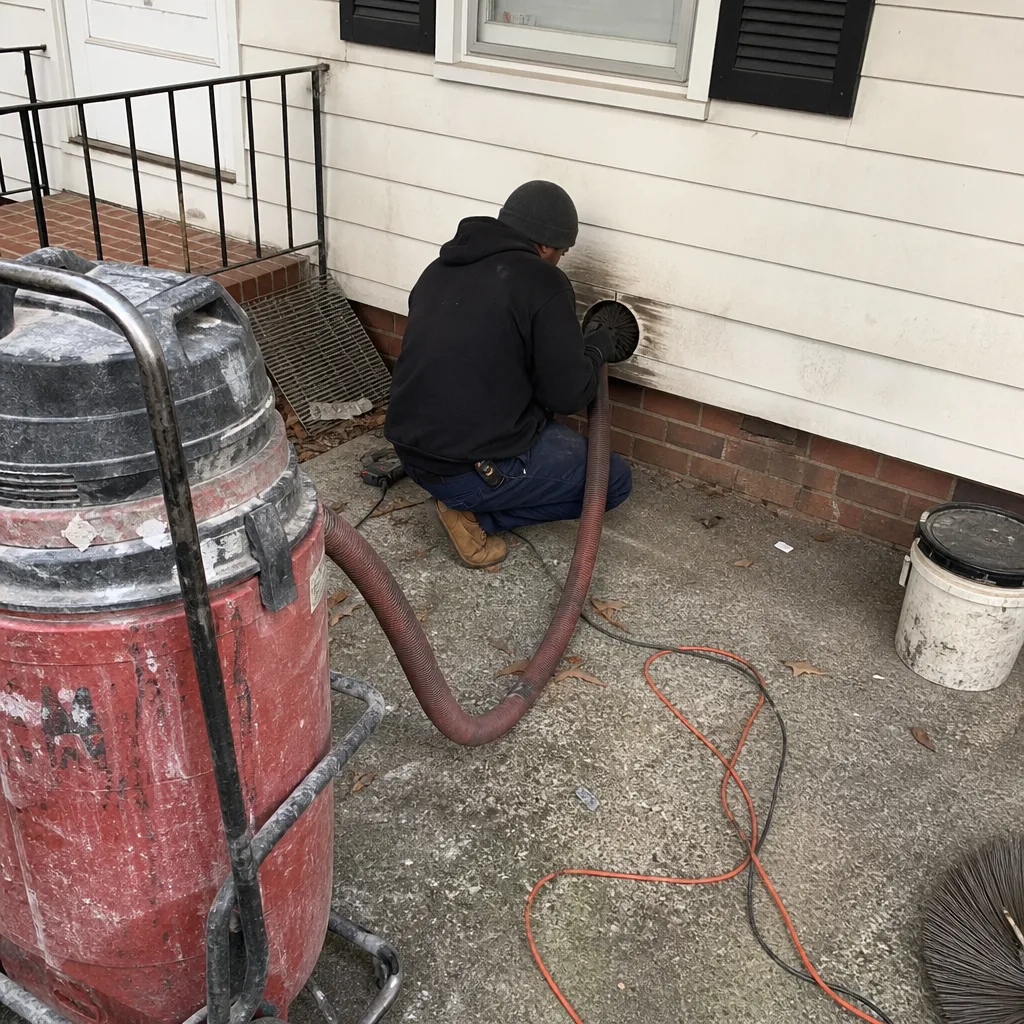 Before
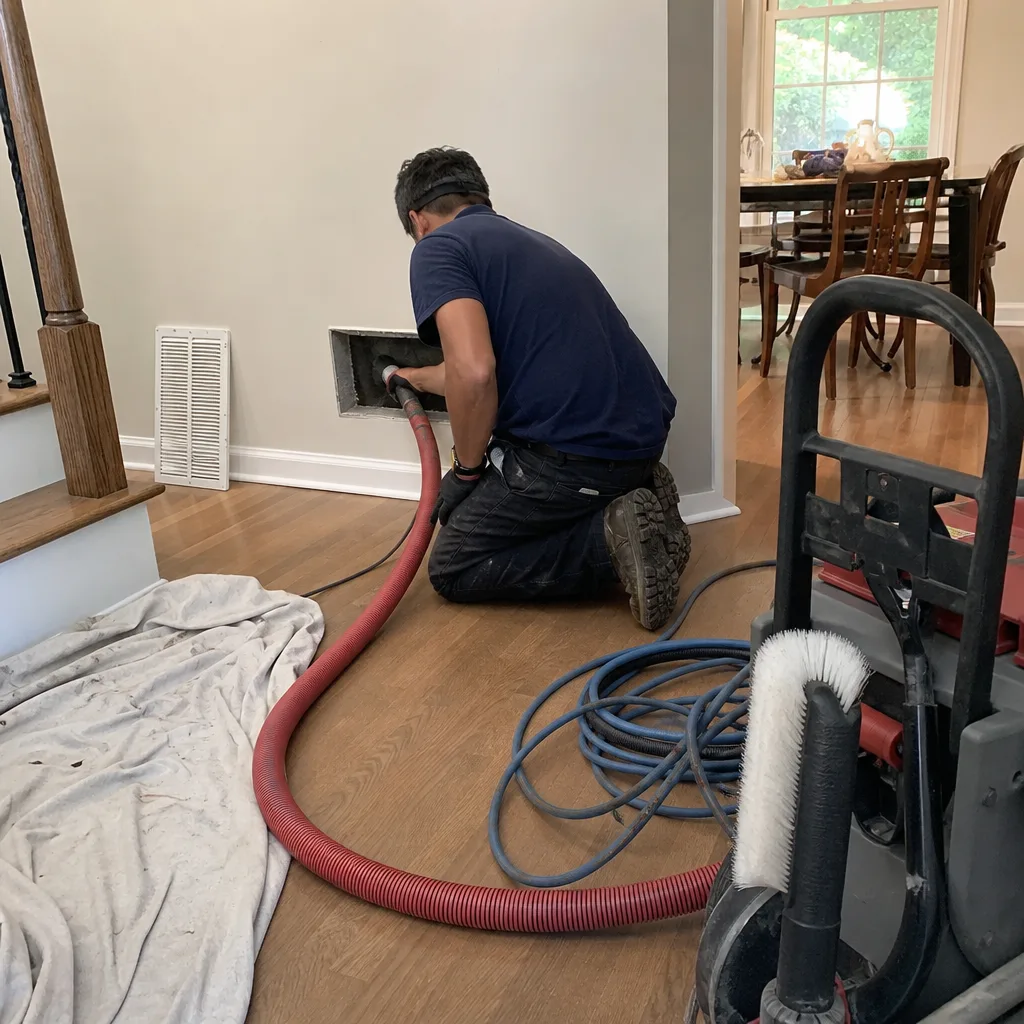 After
After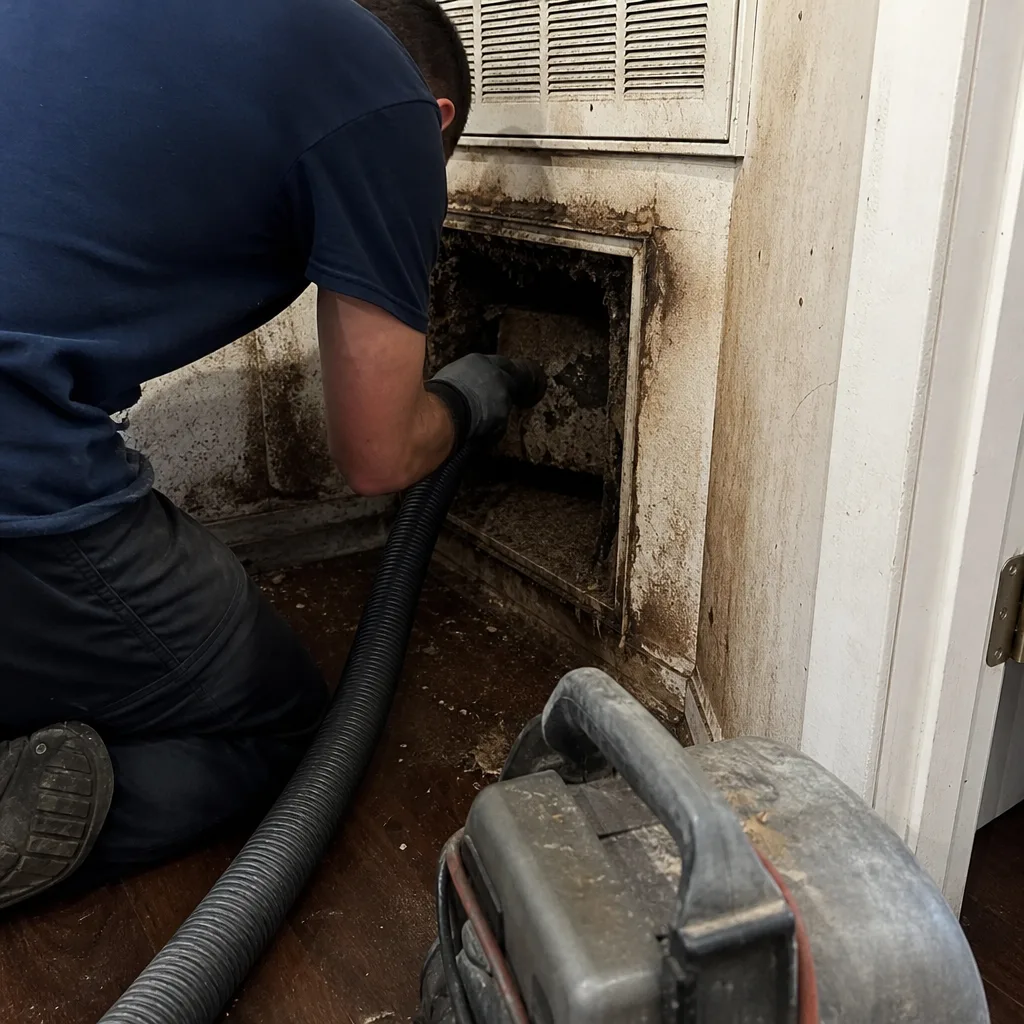 Before
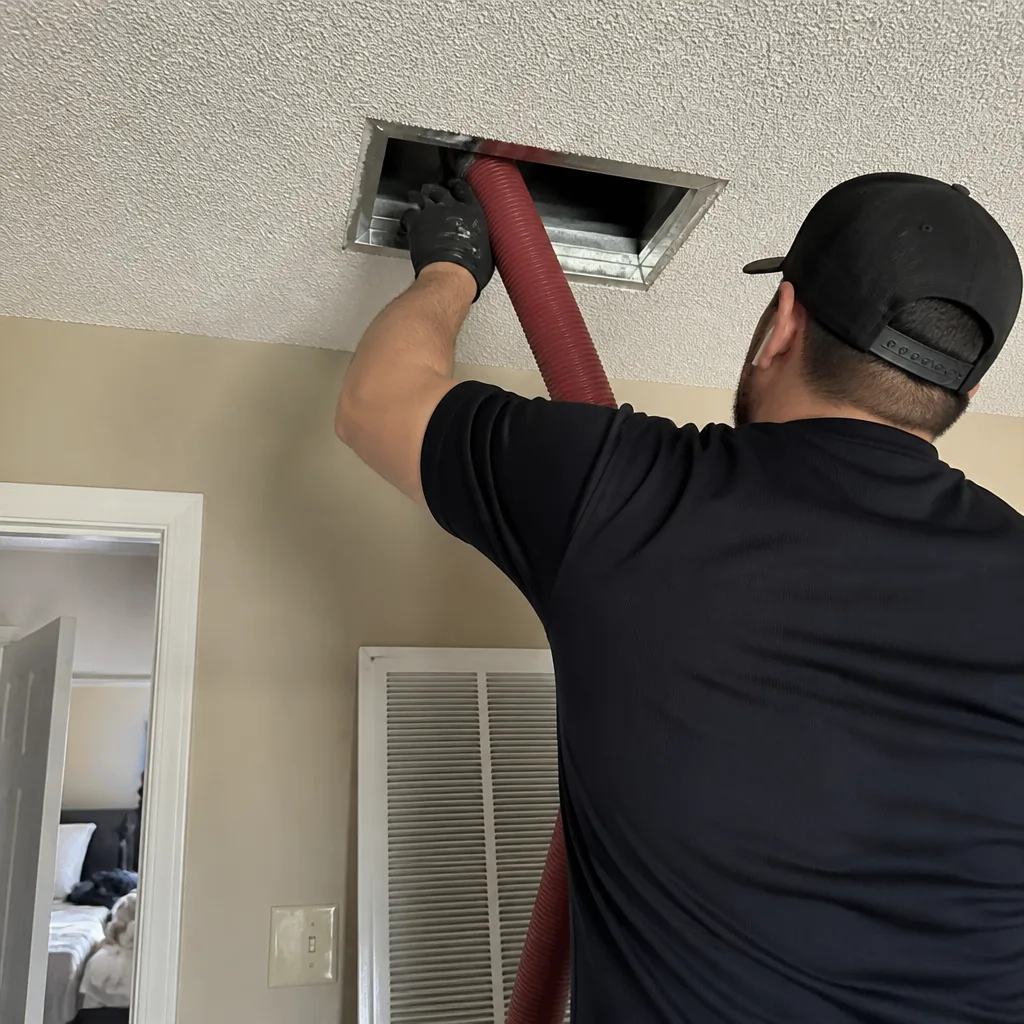 After
After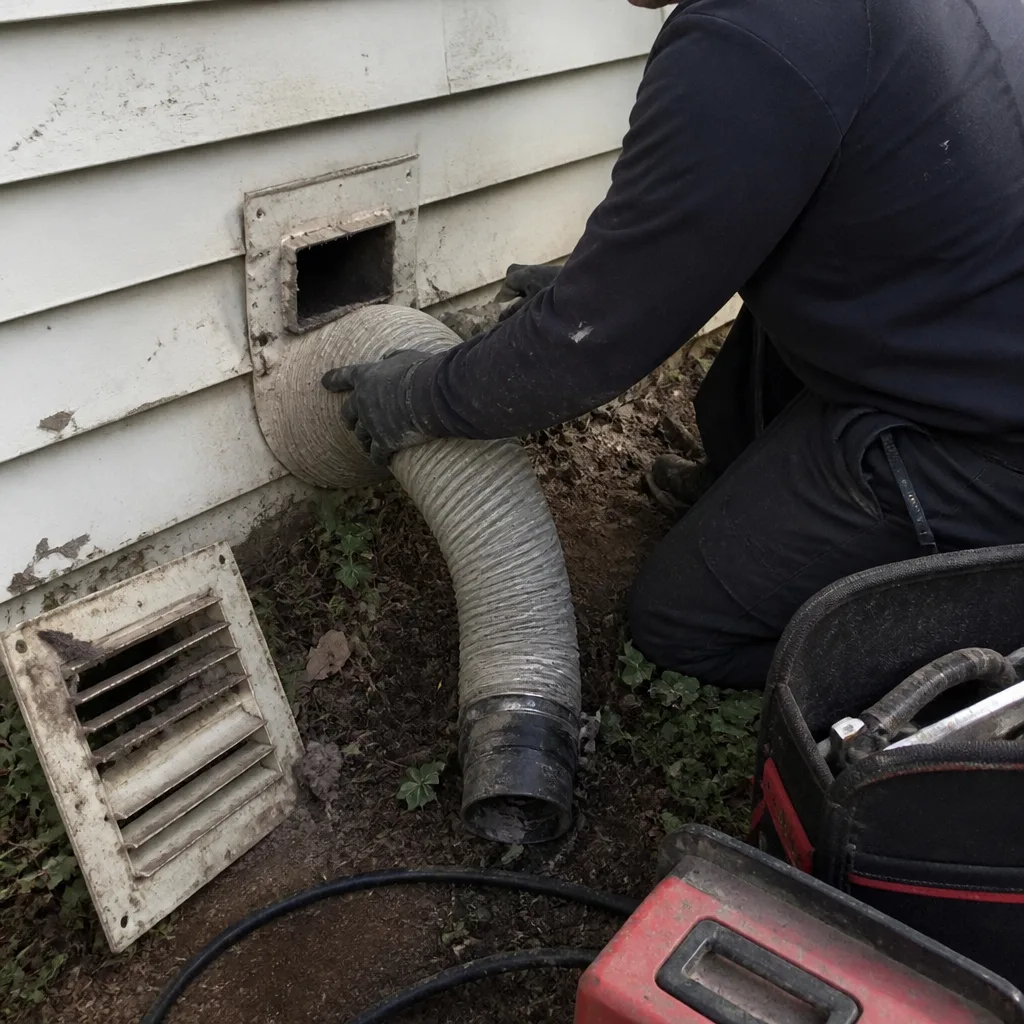 Before
 After
AfterWhen to Call a Professional
Call a professional when you see dust around registers that returns within days of wiping, when your allergies spike specifically when the HVAC runs, when you’ve completed renovation work, or when a musty odor accompanies system startup. Call when you’ve lived in the home more than three years and have never had the ducts inspected. Call when you bought a house and the previous owner’s maintenance habits are unknown. And call when a company’s quote doesn’t survive the questions in this guide. For Air Duct Cleaning Maintenance Checklist for Atlanta Homeowners and other resources, see our blog. Kestrel Air Duct Atlanta offers free estimates for homeowners in Atlanta and surrounding areas. Call (470) 378-1006 and we’ll give you a written price before any work begins, with no obligation and no follow-up pressure.
Frequently Asked Questions
Most Atlanta homes run between $300 and $550 for a complete cleaning of a 2,000 sq ft home, with smaller homes falling below that range and larger or vent-heavy homes running up to $900. The cost depends primarily on vent count, main-line access, and equipment quality. Call (470) 378-1006 for an exact quote for your home; estimates are free and the written price is locked before work begins.
Cheaper quotes are almost always teaser prices that exclude main access, per-vent pricing, and equipment mobilization, all of which get added back once the technician is inside. The total cost of a bait-and-switch cleaning typically lands between $600 and $1,100, which is more than a legitimate flat-rate cleaning. Call (470) 378-1006 for an honest quote with every line item included up front.
Ask for before-and-after photos of your own ducts, taken from the access points during the job. Ask what equipment the company uses and what each piece does. A legitimate company will show you the negative-air unit running, explain the brush agitation process, and provide photos of the collection filter after the job. Kestrel Air Duct Atlanta documents every job this way. Call (470) 378-1006 to schedule a cleaning that you can see.
Every three to five years for most Atlanta homes, with shorter intervals for homes with heavy shedding pets, recent renovation, smokers, or allergy-sensitive occupants. The three-year mark is a good check-in point; have a professional evaluate before committing to a cleaning. Call (470) 378-1006 for a free assessment of whether your ducts need cleaning now.
It’s not a scam in the legal sense; it’s a sales funnel. The company intends to upsell you to $600 to $1,100 once the tech is in the house, and the work performed at the teaser price is often minimal. The $49 price exists to get the van to your driveway. Nothing more. A legitimate company tells you the real price on the phone, writes it down, and stands behind it. Call (470) 378-1006 for that kind of quote.
Yes. Atlanta’s hot, humid summers create conditions where biological material grows more readily inside ductwork, especially in homes with crawlspace HVAC systems. Dust that would stay dry and loose in a desert climate becomes sticky and adheres to duct walls in Atlanta. This means Atlanta homeowners on the shorter end of the three-to-five-year interval are often the ones with crawlspace homes and older duct systems. Call (470) 378-1006 for an evaluation specific to your home’s construction.
The Bottom Line
Atlanta air duct cleaning in 2026 costs between $300 and $550 for an honest, thorough job on a typical home, and that price buys negative-air extraction, brush agitation, HEPA filtration, main-line access, and a written guarantee. Anything advertised dramatically below that range is a partial service designed to upsell into a higher total than the honest price. The right questions, asked before the van arrives, protect you better than any comparison shopping. Demand a written price. Demand equipment specifications. Demand a guarantee in writing. If the company answers all three clearly, you’ve found one worth hiring. If they can’t, keep dialing.
Written by Dale Whitmore, Owner at Kestrel Air Duct Atlanta, serving Atlanta since 2004. Explore more guides & resources on our blog.