
Last updated October 15, 2026
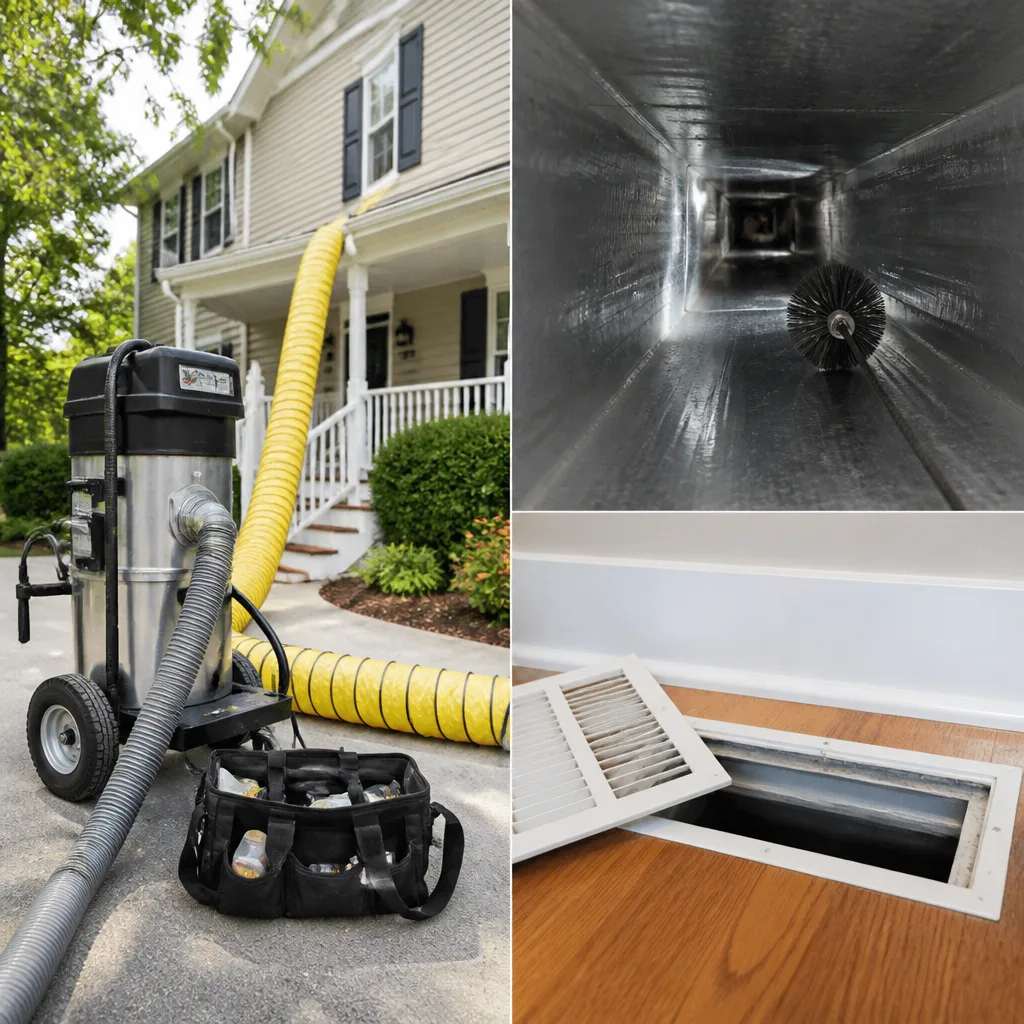 Whole-home duct cleaning
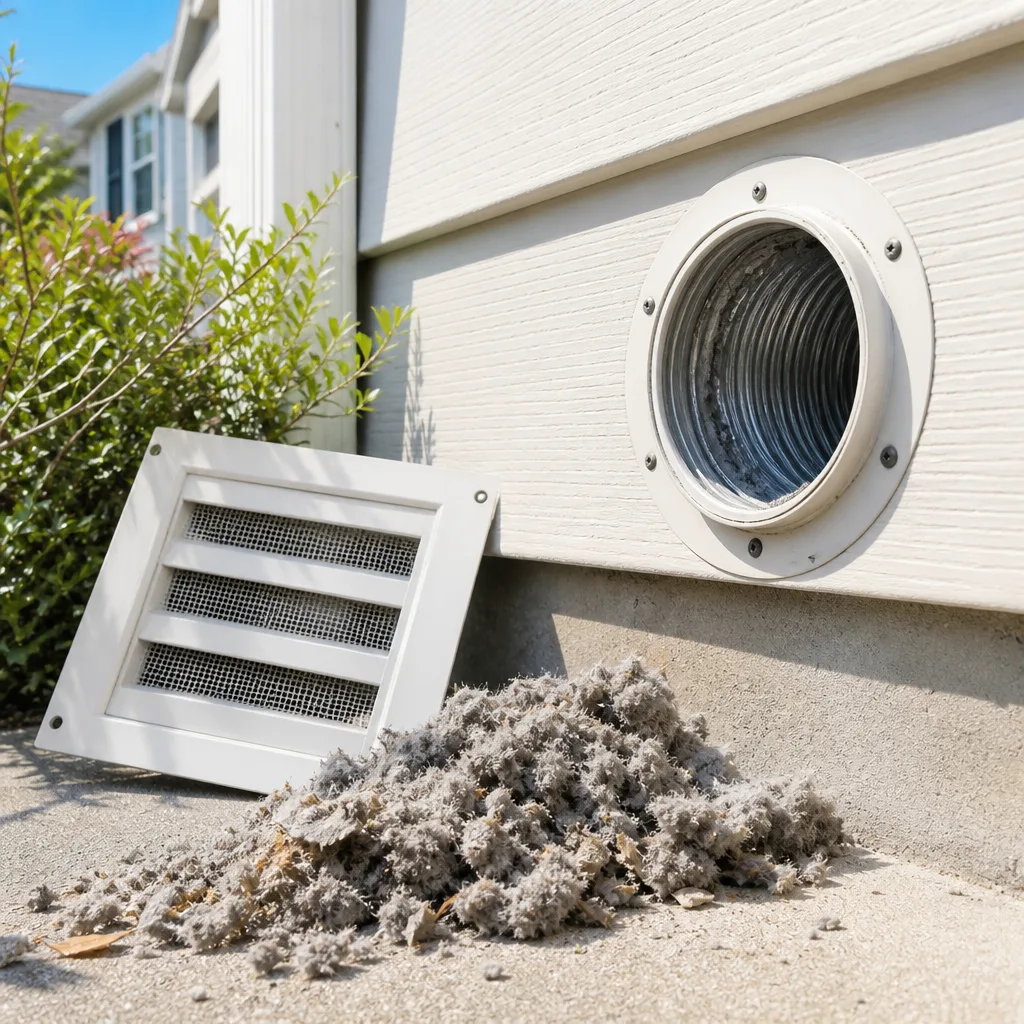 Dryer vent cleaning
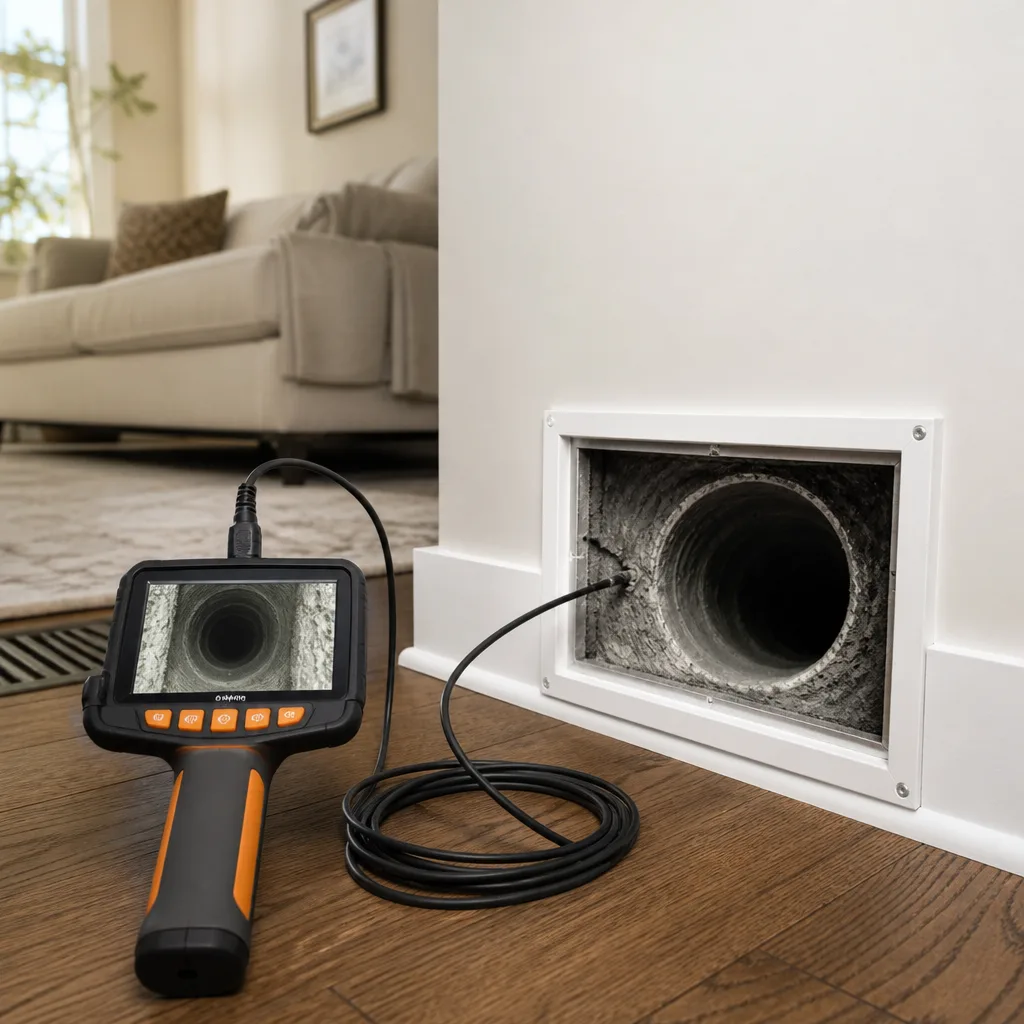 Camera inspection
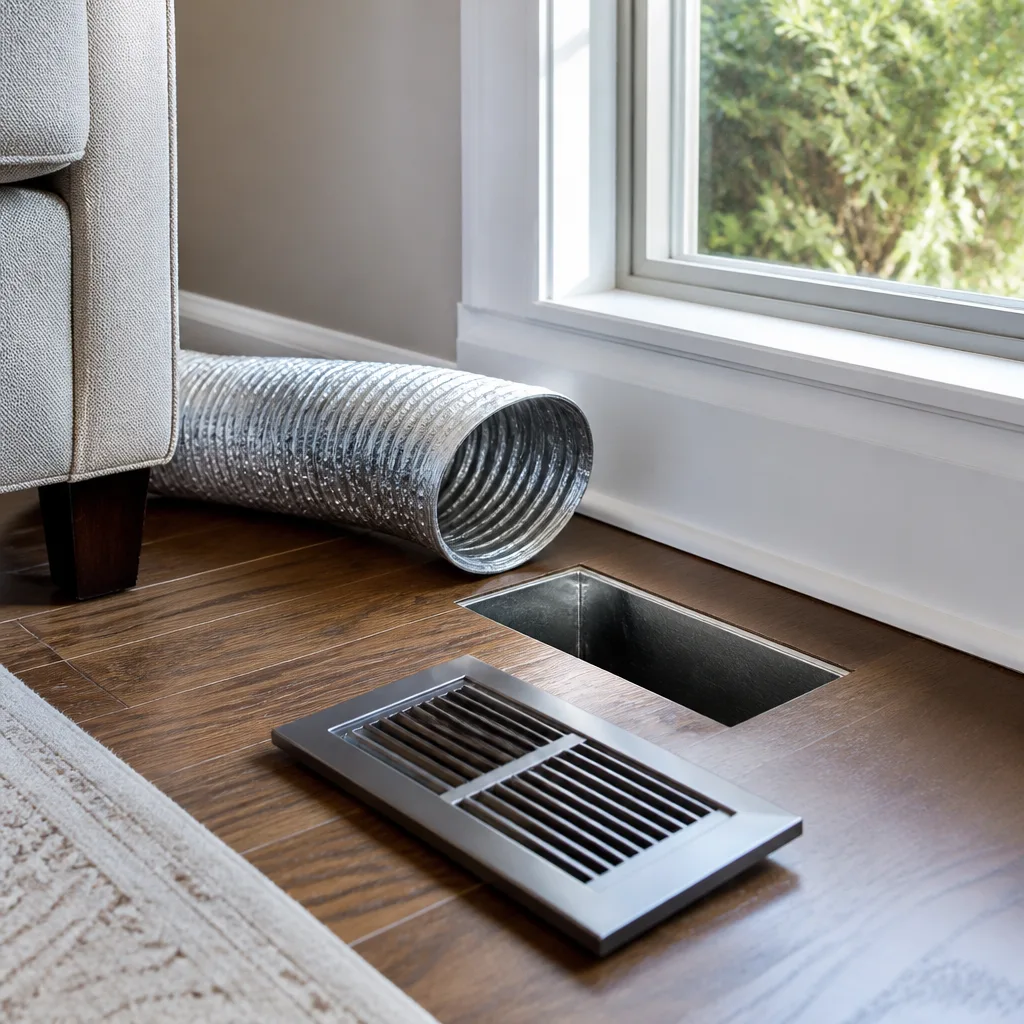 Sanitizing & deodorizing
Whole-system duct and dryer vent check with before-and-after photos - you see exactly what came out of your vents
That "$99 whole-house special" is a bait ad - the real number appears once they are in your hallway, or the "clean" is a shop-vac at the register. We photograph the inside of your ducts before and after instead.
Air Duct Cleaning Permits, Codes & Inspections in GA: What You Need to Know
Here’s the counterintuitive reality most Atlanta homeowners never see coming: the friendly technician who reattaches a disconnected flex duct run without a permit isn’t doing you a favor. They’re leaving you with unpermitted mechanical work that can surface during a home sale inspection years later, and suddenly a $75 “quick fix” becomes a negotiation chip for the buyer’s attorney. Clean ductwork has no permit requirement anywhere in Georgia. But the moment cleaning crosses into sealing, reconnecting, replacing, or modifying duct systems, the state’s amended International Mechanical Code can kick in, along with stricter interpretations in Fulton, DeKalb, Cobb, and Gwinnett counties. This guide draws the exact line, so you’ll know before any contractor touches your system what’s routine maintenance and what’s permitted work. For a deeper dive into the process itself, see our The Complete Guide to Air Duct Cleaning in Atlanta.
Quick Answer
Pure air duct cleaning, meaning the removal of debris from the interior surfaces of existing ducts using brushes and negative-pressure extraction, requires no permit anywhere in Georgia. However, if the work includes duct replacement, reconnecting separated sections, applying sealant to close leaks, or installing equipment like UV purifiers, you may need a mechanical permit depending on the county and the scope of the modification. The safest question to ask any contractor is direct: “Will this work require a permit, and will you pull it in your name?” The right answer is never a dodge.
Styles & brands we work with
Table of Contents
- Cleaning vs. Repair: Where Georgia Draws the Line
- Georgia’s Amended International Mechanical Code: Maintenance vs. Repair Definitions
- Fulton, DeKalb, Cobb, and Gwinnett: How County Interpretations Differ
- What Actually Triggers a Mechanical Permit in Metro Atlanta
- Your Legal Exposure if Unpermitted Work Is Found During a Sale
- How to Ask a Contractor About Permits (And Hear What You Need to Hear)
- When a Duct Cleaning Company Performs Repairs: What to Verify
- What a Mechanical Inspection Actually Checks
Cleaning vs. Repair: Where Georgia Draws the Line
The distinction matters more than most people realize. Cleaning is exactly what it sounds like: agitating debris loose from duct walls with a rotary brush, pulling it out with a negative-pressure vacuum, and leaving the existing system intact. No structural change, no material modification, no new equipment. Under Georgia code, that’s maintenance, and maintenance never requires a permit. Repair is different. Repair means restoring a system component to proper function by replacing, reconnecting, sealing, or structurally altering it. In our experience across Atlanta, the confusion almost always starts when a cleaning technician discovers something broken during the job: a flex duct that’s sagged apart at a joint, a return plenum with a gaping hole, a boot that’s come loose from the floor register. The honest technician tells you it’s a repair and explains what’s required. The less careful one just “takes care of it” on the spot, and that’s where unpermitted work begins.
The practical test we tell Atlanta homeowners to apply is simple. If the fix involves tools that alter the system rather than clean it, if it involves new materials, if it involves anything that changes how air moves through the ductwork, it’s worth asking the permit question out loud. You’re not being difficult. You’re protecting the most expensive asset you own.
Georgia’s Amended International Mechanical Code: Maintenance vs. Repair Definitions
Georgia adopts the International Mechanical Code (IMC) with state-specific amendments, and the IMC defines maintenance as “the upkeep of equipment and systems” that does not change the original design or function. Cleaning fits squarely inside that definition. The IMC defines repair as work that “restores to a state of proper function” but may involve replacement of parts or materials. That’s a broader net than most homeowners expect, because “replacement of parts” can include something as small as re-taping a joint or replacing a short section of flex duct.
Here’s the structural reality: a duct cleaning company that only cleans never needs a permit, and any company in Georgia that tells you otherwise is either misinformed or padding an invoice. But a company that also performs repairs, and many cleaning companies do, now operates under a different set of obligations. The Georgia Secretary of State licenses HVAC contractors, and any work that alters a mechanical system is supposed to be performed by a licensed contractor under a permit issued by the local code enforcement authority. The permit is the local government’s way of ensuring the work meets code before it’s buried inside walls or ceilings. We use professional-grade Rotobrush rotary brushes and Nikro negative-pressure units for cleaning, and Abatement Technologies HEPA filtration to keep loosened particles out of living spaces during the work. None of that equipment alters your system, which is why cleaning alone stays permit-free.
Fulton, DeKalb, Cobb, and Gwinnett: How County Interpretations Differ
Georgia’s code is statewide, but enforcement is local, and the four biggest counties around Atlanta interpret the permit trigger differently. This is where things get genuinely practical for Atlanta homeowners, because a job that sails through unpermitted in one county can get flagged in another.
Fulton County is generally the strictest in the metro on mechanical permits, particularly inside the city of Atlanta limits. Even minor duct modifications that most homeowners would call “a repair” can trigger a mechanical permit requirement when the alteration touches supply or return lines. Fulton inspectors also tend to ask more questions when a non-licensed contractor pulls a permit, so unpermitted work here carries higher detection risk.
DeKalb County takes a similar position but has historically focused more on HVAC equipment changes than on ductwork specifically. A full furnace replacement in DeKalb absolutely needs a permit. A reconnected flex duct is murkier, and DeKalb’s code office can be inconsistent depending on which inspector looks at the job. That inconsistency is exactly why we recommend asking.
Cobb County publishes clearer guidance than most and treats any modification to a duct system beyond minor sealing as legitimate repair work requiring a permit. Cobb is also one of the few metro counties that explicitly lists duct sealing as an activity code officials want permits for when the sealing is structural rather than cosmetic.
Gwinnett County has the most active code enforcement program of the four and a reputation for following up on unpermitted work when it surfaces during resale inspections. Gwinnett’s building department also operates online permit lookups, which means a buyer’s home inspector can check whether work on your house was ever permitted. That’s a powerful incentive to get it right the first time.
What Actually Triggers a Mechanical Permit in Metro Atlanta
Let’s make this concrete. The following activities, when they happen during or alongside a duct cleaning visit, are the most common permit triggers in the Atlanta area. This list is neither exhaustive nor legal advice, but it reflects what we’ve seen across hundreds of Atlanta homes since 2004.
Duct replacement: If a cleaning reveals crushed, mold-contaminated, or rodent-damaged ducts and the repair means cutting out and replacing a section, that’s mechanical work. Full replacement of a duct run is unambiguously permitted work in every metro county. Duct sealing: Sealing leaks with mastic or aluminum tape is the grayest zone. Sealing a few minor leaks as part of cleaning is usually considered maintenance. Systematic sealing of an entire system, often marketed as “aerosealing” or similar, is a modification that some counties require to be permitted. Duct reconnection: Reattaching a flex duct that has separated from a boot or plenum seems minor, but several metro counties view it as repair because air distribution is being restored. UV system installation: Installing UV purification equipment inside the ductwork or air handler always involves electrical connections and often requires a permit, particularly in Cobb and Gwinnett. Adding or relocating registers: Cutting new openings for supply or return registers is a structural modification of the duct system and triggers a permit in all four counties. Insulation modifications: If the work involves changing or adding duct insulation in unconditioned spaces like attics, some counties want it reviewed for code compliance.
Your Legal Exposure if Unpermitted Work Is Found During a Sale
This is the section Atlanta homeowners should read twice, because the consequences of unpermitted mechanical work rarely show up when the work is fresh. They show up when the house is under contract and a buyer’s inspector finds the evidence. Georgia property disclosure forms explicitly ask sellers to disclose any work done without required permits. Fail to disclose it, and the buyer’s legal team has a claim. Disclose it, and the buyer can demand a licensed contractor correct the work at seller’s expense before closing, or walk away and keep their earnest money in some circumstances.
The equation is straightforward: a $150 “we fixed that duct while we were in there” decision can become a $2,500 pre-closing repair demand, a $300 permit fee, and three weeks of delay while the buyer waits for the county to inspect the correction. We’ve watched this play out in Atlanta real estate transactions in neighborhoods from Buckhead to Decatur to Marietta, and it never once made the seller happy. Unpermitted work doesn’t make a house unsellable, but it makes the sale slower and more expensive, and it transforms a discretionary repair into a negotiating liability. That’s the risk, and it’s entirely avoidable by asking the permit question before the work starts, not after the inspection report lands.
How to Ask a Contractor About Permits (And Hear What You Need to Hear)
A contractor’s answer to the permit question tells you almost everything about how they run their business. The question itself is simple: “Does this work require a permit, and will you pull it in your name?” A licensed, legitimate contractor answers without hesitation. They may say yes, here’s the cost, here’s the timeline, here’s who schedules the inspection. Or they may say no, and explain exactly why this particular job falls under maintenance rather than repair. Either answer is fine, as long as it’s direct and specific.
The dodge sounds different. It sounds like “you don’t really need to worry about that,” or “we’ve done hundreds of these and nobody ever pulls a permit for something this small,” or “pulling a permit will just slow things down and cost you more.” Those are the answers that should end the conversation. Here’s a step-by-step approach we recommend to every Atlanta homeowner:
- Ask the permit question in writing, ideally in an email or text, before you sign anything. You’re creating a record.
- Listen for the word “maintenance.” If the contractor can explain why the work qualifies as maintenance under Georgia’s amended IMC, that’s a real answer. If they can’t define the term, ask again.
- Ask who performs any necessary repairs. If the cleaning technician finds broken ductwork, will the same technician fix it, or does the company bring in a licensed mechanical contractor? The second answer is the one you want to hear.
- Check the license. In Georgia, HVAC mechanical work requires a license from the state. You can verify licenses through the Georgia Secretary of State’s website. A company that resists this question is telling you something.
- Get the answer on paper. If the contractor says no permit is needed, ask them to write that on the scope of work. If they won’t, that’s your answer.
When a Duct Cleaning Company Performs Repairs: What to Verify
Many Atlanta duct cleaning companies, including ours, regularly encounter repair-worthy conditions during routine cleanings. The key is how the company handles the boundary between cleaning and repair. At Kestrel Air Duct Atlanta, our Air Duct Cleaning technicians are trained to photograph conditions and explain them in plain language before any repair discussion begins. We don’t reconnect separated ducts as an off-the-books favor. We tell you what we found, explain whether it’s a cleaning issue or a repair issue, and give you options that keep you code-compliant.
Because we operate exclusively in air duct cleaning in Atlanta and dryer vent cleaning, we’re not positioned to perform permitted mechanical repairs under a state HVAC license. That’s a boundary we respect, and we’re explicit about it with every Atlanta homeowner who asks. We can clean your system thoroughly, we can show you photos of what we found, and we can tell you when the right move is to bring in a licensed mechanical contractor. What we won’t do is pretend a repair is part of the cleaning and leave you with an unpermitted modification. That’s the distinction that protects both parties. Our 365-Day Done Right Promise applies to the work we perform, and the Kingswell Guarantee means a written price before any work begins, a defined arrival window, a clean job site, and a free return visit if the work falls short. Those commitments are about cleaning, not about pretending we’re something we aren’t.
What a Mechanical Inspection Actually Checks
If your duct repair or modification does trigger a permit, the county inspection process is more straightforward than most people fear. It’s not a gotcha process. It’s a verification process, and understanding what the inspector looks at removes most of the anxiety. Here’s what a typical mechanical inspection for duct work in the Atlanta area covers:
- Materials: The inspector verifies that duct materials meet code, which generally means rigid metal or approved flex duct. Cheap unrated flexible duct is the most common material violation inspectors flag.
- Connections: Joints must be properly secured with mechanical fasteners and sealed with mastic or approved tape. Duct tape, the gray cloth stuff, is not code-compliant for duct sealing, and inspectors look for it.
- Support: Ducts in attics and crawl spaces must be supported at intervals specified in the code. Sagging, unsupported runs fail inspection.
- Insulation: Supply ducts in unconditioned spaces must be insulated to code minimums. A bare metal duct in a hot Atlanta attic is a common failure.
- Access: The inspector checks that access panels, filters, and dampers remain reachable for future maintenance. Hidden equipment is a violation.
- Airflow basics: While not a full system commission, the inspector will often check that returns and supplies aren’t obstructed and that the system can move air without obvious restriction.
The inspection is done by the county that issued the permit, and it happens after the work is complete but before it’s hidden behind drywall or buried in insulation. That sequencing matters. Unpermitted work that’s already been closed up inside a wall is work a buyer’s inspector can’t verify, which is exactly why it becomes a red flag during resale.
Common Mistakes to Avoid
- Letting a cleaning technician perform repairs without asking the permit question. The moment a wrench comes out, the job has changed from maintenance to repair, and repair carries a different set of rules in Georgia.
- Assuming “it’s just a small fix” exempts you from code requirements. Small fixes are the gray zone where unpermitted work most often hides, and county inspectors in Atlanta don’t share the homeowner’s sense of scale.
- Not documenting what was done. When you later need to prove work was performed, photos and a written scope of work matter more than memory.
- Paying cash for off-the-books repairs. Cash jobs with no paper trail are impossible to verify and even harder to enforce if something goes wrong later.
- Confusing the company’s cleaning guarantee with a repair warranty. A cleaning guarantee covers the cleaning. A repair warranty is a separate document, and if you don’t have one, you don’t have a warranty.
- Hiring a company that won’t verify its licensing in writing. A legitimate Atlanta contractor will put license information in writing without being asked twice.
- Waiting until the home inspection to discover the problem. The best time to confirm your ducts are code-compliant is before the house goes on the market, not after a buyer’s inspector starts pulling boots loose.
See the difference
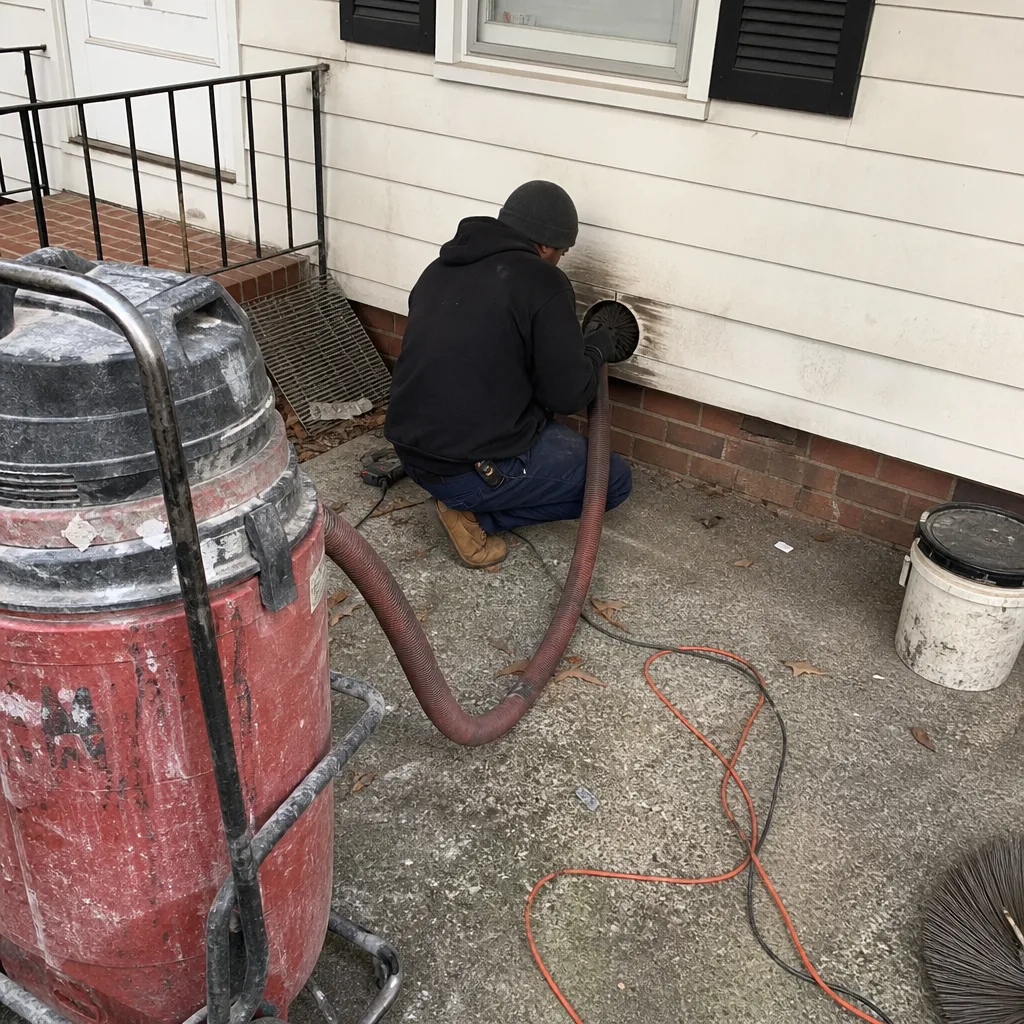 Before
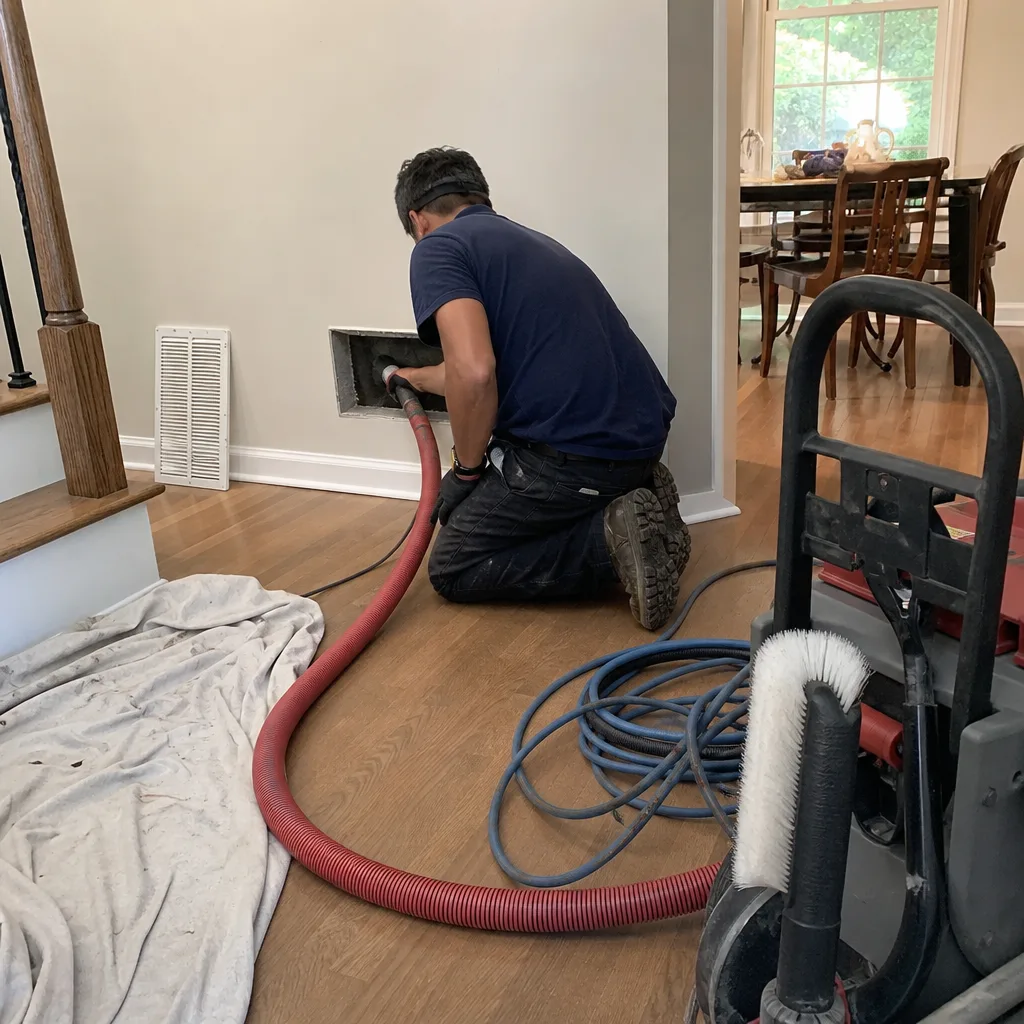 After
After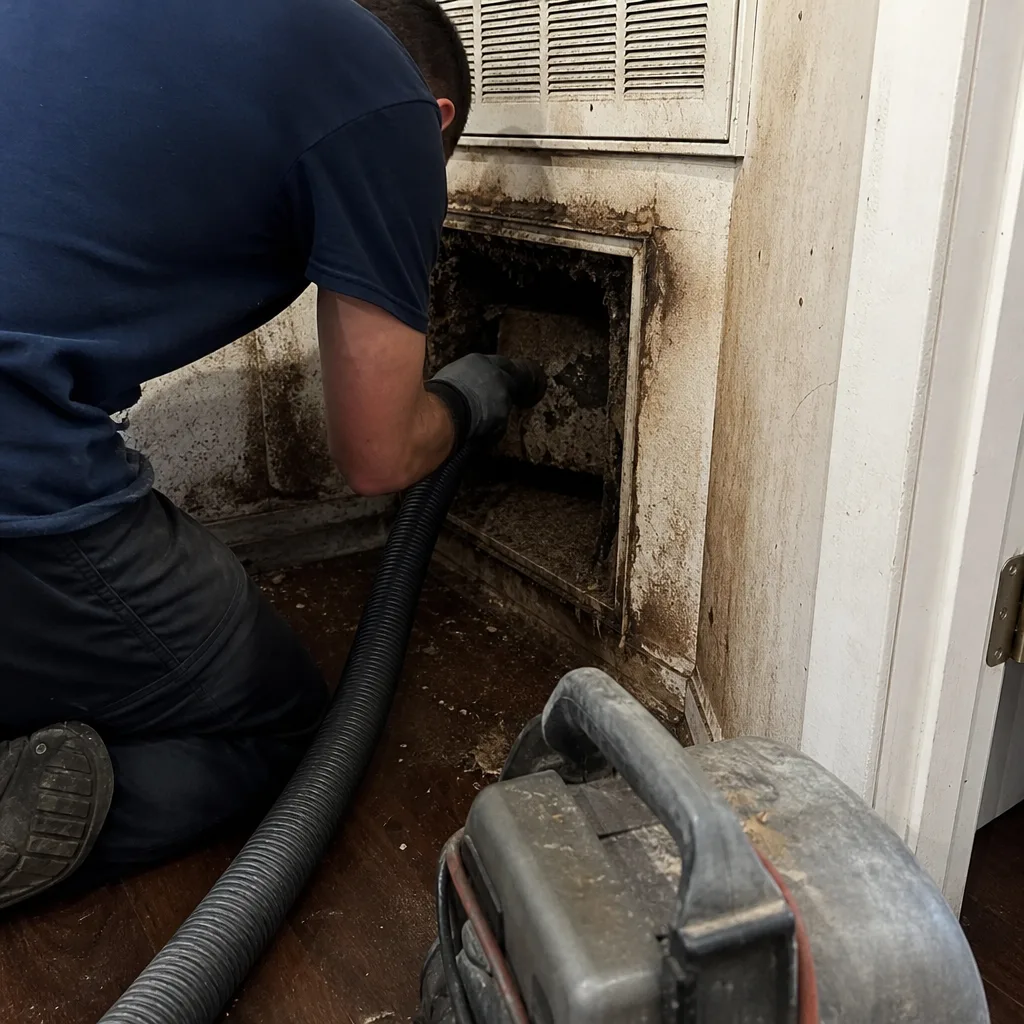 Before
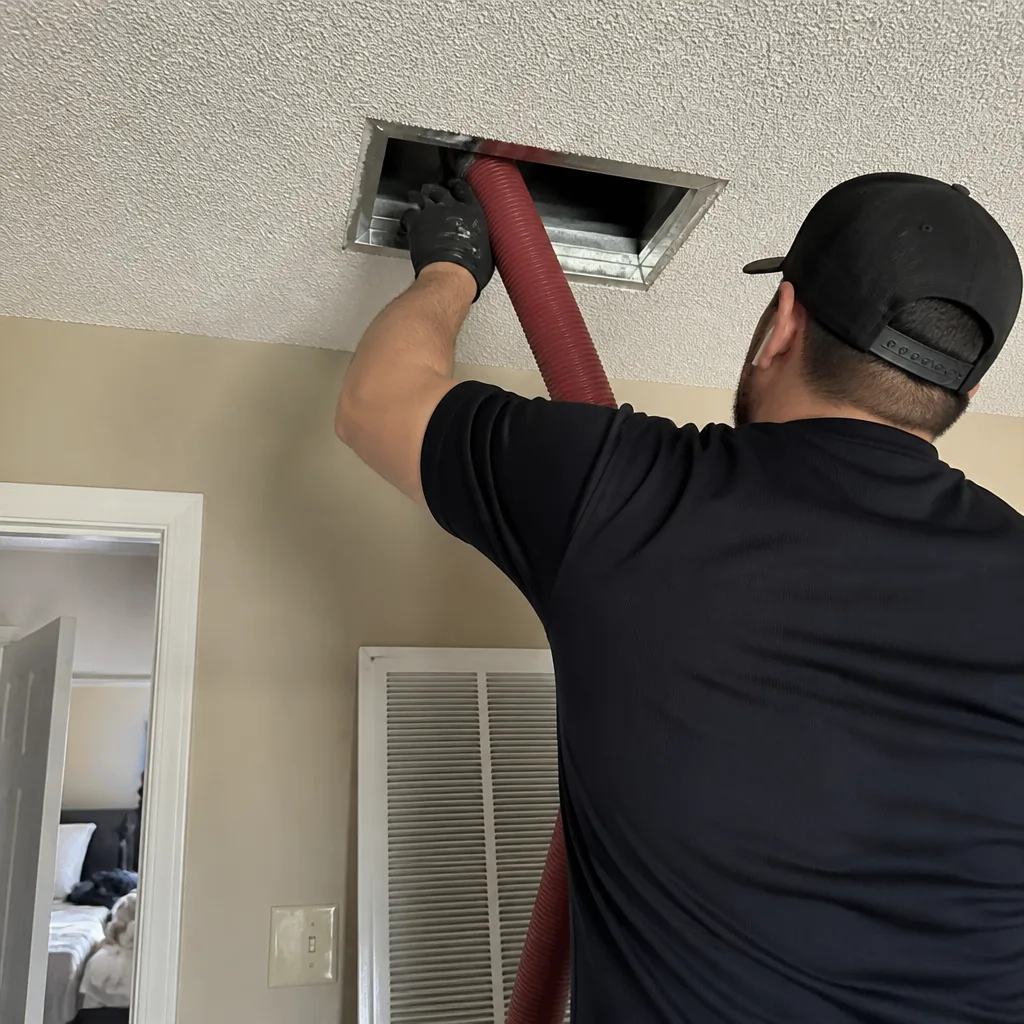 After
After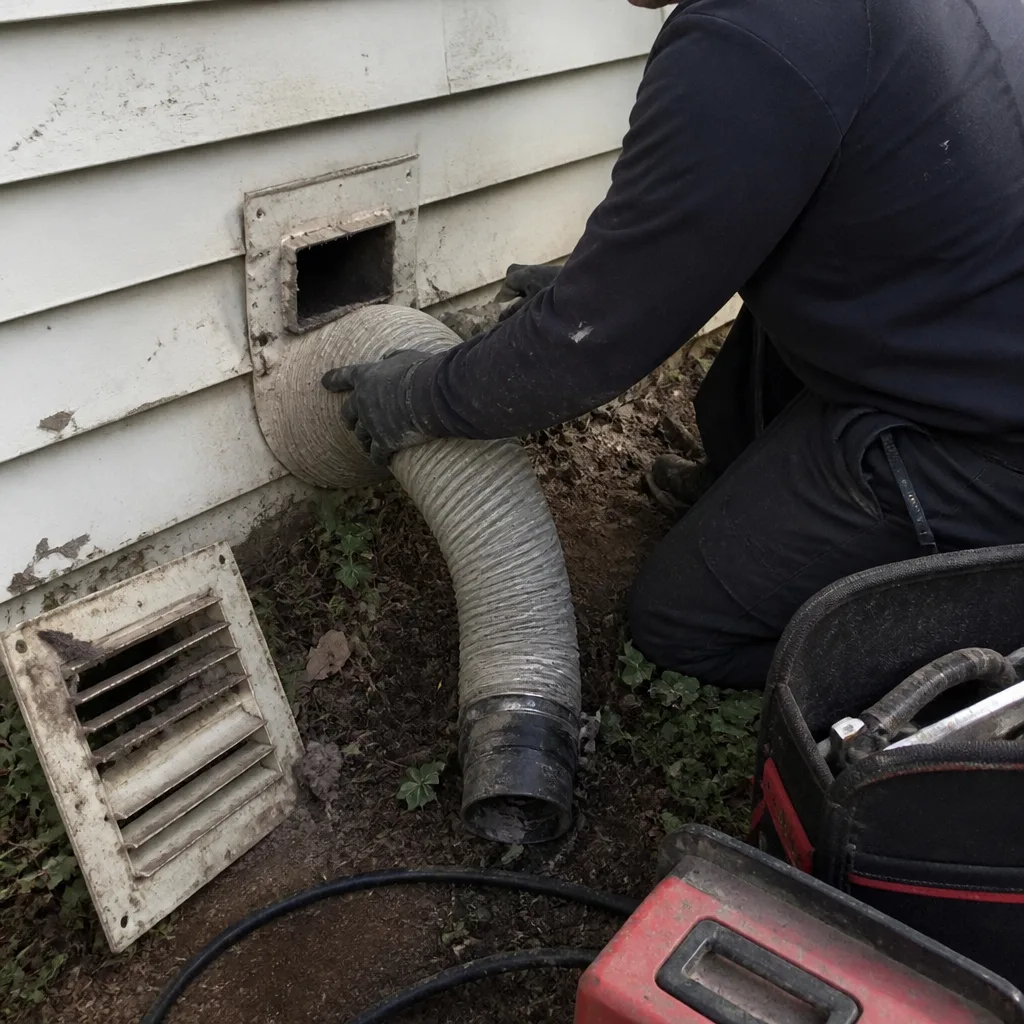 Before
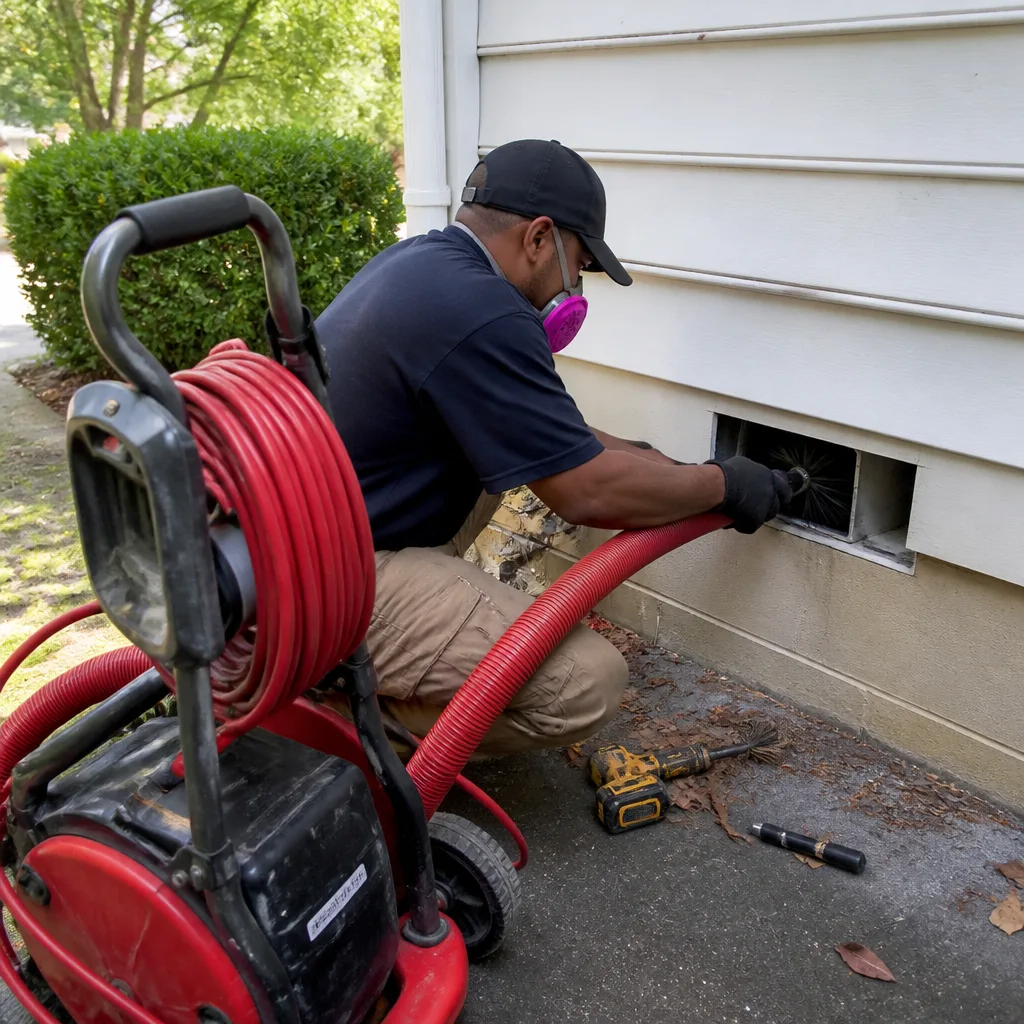 After
AfterWhen to Call a Professional
If you’ve read this far and you’re now wondering about the state of your own ductwork, that’s the right instinct. The specific times to call a professional are when you know you have unpermitted work from a previous owner or a previous contractor, when you’re preparing to list your Atlanta home and want no surprises at inspection, when your ducts are visibly separated or sagging and you need to know whether it’s a cleaning issue or a repair issue, or when you’ve simply never had the system evaluated by someone who will photograph it and tell you the truth. We can handle the cleaning portion with our Kestrel Air Duct Atlanta home standard: Rotobrush agitation, Nikro negative-pressure extraction, and Abatement Technologies HEPA filtration, all backed by the 365-Day Done Right Promise. If the evaluation reveals repair work, we’ll say so clearly and point you toward a licensed mechanical contractor. Kestrel Air Duct Atlanta offers free estimates in Atlanta. Call (470) 378-1006 and we’ll help you separate cleaning from repair before either one begins.
Frequently Asked Questions
No, pure air duct cleaning is classified as maintenance under Georgia’s amended International Mechanical Code and requires no permit anywhere in the state. Permit requirements only arise when the work crosses into repair, which includes reconnecting, replacing, sealing, or structurally modifying duct systems. Ask any contractor to confirm in writing that the proposed work is maintenance if you want certainty.
It depends on scope. Touching up a few minor leaks with mastic during a cleaning is generally considered maintenance. Systematically sealing an entire duct system, especially when marketed as a standalone service, is viewed by several Atlanta-area counties, including Cobb and Gwinnett, as a modification that may require a mechanical permit. The safest approach is to ask the county’s code office directly or require the contractor to determine the answer in writing.
The buyer has leverage. Unpermitted mechanical work can lead to a repair demand, a price concession, or the buyer walking away entirely. Georgia disclosure forms require sellers to disclose unpermitted work, which transforms a technicality into a legal obligation. Correcting the work before listing is always cheaper than negotiating it after inspection.
Only if the company holds the appropriate state mechanical license and the repair falls within the scope allowed by the county’s permitting authority. A duct cleaning company without a mechanical license should limit its work to cleaning and should refer any repairs to a licensed contractor. Always ask who will perform any necessary repairs before work begins.
Check the Georgia Secretary of State’s professional licensing database. You can search by company name or individual name. Legitimate contractors expect this verification and won’t resist it. Companies that deflect licensing questions are a risk, especially for work that might require a permit.
Permit fees vary by county and by the value of the work, but minor duct repair permits in the metro typically range from $50 to $300. The cost is small compared to the potential cost of correcting unpermitted work later. Call (470) 378-1006 if you want help determining whether your specific situation needs a permit.
The Bottom Line
Cleaning your air ducts in Georgia is maintenance, and maintenance needs no permit. But the moment cleaning becomes repair, the rules change, and the cost of getting it wrong doesn’t show up until the worst possible moment: when your house is under contract and a buyer’s inspector starts asking questions. Ask every contractor the same direct question, demand direct answers, and hire a cleaning company that knows exactly where its lane ends. At Kestrel Air Duct Atlanta, we’ve spent two decades drawing that line clearly for homeowners across the metro, and we’ll draw it for you on your first call. Explore more guides & resources to protect your home.
Written by Dale Whitmore, Owner at Kestrel Air Duct Atlanta, serving Atlanta since 2004.