
Last updated October 15, 2026
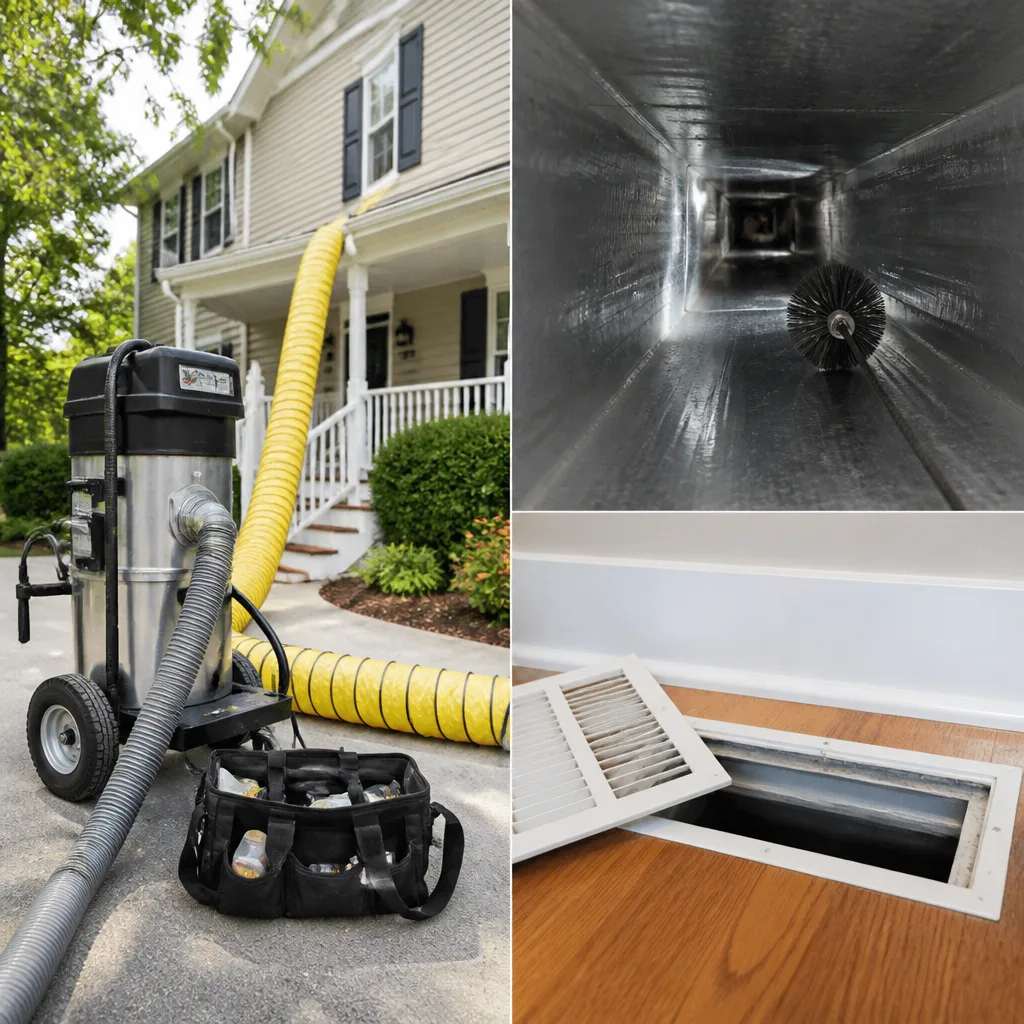 Whole-home duct cleaning
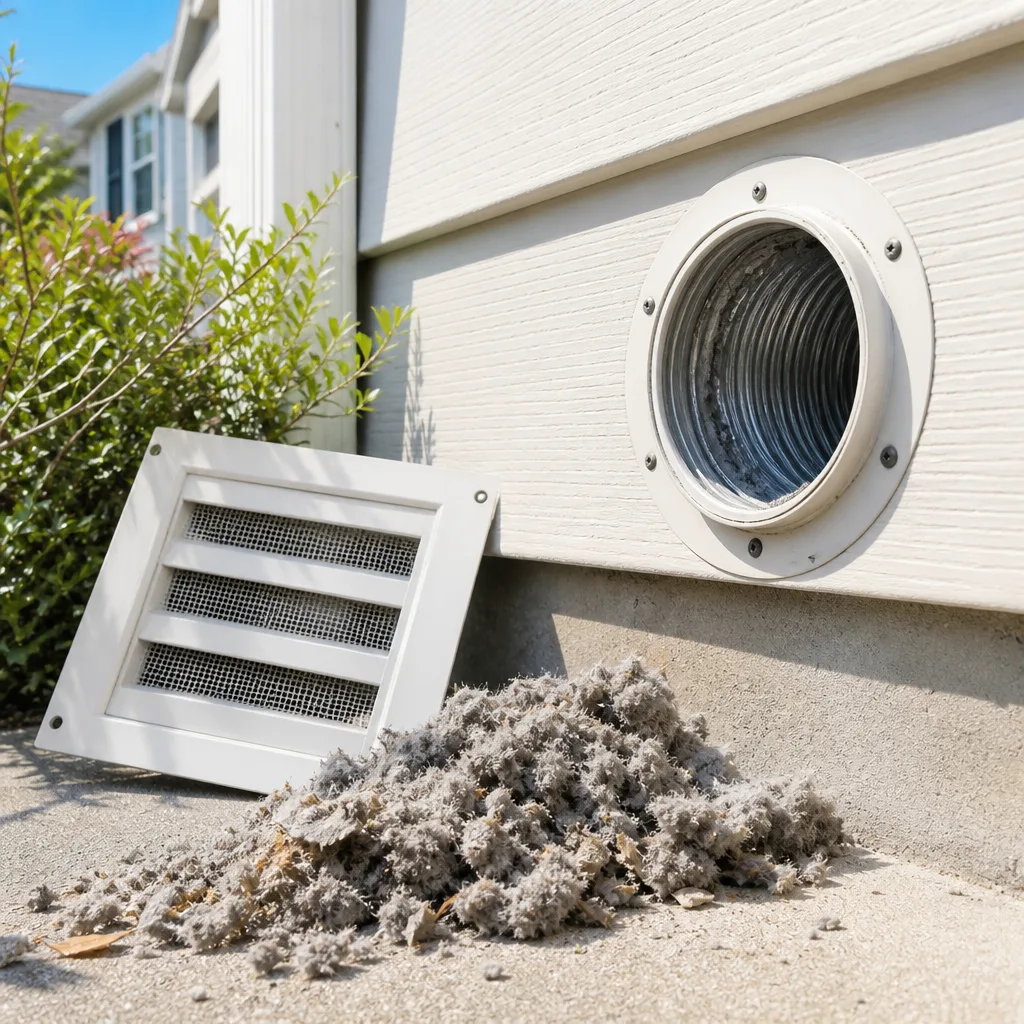 Dryer vent cleaning
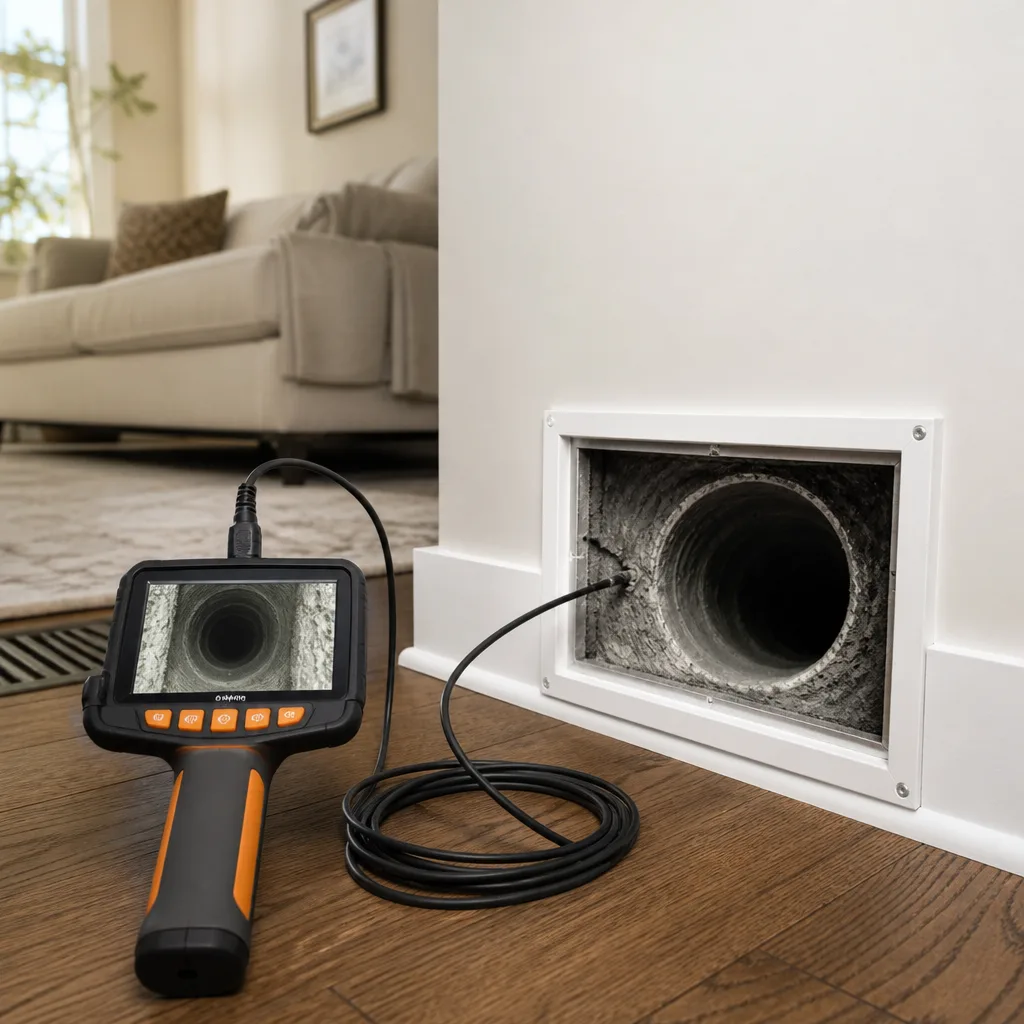 Camera inspection
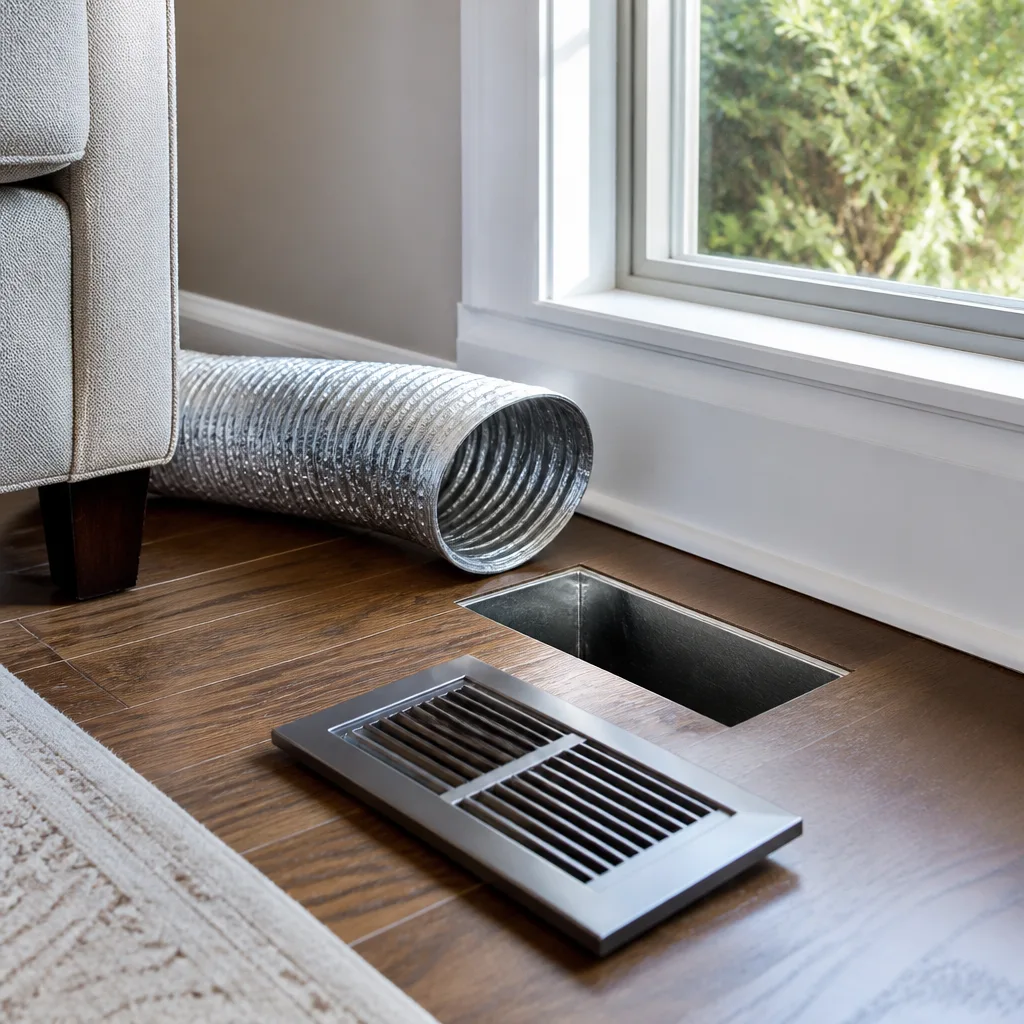 Sanitizing & deodorizing
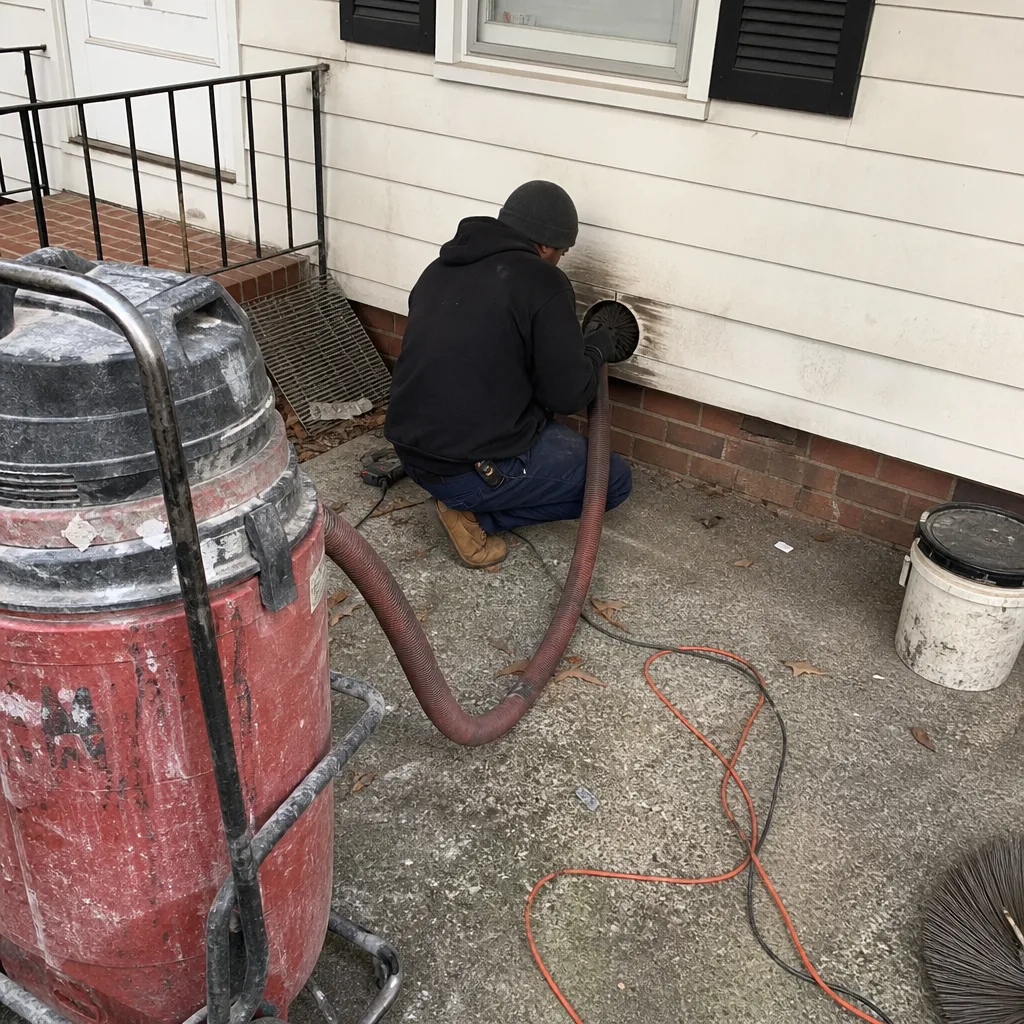
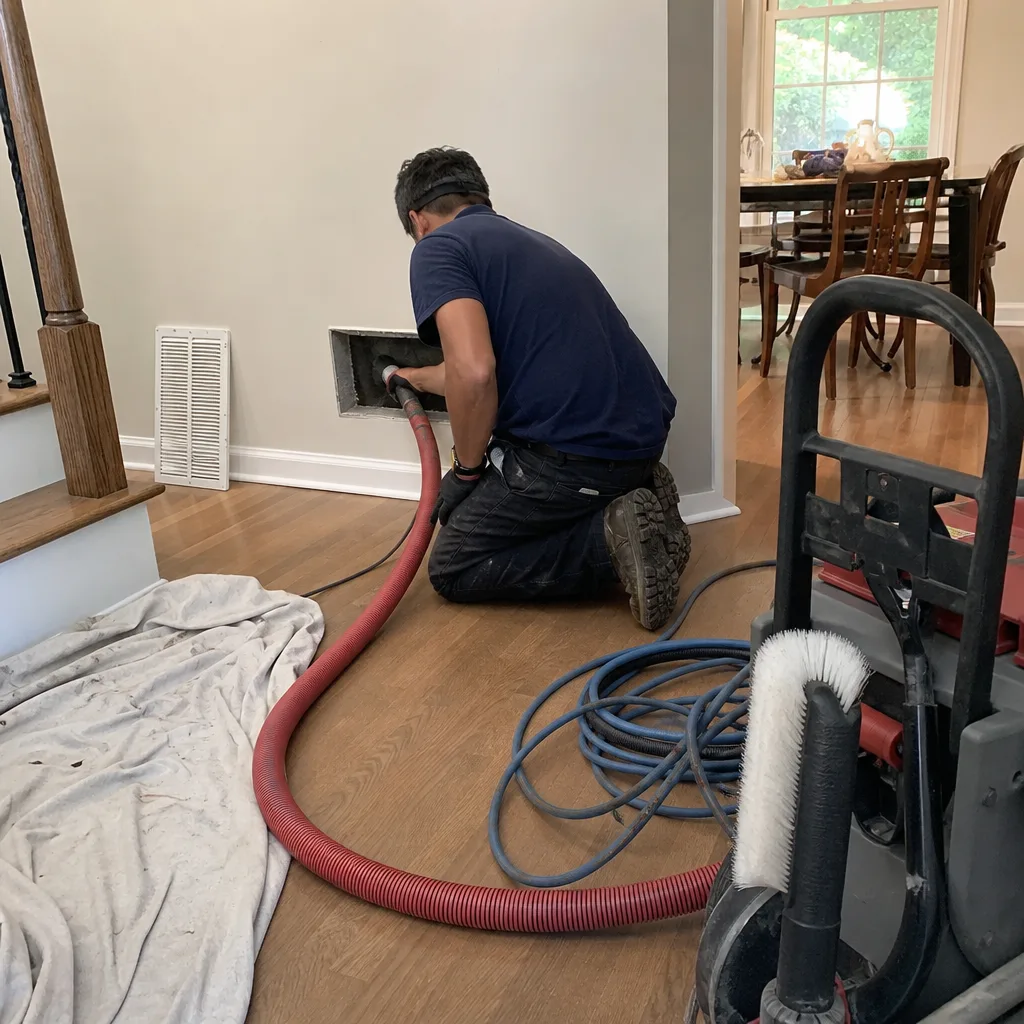
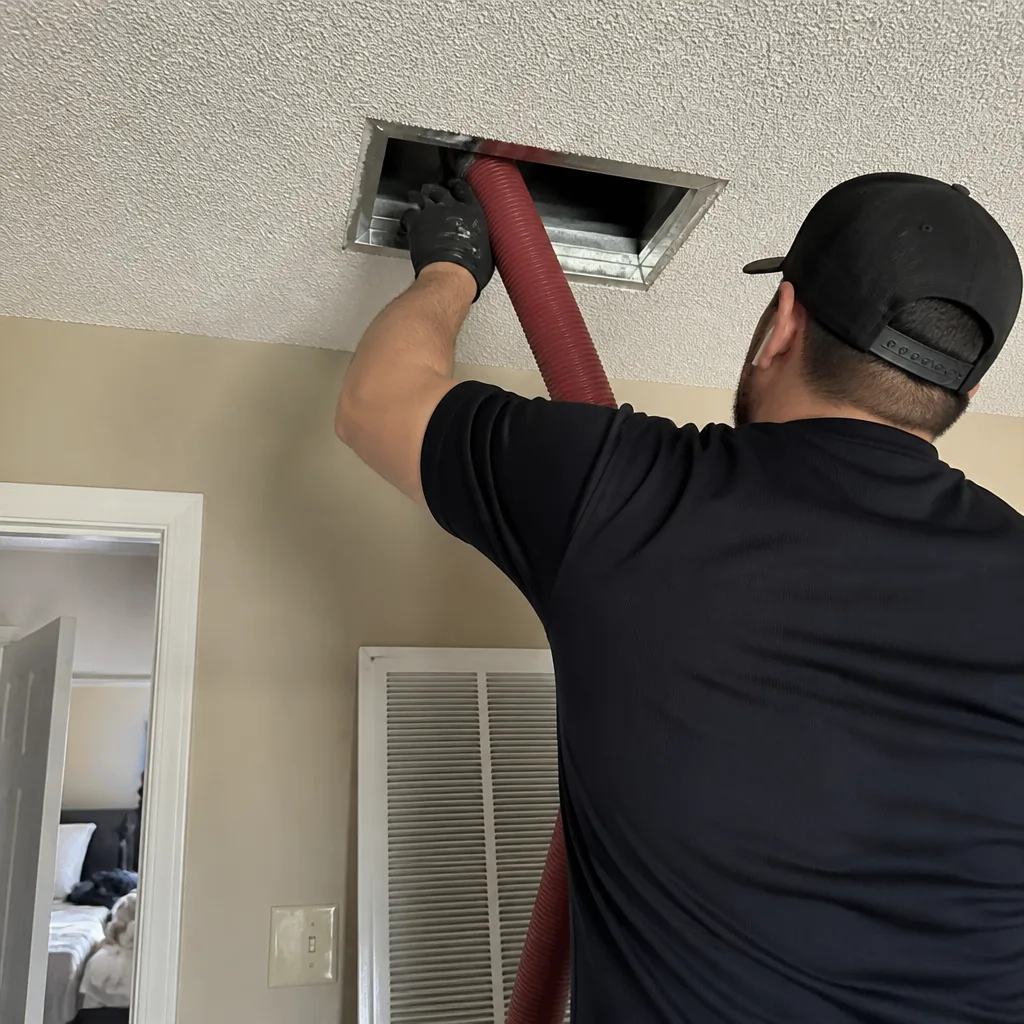
Whole-system duct and dryer vent check with before-and-after photos - you see exactly what came out of your vents
That "$99 whole-house special" is a bait ad - the real number appears once they are in your hallway, or the "clean" is a shop-vac at the register. We photograph the inside of your ducts before and after instead.
Air Duct Cleaning Maintenance Checklist for Atlanta Homeowners
Most Atlanta homeowners schedule duct cleaning the wrong month, for the wrong reasons. They call in January, right after a cold snap, because the system has been blowing warm, dusty air all winter. Then they run the air conditioner from May through September through ducts that collected peak oak and pine pollen between February and April. That sequence means the cleaning they paid for protects the heating season, not the cooling season that dominates eight months of Atlanta’s year. This guide gives you a month-by-month maintenance rhythm built around Atlanta’s actual air-quality triggers: the March pollen bloom, the July humidity spike, and any renovation that fills your home with drywall dust. For Air Duct Cleaning Warning Signs: A Atlanta Homeowner’s Reference Guide on when to call a pro, see our companion resource.
Styles & brands we work with
Quick Answer
Atlanta homeowners should treat air duct maintenance as a rolling yearly rhythm, not a single three-year check-off. The highest-value window for Air Duct Cleaning services is mid-to-late April, after oak and pine pollen have peaked, so your AC runs clean all summer. Between cleanings, do a 10-minute visual inspection of your supply registers every 90 days, swap your filter based on MERV rating and Atlanta pollen load, and document every professional visit in writing.
Table of Contents
- The Atlanta Month-by-Month Duct Maintenance Rhythm
- The 10-Minute Visual Inspection You Can Do Yourself
- Filter Upgrades: When a MERV 11 Helps and When It Hurts
- What to Log After Every Professional Cleaning
- When a Cleaning Reveals Something Bigger
- What Air Duct Cleaning Actually Costs in Atlanta
- Common Mistakes to Avoid
- When to Call a Professional
- Frequently Asked Questions
- The Bottom Line
The Atlanta Month-by-Month Duct Maintenance Rhythm
Forget the “every three years” rule you see on generic maintenance checklists. Atlanta’s climate writes its own schedule. We’ve worked in homes from Buckhead to Decatur, and the same pattern shows up year after year: ducts that were professionally cleaned in December look like they were never touched by August, because the real contaminants arrived in spring. Here’s how to think about it, month by month.
February: Pre-Pollen Filter Swap
Atlanta’s pollen season often starts earlier than newcomers expect. By mid-to-late February, alder and elm pollen begin appearing on car windshields in neighborhoods like Sandy Springs and Dunwoody. Swap in a fresh filter before the first real pollen surge. If you run a basic MERV 8 fiberglass filter, February is the month to consider moving up to a MERV 11 pleated filter. More on that decision below.
March through early April: Weekly Register Wipe-Down
Oak pollen in Atlanta peaks between mid-March and mid-April, and pine pollen follows close behind. During those four to six weeks, pollen settles on every horizontal surface in your home, including the inside of your supply registers. Wipe the register faces and visible duct openings once a week with a damp microfiber cloth. This takes ten minutes and prevents a significant amount of visible pollen from being pulled deeper into the duct system when the blower cycles on.
Mid-to-late April: The Optimal Professional Cleaning Window
This is the single most important insight in this guide. After oak pollen has peaked and before Atlanta’s humidity settles in for the summer, your ducts are carrying the maximum load of the year’s worst contaminants. Scheduling a professional cleaning in late April means the system runs clean through the cooling season, which in Atlanta can stretch from May through October. You’ll notice the difference in air quality for seven months instead of three.
June through August: Humidity Watch and Condensation Check
Atlanta’s summer dew points routinely sit in the 70s. Ducts in unconditioned attics and crawlspaces are prone to condensation when cool air moves through them and hot, humid air presses against the outside. During the hottest weeks, run your hand along exposed duct surfaces in your attic. If you feel moisture, you have a condensation problem that can lead to mold inside the duct liner. This is not something to wait on. A professional needs to assess whether the duct insulation is adequate or whether you need a dehumidifier in that space.
September: Switchover Inspection Before Heating Season
When you flip the thermostat from cool to heat for the first time, you’ll often smell a burning odor. That’s months of dust that settled on the heat exchanger during the cooling season burning off. It’s harmless the first time, but it’s also a signal. Do a quick visual inspection at your floor registers before the first real heating cycle. If you see visible dust or debris in the duct openings, schedule a cleaning before you run the heat regularly.
October through January: Low-Allergen Winter Months
Atlanta’s winter air is comparatively clean. Pollen is gone, humidity is moderate, and the system is mostly recirculating indoor air. These months are fine for professional cleaning if you missed the spring window, but you’ll get less value from it. The one exception: if you host holiday gatherings or have indoor pets, pet dander and cooking particulates accumulate faster in a closed-up house. A mid-winter cleaning still improves air quality, but the spring window remains the better annual anchor.
The 10-Minute Visual Inspection You Can Do Yourself
You don’t need special training to spot early duct problems. You need a flashlight, your phone camera, and ten minutes. Here’s the exact sequence we use with Atlanta homeowners who want to track duct condition between professional visits.
- Remove the register cover. Unscrew or pop out two to four supply registers in different rooms, ideally one on each floor. Floor registers in Atlanta homes are often held in by friction or two small screws.
- Shine the flashlight down into the duct opening. Angle it so the light skims the duct surface rather than pointing straight down. This makes dust and debris texture visible.
- Take a photo with your phone camera. Hold the camera steady and use the flashlight to illuminate the duct interior. The photo is your documentation baseline.
- Look for three specific things. First: visible dust accumulation more than a light film on the duct walls. Second: any dark discoloration that could be mold, especially near a register that has felt damp. Third: debris that shouldn’t be there, like drywall chunks, insulation fibers, or pest droppings.
- Check the return side too. Atlanta homes often have a large central return or wall returns near the ceiling. The return side sees the rawest air in the house, so dust there tells you the filter is being bypassed or isn’t adequate.
- Repeat every 90 days. Set a calendar reminder. Compare photos over time to see the rate of accumulation.
If any of these checks raises a concern, that’s when a professional assessment makes sense. The visual inspection isn’t a replacement for professional cleaning; it’s how you know when cleaning is actually due, instead of guessing.
Filter Upgrades: When a MERV 11 Helps and When It Hurts
MERV stands for Minimum Efficiency Reporting Value, a scale that runs from 1 to 20 and measures how effectively a filter captures particles. A MERV 8 filter captures most household dust, pet dander, and pollen. A MERV 11 filter captures those plus smaller particles like fine dust and some mold spores. For Atlanta homeowners, a MERV 11 is often a good seasonal choice during the spring pollen months of February through May.
But here’s what most filter advice misses: a higher MERV rating means more airflow resistance. If your HVAC system wasn’t designed for a MERV 11 filter, the restriction can reduce airflow enough to strain the blower motor, increase energy bills, and in the worst cases, cause the evaporator coil to freeze. Homes with older ductwork, undersized returns, or correctly-sized but restrictive filtration racks are particularly vulnerable. The symptom to watch for is uneven cooling: some rooms get cold while others stay warm, especially upstairs rooms in two-story Atlanta homes.
If you want the benefits of better filtration without the airflow penalty, look for pleated filters labeled “low pressure drop” or “electrostatic.” Brands like Honeywell and Aprilaire make MERV 11 filters designed to minimize airflow restriction. If you’re uncertain whether your system can handle a MERV 11, leave the MERV 8 in place and address filtration as a separate project with a professional who can measure static pressure.
The practical guidance for Atlanta: try a MERV 11 in February. If you notice even cooling and no unusual blower noise, keep it through the summer. If you notice the issues above, switch back to a MERV 8 and let the professional cleaning handle the particle load. The filter’s job is to protect the equipment; the cleaning’s job is to remove what already accumulated.
What to Log After Every Professional Cleaning
Most Atlanta homeowners have no written record of what a duct cleaning found or did. When the next technician arrives three years later, that person starts from zero, which wastes your time and money. A simple log creates a baseline that makes every subsequent visit more efficient and more accountable. Here’s what to record after any cleaning.
- Date and company name. Simple, but often forgotten.
- Scope of work. Which ducts were cleaned, whether the return side was included, whether the blower motor and housing were accessed.
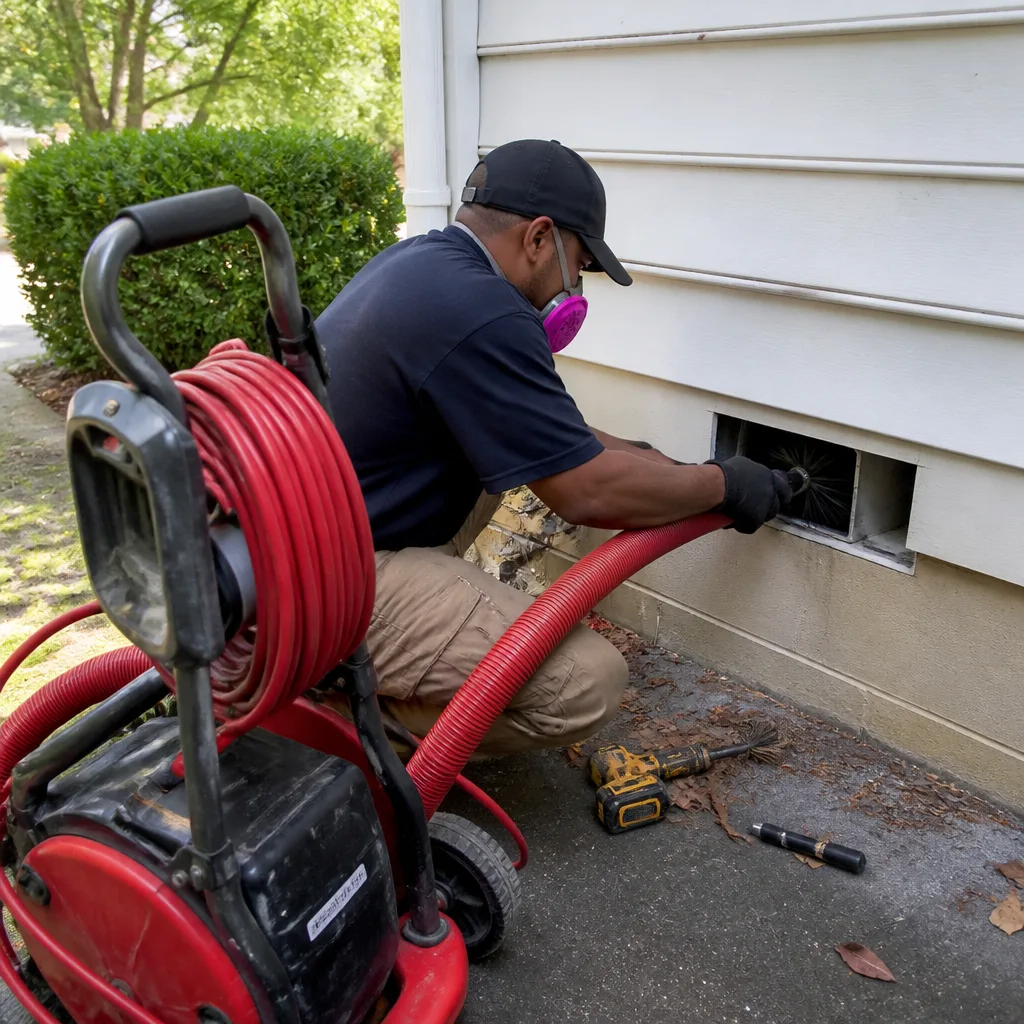
- Equipment used. Note whether the technician used negative-pressure extraction, rotary brush agitation, or both. At Kestrel Air Duct Atlanta, we use Nikro negative-pressure units and Rotobrush rotary brush systems, and we explain what each tool does before we start.
- Before and after photos. Reputable companies provide these. Keep them in a folder on your phone or computer. They’re your proof of work.
- Findings. Did the technician note any duct separation, flex duct kinks, mold, or pest activity? Even minor findings are worth logging because they often become bigger issues later.
- Filter recommendation. What MERV rating was recommended, and did the technician measure airflow restriction?
- Written guarantee terms. What exactly is covered, for how long, and what you need to do to invoke it.
We tell every Atlanta homeowner the same thing: if a company won’t provide a written record of what was done, that’s a signal. The entire point of professional duct cleaning is verifiable work. A company that documents its own work is a company you can hold accountable.
When a Cleaning Reveals Something Bigger
A professional duct cleaning sometimes uncovers problems that no cleaning can fix by itself. When that happens, you need the follow-up work order in writing, not a verbal aside. Here are the three findings we see most often in Atlanta homes, and what the written work order should specify.
Duct Separation
Flex duct in Atlanta attics can separate from its register boot or from the trunk line due to heat, humidity, and poor original installation. Symptoms include weak airflow in one room, noticeably dusty air from one register, or higher humidity in a specific area of the house. The work order should state which duct run is separated, where the separation is, and what the repair involves.
Flex Duct Kinks
Flex duct gets kinked when it’s bent too sharply during installation or when it sags over time. A kink restricts airflow enough to throw off your system’s balance. The work order should specify which duct run is kinked and the repair approach: usually re-routing or supporting the duct properly.
Mold in the Ductwork
Mold in Atlanta ducts is less common than people fear, but when it appears, it’s almost always tied to condensation. Cleaning alone won’t fix the moisture source. The work order should identify the moisture source, specify what needs to be corrected, and note whether any duct sections need replacing rather than cleaning. At Air Duct Cleaning in Atlanta, we document these findings in the written report we leave with every customer, so the next step is clear.
Any of these findings should also trigger a conversation about whether your HVAC contractor or a specialized ductwork company needs to be involved. A good duct cleaning company will tell you when the problem is beyond what cleaning can solve.
What Air Duct Cleaning Actually Costs in Atlanta
Let’s talk in real numbers. In the Atlanta market, professional air duct cleaning for a typical single-family home runs between $450 and $900, depending on the home’s size, the number of systems, and the ductwork configuration. A smaller condo with one system and accessible ductwork might run $300 to $500. A larger home with two systems, a finished basement, and long flex runs might run $800 to $1,100.
Here’s the critical point that most Atlanta homeowners learn the hard way: the price you’re quoted on the phone should be the price you pay when the work is done. The industry’s worst operators quote a low per-vent price, then arrive and “discover” that the job requires additional work that doubles or triples the invoice. That’s not how we operate. Our written price is in your hands before a single vent is touched, and it doesn’t change at the door.
| Home Type | Typical Atlanta Price Range | What Affects the Price |
|---|---|---|
| Condo or small single-family (1 system, up to 8 vents) | $300 – $500 | Vent count, duct accessibility, single return |
| Standard single-family (1 system, 8 – 14 vents) | $450 – $700 | Vent count, attic or crawlspace access, return size |
| Larger home (2 systems, 14 – 20+ vents) | $700 – $1,100 | Multiple systems, long flex runs, multiple returns |
| Additional findings requiring repair | Quoted separately, in writing | Duct separation, mold remediation, flex duct replacement |
The price range should be the same whether you’re in Midtown, Marietta, or Alpharetta. What changes it is the size and shape of your duct system, not your zip code.
Common Mistakes to Avoid
- Cleaning in January because it’s convenient. The best time to clean Atlanta ducts is after spring pollen peaks, not during the winter lull. A January cleaning protects the heating season, which Atlanta barely has, while the summer cooling season runs six months through contaminated ducts.
- Trusting a per-vent quote. Per-vent pricing creates an incentive to inflate the vent count or add charges on-site. A flat, written price for the whole job eliminates that game before it starts.
- Ignoring the return side. Many Atlanta homeowners focus on supply registers and forget the return. A dirty return side contaminates the entire system every time the blower runs, even if the supply ducts were just cleaned.
- Upgrading to a MERV 13 without checking system compatibility. Higher MERV filters restrict airflow. If your system wasn’t designed for it, you’ll strain the blower motor and may cause uneven cooling or a frozen coil in Atlanta’s summer heat.
- Not documenting the work. If you don’t keep the written report and photos from a cleaning, the next technician starts from zero, and you have no way to hold anyone accountable.
- Waiting to address condensation. Condensation on ducts in an Atlanta attic is not a cosmetic issue. It becomes mold, and mold becomes a much bigger and more expensive problem than the dehumidifier or insulation upgrade that would have prevented it.
- Scheduling the dryer vent as an afterthought. Your dryer vent is part of the same air system in practical terms. A clogged dryer vent is a fire hazard, and in Atlanta’s humid climate, lint plus moisture becomes a compacted blockage faster than in drier regions. Dryer Vent Cleaning in Atlanta should happen on the same visit whenever possible.
When to Call a Professional
Visual inspections and filter swaps are homeowner work. Everything else belongs to a trained technician. Call a professional if you see visible dust accumulation more than a light film inside your ducts, any dark discoloration that could be mold, debris that suggests pests, or if you’ve had a renovation that generated drywall dust or flooring debris which has circulated through the system. Also call if you’ve experienced a water event in the home, a persistent musty smell from the registers, or uneven cooling that no amount of filter changing has fixed. Kestrel Air Duct Atlanta offers free estimates for Atlanta homeowners. Call (470) 378-1006 and a live person answers, any time of day.
Frequently Asked Questions
In Atlanta, every 2 to 3 years is the realistic window for most homes, but the timing matters more than the interval. A cleaning that follows the spring pollen peak in late April delivers more value than one done in winter. Homes with pets, smokers, recent renovations, or occupants with allergies may need cleaning every 12 to 24 months. The best signal is the visual inspection: when you see visible dust buildup beyond a light film, it’s time. For an exact quote on your Atlanta home, call (470) 378-1006.
Yes, if the home has accumulated dust, pet dander, or construction debris, and the cleaning uses real negative-pressure equipment rather than a shop vac. What’s not worth the money is a cheap cleaning that stirs up dust without removing it entirely, or a company that quotes low and bills high. Our 365-Day Done Right Promise documents in writing what was done, and if it’s not done right, we return and make it right. Call (470) 378-1006 for a free estimate.
You cannot effectively clean your own air ducts with household tools. A vacuum with a hose attachment only reaches the first few inches of a duct. Professional cleaning uses negative-pressure extraction: a powerful vacuum system pulls air backward through the entire duct run while a rotary brush dislodges debris stuck to the duct walls. Without that combination, you’re removing only what’s visible at the register face and leaving the rest. The visual inspection described above is the right DIY task, and it takes ten minutes.
Cheap duct cleaning quotes in Atlanta usually mean the company is offering a per-vent price to get in the door, then renegotiating once the technician sees the job. Or the company uses inferior equipment that doesn’t actually clean the system. A legitimate whole-system price for Atlanta homes ranges from $450 to $900. If a quote is significantly below that, ask what equipment is used, whether the return side is included, and whether the price is written and final before work begins. If the answer to any of those is unclear, keep looking. Call (470) 378-1006 for a straightforward quote.
Demand before and after photos of the duct interiors, taken at multiple registers. A legitimate company documents its work with photos that show the duct walls before and after cleaning. Also ask for a written report that lists what was cleaned, what equipment was used, and any findings. If a company refuses photos or a written report, that’s your answer. Kestrel Air Duct Atlanta provides both as standard practice on every job, documented under the Kingswell Guarantee.
Yes, it reduces the pollen reservoir inside the system that recirculates every time the blower runs. Atlanta’s oak and pine pollen season is intense, and even a well-filtered home accumulates pollen in the ducts over time. Cleaning in late April, after pollen peaks, removes that buildup before the cooling season traps it in the system for months. For allergy sufferers, pairing cleaning with a quality filter like a Honeywell or Aprilaire MERV 11 during spring months provides the most relief. Call (470) 378-1006 for an estimate.
The Bottom Line
Atlanta air duct maintenance is not a “set it and forget it” task. The city’s pollen season, humidity, and long cooling season mean the annual rhythm matters more than the three-year interval. Do your visual inspections quarterly, swap filters with the pollen calendar in mind, document every professional cleaning, and schedule the big cleaning for late April when it will protect your summer air quality. When you call a professional, demand a written price, written documentation, and a written guarantee. Browse our more guides & resources for year-round duct maintenance advice. Those three written commitments separate the companies that stand behind their work from the ones that disappear after the invoice is paid.
Call Kestrel Air Duct Atlanta at (470) 378-1006 for a free estimate. We’ll give you a written price before any work begins, document everything in writing, and back it with the 365-Day Done Right Promise.
Written by Dale Whitmore, Owner at Kestrel Air Duct Atlanta, serving Atlanta since 2004.
See the difference
 Before
 After
After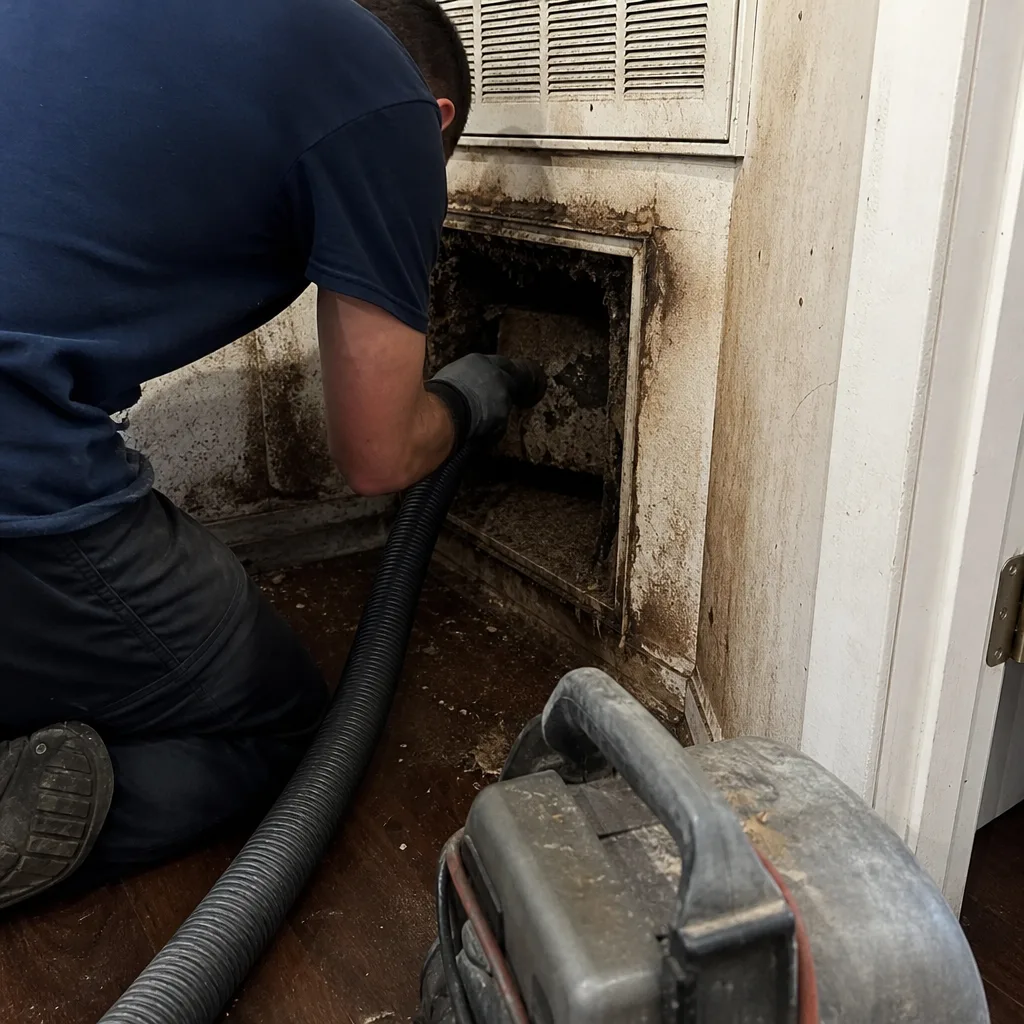 Before
 After
After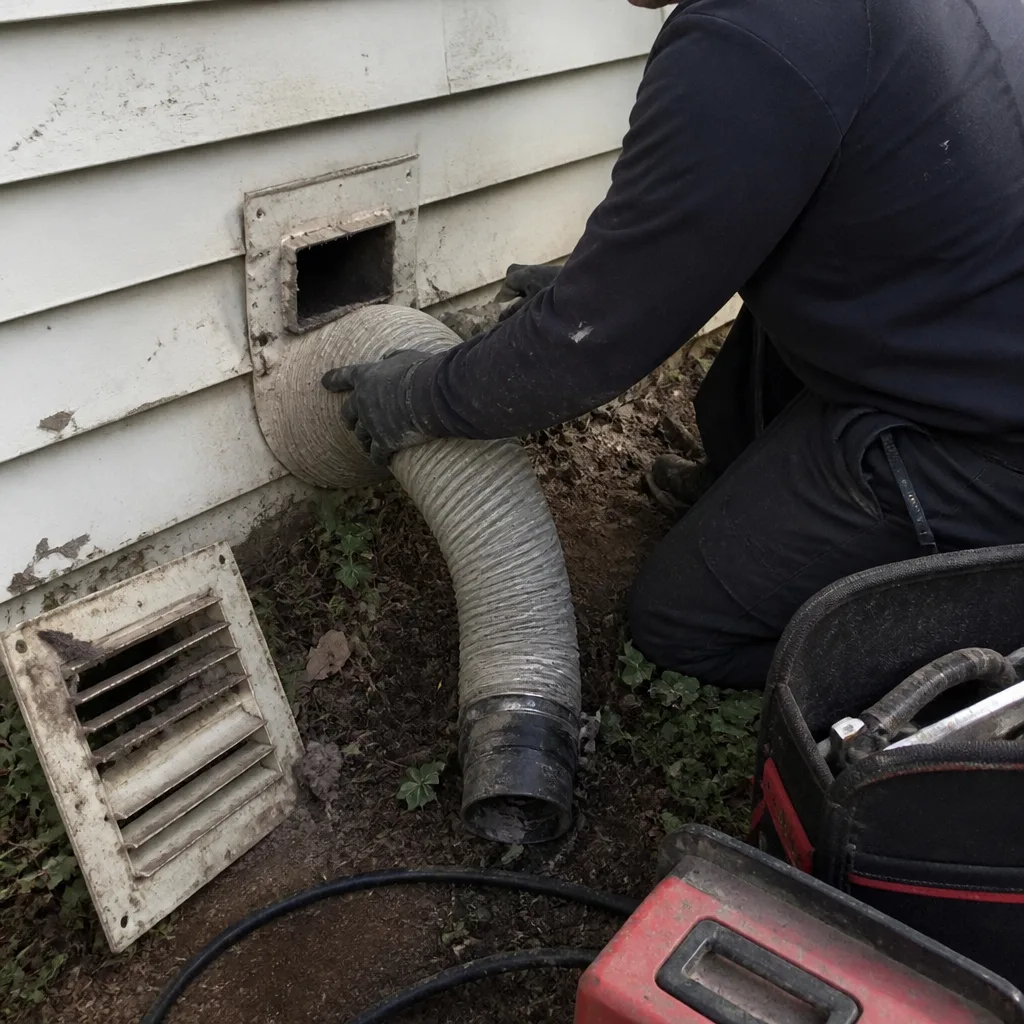 Before
 After
After